I first tried nikumaki onigiri at a small Japanese deli, and I have been hooked ever since. That first bite — warm, sticky rice wrapped in juicy, caramelized meat with a sweet-savory soy glaze — was pure comfort food, and I knew I had to learn how to make it at home.
This nikumaki onigiri recipe is my tested, weeknight-friendly version: it uses thinly sliced pork (with a beef swap), short-grain Japanese rice, and a simple soy, mirin, and sake glaze. In about 30 minutes you will have six glossy, golden meat-wrapped rice balls that work as a snack, a lunchbox star, or a party appetizer — no sushi skills needed.
What is Nikumaki Onigiri?
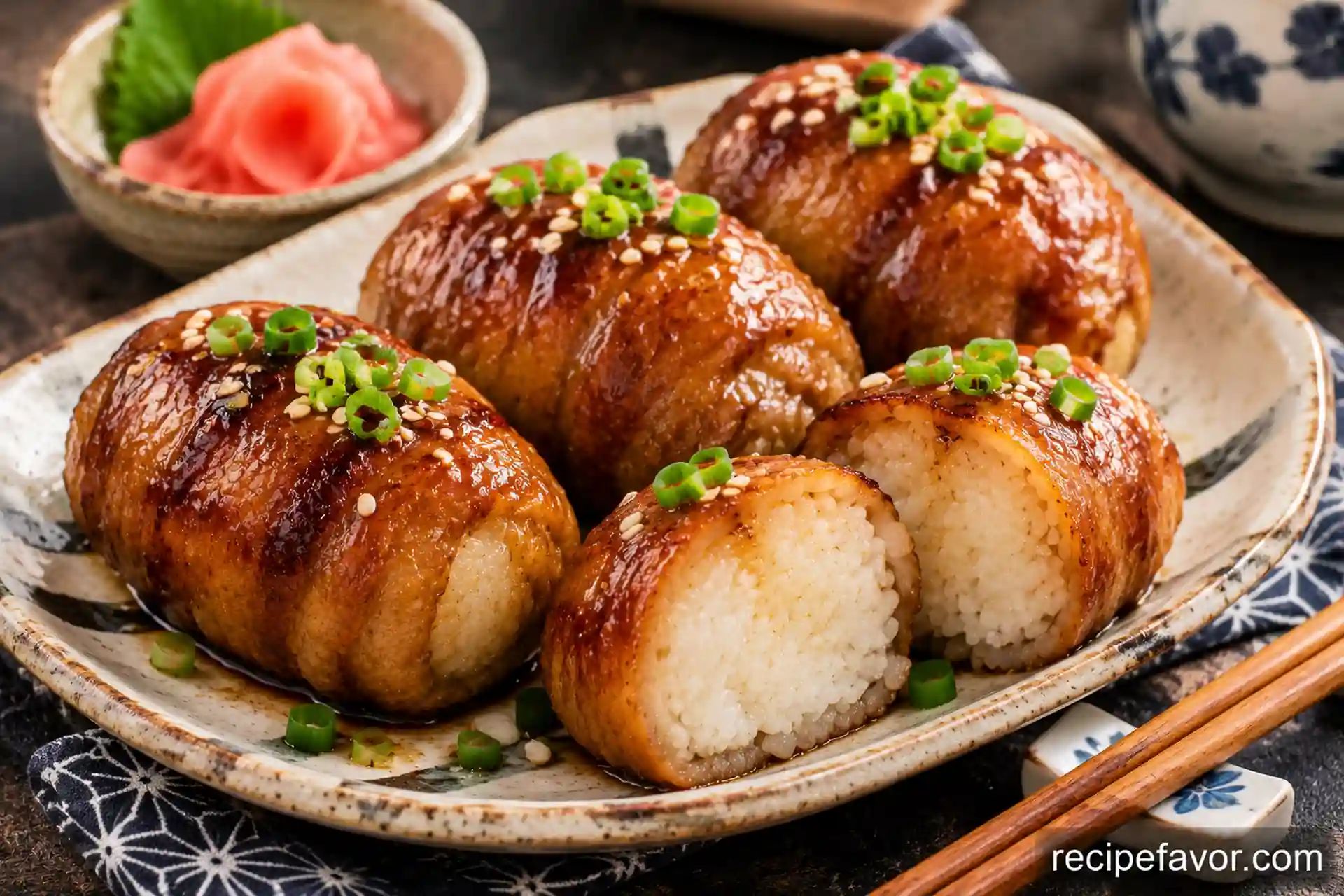
Nikumaki onigiri is a Japanese rice ball wrapped in thinly sliced meat — niku means meat, maki means to wrap, and onigiri is a shaped rice ball. The rice is shaped first, then wrapped in thin slices of pork belly or beef, pan-grilled until golden, and brushed with a savory-sweet soy glaze. It is not a sushi roll and it is not plain onigiri: the meat wrap and the glossy glaze are what make it nikumaki.
Unlike a salmon avocado sushi roll, which is rolled in seaweed with raw fish, nikumaki onigiri is cooked through, warm, and deeply savory. The outside turns crisp and caramelized while the rice inside stays soft and sticky, so every bite gives you salty, sweet, and smoky flavors at once. It is popular as a bento-box item, an izakaya-style snack, and a fun, hands-on dinner.
Nikumaki Onigiri Recipe Ingredients
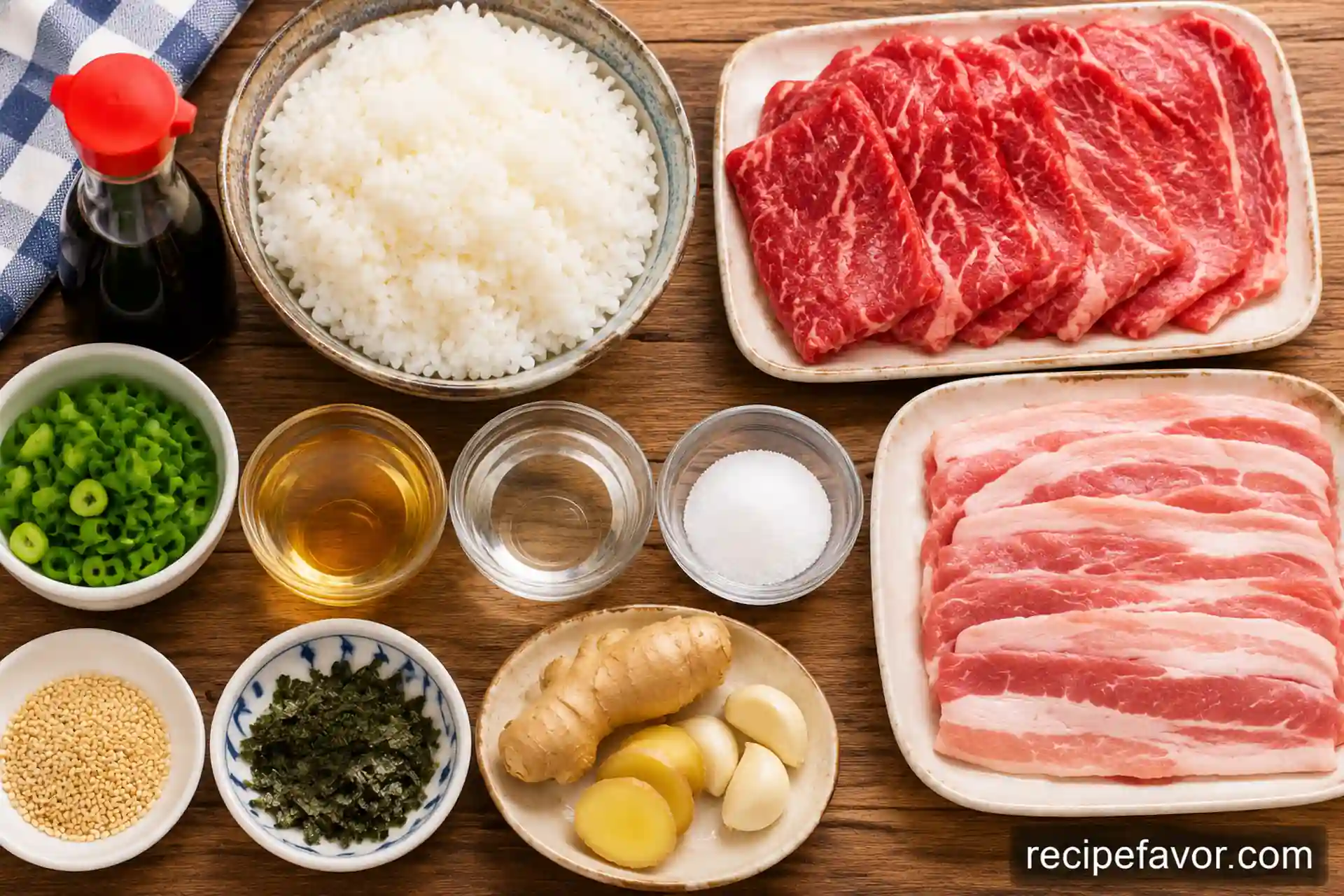
You only need a handful of pantry staples for this nikumaki onigiri recipe. Short-grain Japanese rice is essential because its stickiness holds the ball together, and the meat must be sliced very thinly — ask for shabu-shabu style slices — so it wraps neatly and cooks quickly. The glaze comes together from soy sauce, mirin, sake, and sugar, with ginger and garlic for warmth.
- 2 cups cooked short-grain Japanese rice
- 1 teaspoon salt
- 1 teaspoon rice vinegar (optional)
- 12 thin slices pork belly (or thinly sliced beef)
- 1 tablespoon vegetable oil
- 1 teaspoon toasted sesame seeds
- 2 tablespoons sliced green onions
- 1 sheet nori, cut into strips (optional)
- 3 tablespoons soy sauce
- 2 tablespoons mirin
- 1 tablespoon sake
- 1 tablespoon sugar
- 1 teaspoon grated ginger
- 1 clove garlic, minced
| Ingredient | Why It Matters |
|---|---|
| Short-grain Japanese rice | Sticky texture that holds its shape when wrapped |
| Thinly sliced pork belly | Wraps easily, crisps up, and stays juicy |
| Soy sauce | Salty, umami base of the glaze |
| Mirin | Gentle sweetness and a glossy finish |
| Sake | Depth of flavor and removes any gaminess |
| Sugar | Helps the glaze caramelize on the meat |
| Ginger and garlic | Warmth and aroma in the glaze |
| Green onions and sesame seeds | Fresh finish, color, and a little crunch |
| Nori strips | Optional grip and extra flavor when serving |
How to Make Nikumaki Onigiri Recipe at Home

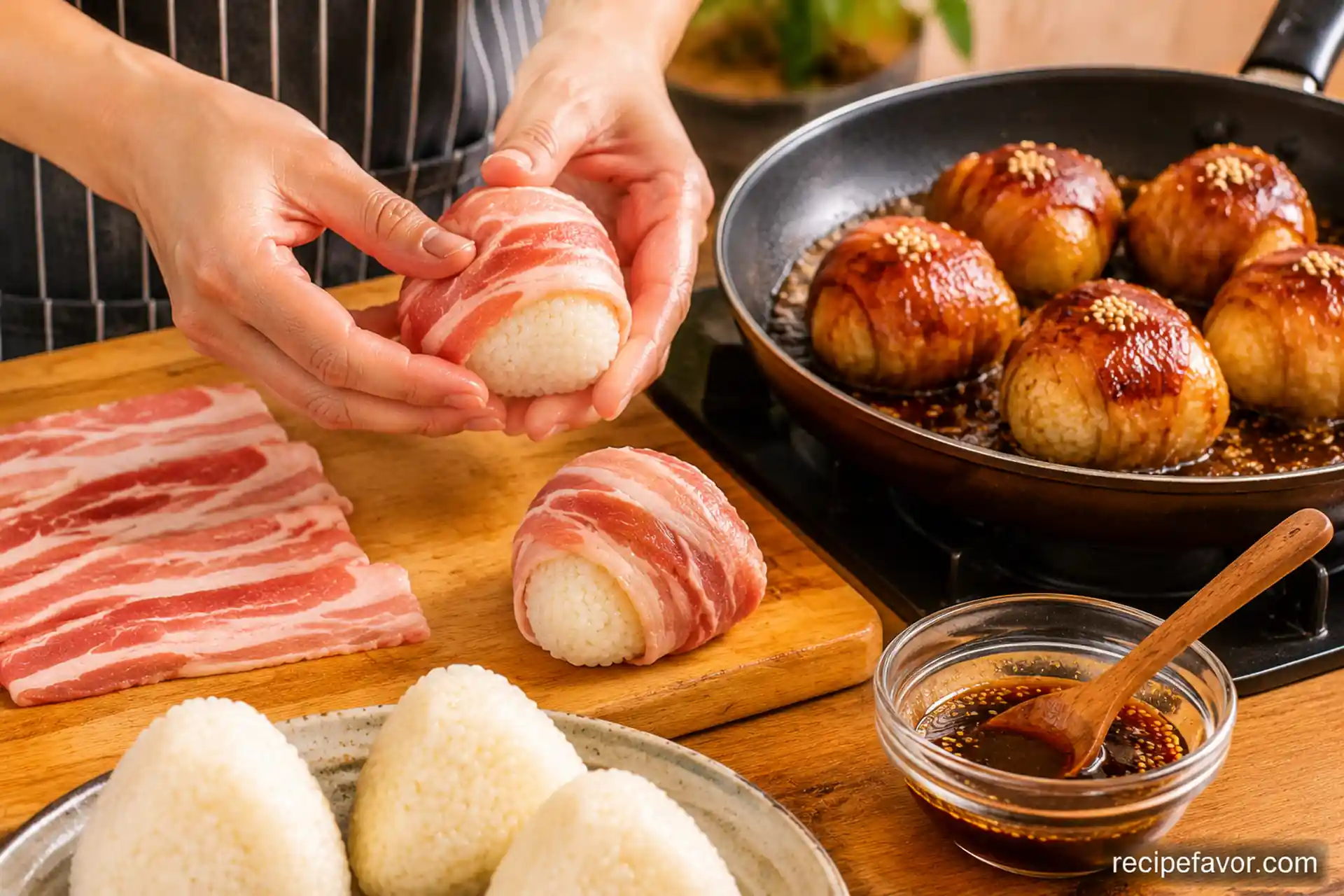
Shaping the rice firmly is the secret to this nikumaki onigiri recipe. Wet your hands so the rice does not stick, press each portion into a compact oval or triangle, and wrap the meat snugly with the seam underneath so it seals as it cooks. Sear first, glaze last — the sugar in the glaze burns easily if it goes in too early.
- Cook the rice, season with salt and rice vinegar, and let it cool slightly until you can handle it.
- Whisk the soy sauce, mirin, sake, sugar, ginger, and garlic together to make the glaze.
- Wet your hands, divide the rice into 6 portions, and shape each into a firm oval or triangular ball.
- Wrap each rice ball with 2 slices of pork, overlapping slightly, with the seam on the bottom.
- Heat the oil in a nonstick pan over medium-high heat and sear the balls seam-side down for 2–3 minutes.
- Turn and cook until the meat is browned and crisp on all sides.
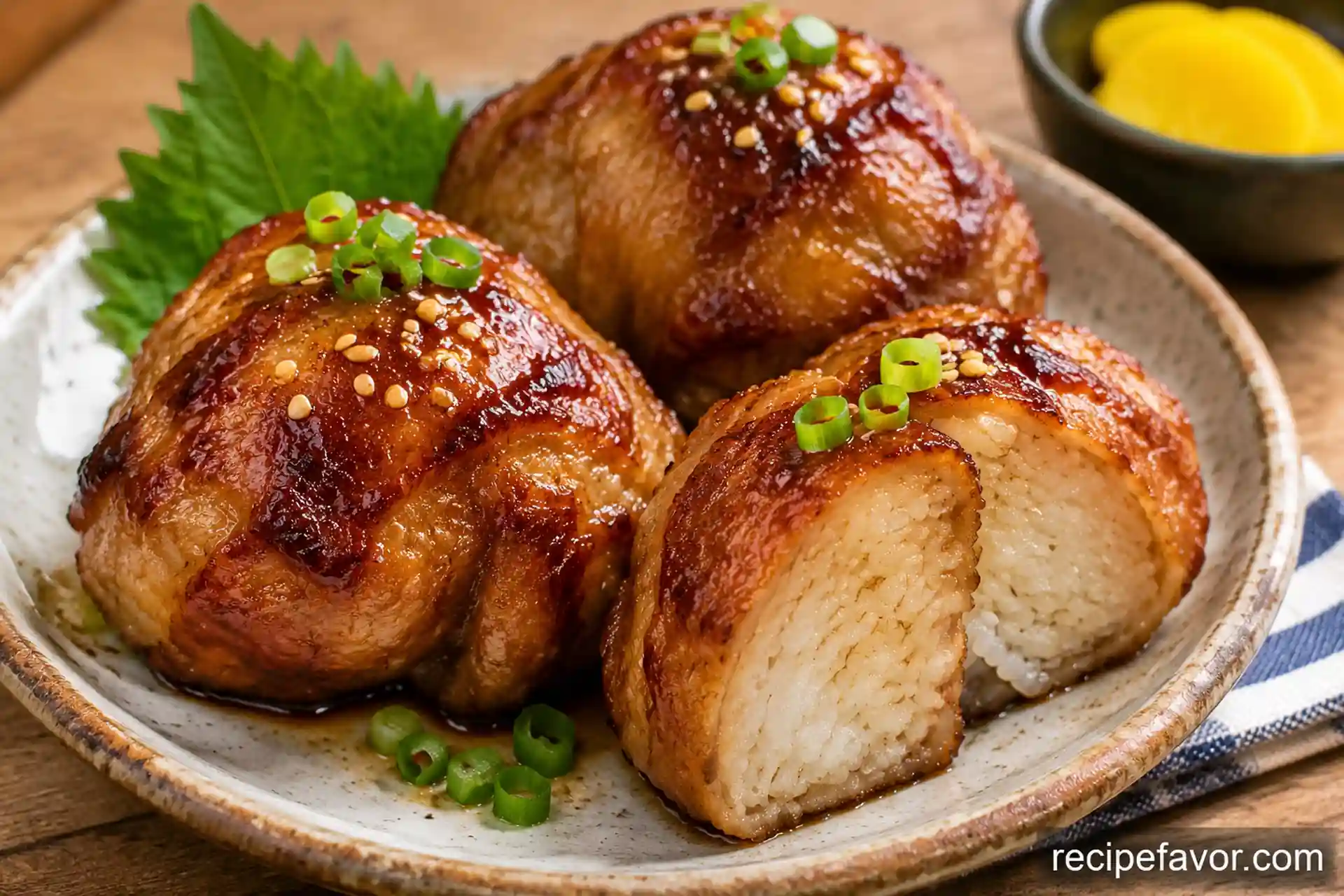
- Brush or spoon the glaze over the balls and cook 1–2 minutes per side until glossy and caramelized — do not let the glaze burn.
- Rest for 2 minutes, then garnish with sesame seeds, green onions, and nori strips if using.
Nikumaki Onigiri Recipe Variations and Fillings
Once you have the basic method down, this nikumaki onigiri recipe is easy to adapt. Swap the pork for thinly sliced beef, try a cheese, umeboshi, or salmon filling inside the rice, or add chili flakes or a little miso to the glaze for extra heat. For a vegetarian version, wrap the rice in seasoned tofu skin or grilled mushrooms instead of meat.
If you love Japanese-style rice dishes, try my chicken tempura sushi roll next — it is crunchy, creamy, and just as fun to make at home. For a lighter plate to serve alongside, a tuna tataki salad with ginger wafu dressing balances the rich, glazed meat beautifully.
Tips to Keep Nikumaki Onigiri Juicy
Use thinly sliced meat and shape firm rice balls so nothing falls apart in the pan. Cook on medium-high heat so the meat browns instead of steaming, brush the glaze on at the end, and let the balls rest for a couple of minutes before serving so the juices settle. Leftover rice works well here, as long as it is still moist and sticky enough to shape.
Serve nikumaki onigiri hot with pickled ginger, miso soup, or a simple salad. A drizzle of Japanese wafu dressing over greens makes a fresh side, and for a bigger spread it sits happily next to smoked mahi or a plate of Haitian fish with rice and plantains.
Nikumaki Onigiri Recipe Storage and Meal Prep
Store leftover nikumaki onigiri in an airtight container in the fridge for up to 2 days. Reheat in a skillet over medium heat so the meat crisps up again — the microwave will soften it. You can also freeze the cooked balls for up to 1 month; thaw overnight in the fridge and reheat in a pan, brushing on a little extra glaze. For meal prep, shape and wrap the balls ahead and grill them just before serving.
Nikumaki Onigiri Recipe Nutrition Facts
Nikumaki onigiri is a satisfying mix of protein from the meat and carbohydrates from the rice, with the glaze adding sweetness and sodium. The exact nutrition depends on whether you use pork belly or leaner beef, how much glaze you brush on, and your portion size, so treat the values in the recipe card as a guide. Pairing the balls with vegetables or salad keeps the meal balanced.
Nikumaki Onigiri Recipe FAQ
Can I use beef instead of pork for nikumaki onigiri?
Yes. Thinly sliced beef, such as shabu-shabu beef, works just as well as pork belly. Wrap it the same way and grill until browned and glossy.
Can I make nikumaki onigiri ahead of time?
Yes. Shape and wrap the rice balls, refrigerate them, and grill just before serving so the meat stays crisp and the glaze stays glossy.
Is nikumaki onigiri gluten-free?
Not as written, because regular soy sauce contains wheat. Use tamari or a certified gluten-free soy sauce to make it gluten-free.
How do I keep the rice from falling apart?
Use short-grain Japanese rice, wet your hands, and press each ball firmly. Wrapping the meat snugly with the seam underneath also holds everything together.
Can I air fry nikumaki onigiri?
Yes. Air fry at 190°C (375°F) for 8–10 minutes, turning once, and brush the glaze on halfway through so it caramelizes without burning.
What can I serve with nikumaki onigiri?
Miso soup, pickled ginger, a green salad, or steamed vegetables all work well. It also makes a great bento-box main or party appetizer.
Can I freeze nikumaki onigiri?
Yes, freeze cooked nikumaki onigiri for up to 1 month. Thaw overnight in the fridge and reheat in a skillet with a little extra glaze.
Is nikumaki onigiri the same as sushi?
No. Sushi is usually vinegared rice with raw fish or other toppings, often rolled in seaweed. Nikumaki onigiri is a grilled, meat-wrapped rice ball with a savory soy glaze.
Conclusion
This nikumaki onigiri recipe proves that a little technique goes a long way: sticky rice, thinly sliced meat, and a glossy soy glaze turn into something far more special than the sum of its parts. Make a batch this week, and let me know in the comments how yours turned out. For more easy, family-friendly recipes, explore the rest of Recipe Favor.
Nikumaki Onigiri Recipe
Ingredients
Equipment
Method
- Cook the rice, season with salt and rice vinegar, and let it cool slightly until you can handle it.
- Whisk the soy sauce, mirin, sake, sugar, ginger, and garlic together to make the glaze.
- Wet your hands, divide the rice into 6 portions, and shape each into a firm oval or triangular ball.
- Wrap each rice ball with 2 slices of pork, overlapping slightly, with the seam on the bottom.
- Heat the oil in a nonstick pan over medium-high heat and sear the balls seam-side down for 2-3 minutes.
- Turn and cook until the meat is browned and crisp on all sides.
- Brush or spoon the glaze over the balls and cook 1-2 minutes per side until glossy and caramelized. Do not let the glaze burn.
- Rest for 2 minutes, then garnish with sesame seeds, green onions, and nori strips if using.

Tuaseen is the creator of Recipe Favor, sharing easy, delicious, and homemade recipes for everyday cooking. Passionate about simple meals and flavorful dishes, Tuaseen focuses on creating step-by-step recipes that help beginners and food lovers cook with confidence, enjoy new flavors, and make every meal special at home.


6 thoughts on “Nikumaki Onigiri Recipe: Easy Japanese Meat-Wrapped Rice”