If you have ever ordered a crisp green salad at a high-end Japanese restaurant or steakhouse, you have likely experienced the addictive, savory, and slightly tangy bite of Wafu Dressing.
While western dressings rely heavily on dairy (ranch) or egg yolks (Caesar) to bind their ingredients, traditional Japanese cuisine takes a different approach. Wafu literally translates to “Japanese-style.” A Wafu dressing is a delicate vinaigrette built on a foundation of soy sauce, rice vinegar, and vegetable oil, relying on the structural science of grated aromatics to hold it together.
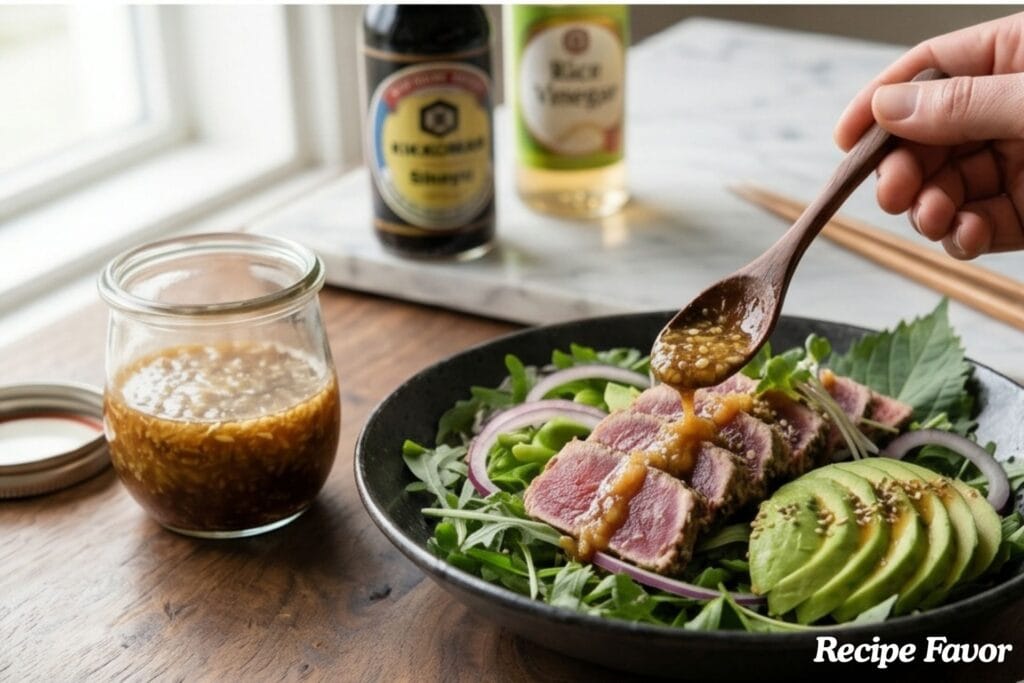
This guide breaks down the “Golden Ratio” of Wafu, the food science of stabilizing a temporary emulsion without mayonnaise or mustard, and how to utilize it to elevate dishes like Tuna Tataki Salad or seared Wagyu beef.
The Semantic Difference: Wafu vs. Ponzu vs. Goma
To establish true culinary authority, we must differentiate Wafu from other Japanese sauces that are frequently confused in western kitchens:
- Ponzu: A non-emulsified, fat-free sauce made of citrus juice, soy sauce, and dashi. Used primarily as a dipping sauce.
- Goma (Sesame) Dressing: A thick, creamy, opaque dressing made by blending large quantities of toasted sesame seeds with mayonnaise or tahini.
- Wafu: A translucent, oil-and-vinegar-based emulsion flavored with soy sauce, sweetened slightly with sugar or mirin, and stabilized by grated onion or ginger.
The Food Science: Building a Stable Emulsion
Oil and vinegar are natural enemies; they repel each other. In western vinaigrettes, Dijon mustard acts as the emulsifier (a surfactant that coats the microscopic oil droplets so they remain suspended in the vinegar).
Because traditional Japanese cooking does not utilize Western mustard, Wafu dressing relies on mechanical friction and cellular pectin to create a temporary emulsion.
- The Stabilizers: Finely grated onions, ginger, or daikon radish act as physical barriers. The microscopic cellular walls and natural pectins released during grating trap the oil droplets in the liquid matrix, slowing down the separation process.
- The Lipid Ratio: A classic Wafu requires a neutral oil (like grapeseed or canola) for volume, spiked with just a small amount of toasted sesame oil for aroma. Using 100% sesame oil will overpower the delicate balance and make the dressing bitterly heavy.
Classic Ginger-Onion Wafu Dressing
Recipe Summary
A bright, umami-rich, and perfectly balanced authentic Japanese Wafu Dressing. Made in under 5 minutes, this vinaigrette combines soy sauce, unseasoned rice vinegar, and toasted sesame oil, stabilized by the fresh bite of finely grated ginger and onion. It is the definitive dressing for a restaurant-quality Tuna Tataki Salad, fresh greens, or even as a finishing sauce for grilled steaks.
Prep Time: 5 mins | Cook Time: 0 mins | Yield: Approx. 1 Cup | Category: Dressing/Condiment | Cuisine: Japanese
Equipment Needed
- Microplane / Fine Grater: Essential for turning the onion and ginger into a fine paste. Chopping with a knife will not release the pectins needed for the emulsion.
- Glass Mason Jar with Tight Lid: The best tool for aggressively shaking and emulsifying the dressing.
- Measuring Cups & Spoons: For achieving the exact “Golden Ratio.”
Ingredients
- 1/4 cup Soy sauce (Shoyu)
- 1/4 cup Rice vinegar (unseasoned)
- 1/3 cup Neutral oil (Grapeseed, Safflower, or Canola)
- 2 tbsp Toasted sesame oil
- 2 tbsp Granulated sugar (or honey/mirin for a richer finish)
- 1 tbsp Fresh yellow onion, grated into a paste
- 1 tbsp Fresh ginger, peeled and grated into a paste
- 1 tsp White sesame seeds, lightly toasted
- 1/4 tsp Coarse black pepper
Step-by-Step Instructions
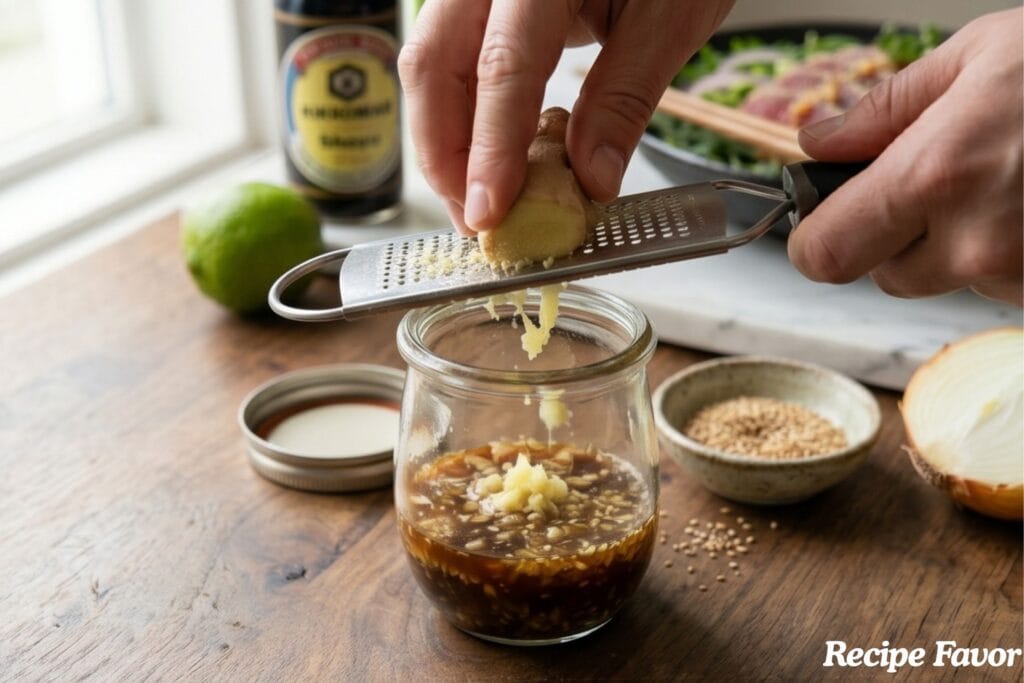
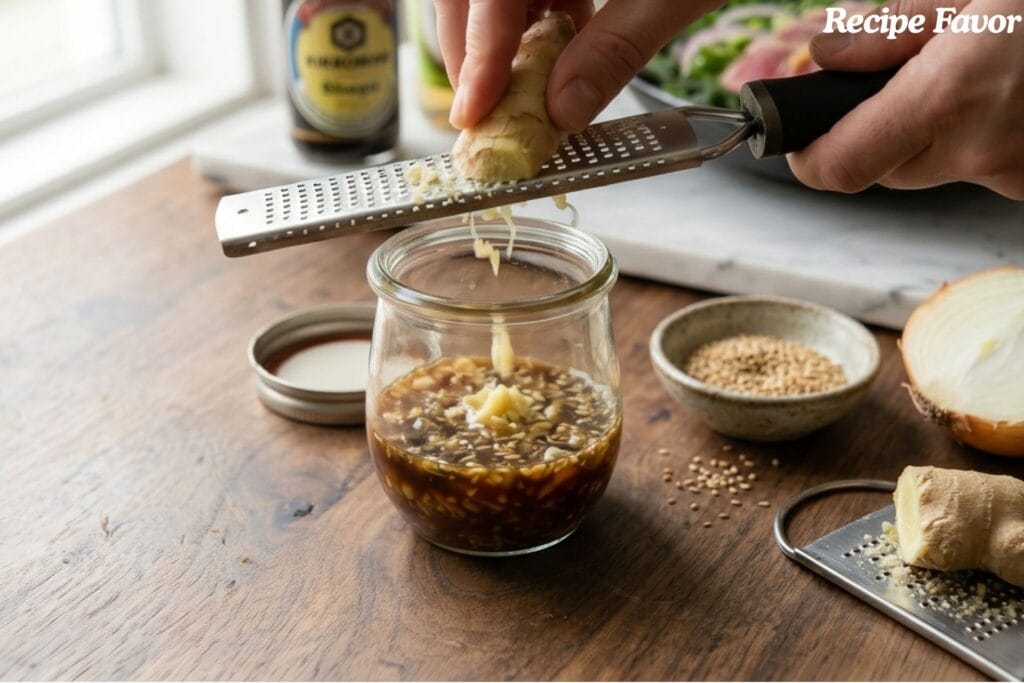
- Prepare the Aromatics: Using a microplane or fine grater, grate the onion and ginger until you have a wet paste. Do not discard the juices; add the entire paste and its liquid directly into your glass mason jar.
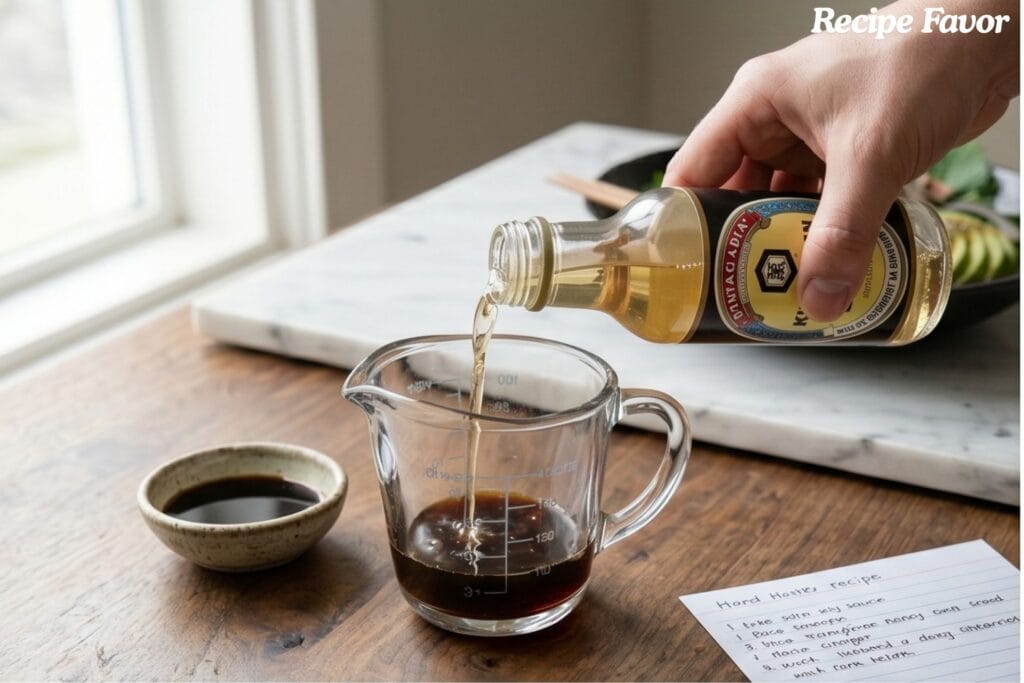
- Dissolve the Sugar: Add the soy sauce, rice vinegar, and sugar to the jar. Stir or shake briefly until the sugar crystals are completely dissolved into the liquids.
- The Emulsion: Pour in the neutral oil and the toasted sesame oil. Add the sesame seeds and black pepper.
- Agitate: Seal the lid tightly on the mason jar. Shake aggressively for 15 to 20 seconds until the dressing becomes slightly cloudy, thickened, and fully combined.
- Rest & Serve: For the best flavor, let the dressing sit for 10 minutes before serving to allow the harsh bite of the raw onion to mellow into the vinegar.
Japanese Wafu Dressing Recipe (Ginger & Sesame)
Nutrition Facts (Estimated Per 2 Tbsp Serving)
- Calories: 110 kcal
- Protein: 1g
- Carbohydrates: 4g
- Fat: 11g (Heart-healthy unsaturated fats)
- Sodium: 450mg
- Sugar: 3g
Chef’s Notes & Pro-Tips
- The Shake Rule: Because this is a temporary emulsion without heavy chemical binders, the oil and vinegar will naturally separate over time. You must shake the jar vigorously immediately before every use.
- Neutral Oil is Mandatory: Never use Extra Virgin Olive Oil for Wafu dressing. Olive oil has a strong, peppery flavor that will clash terribly with the soy sauce and sesame profiles.
- Onion Subsitutes: If yellow onion is too sharp for your palate, substitute it with grated shallot, or use the white parts of scallions (green onions) for a milder bite.
- Storage & Shelf Life: Store the dressing in a sealed glass jar in the refrigerator. Because of the fresh aromatics (onion and ginger), it is best consumed within 7 to 10 days. The oil may solidify slightly in the fridge; simply let it sit at room temperature for 5 minutes before shaking.
Other Related Recipes:
Best Healthy Tuna Salad Recipe
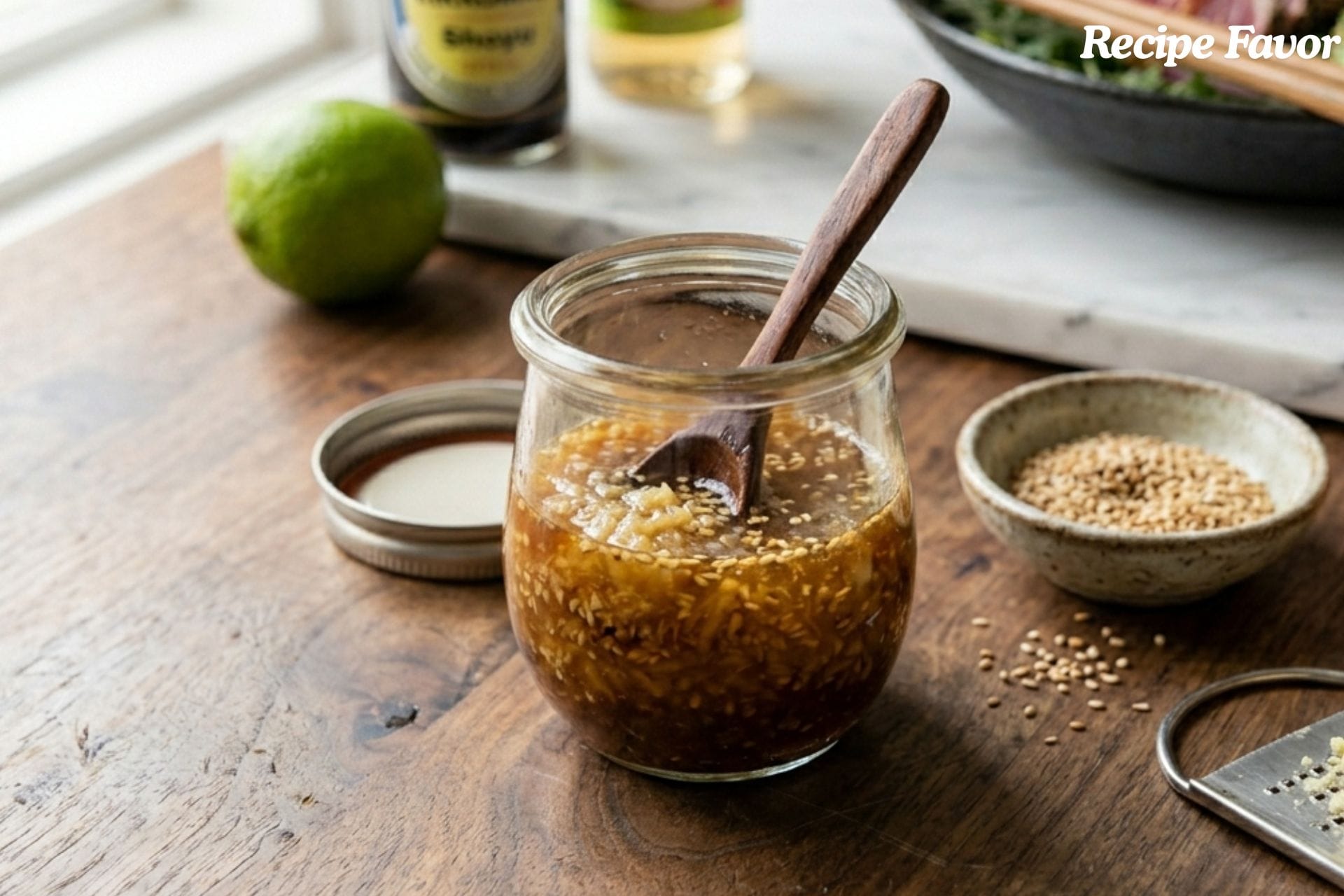

Ginger-Onion Wafu Dressing
Ingredients
Equipment
Method
- Prepare the Aromatics: Using a microplane or fine grater, grate the onion and ginger until you have a wet paste. Do not discard the juices; add the entire paste and its liquid directly into your glass mason jar.
- Dissolve the Sugar: Add the soy sauce, rice vinegar, and sugar to the jar. Stir or shake briefly until the sugar crystals are completely dissolved into the liquids.
- The Emulsion: Pour in the neutral oil and the toasted sesame oil. Add the sesame seeds and black pepper.
- Agitate: Seal the lid tightly on the mason jar. Shake aggressively for 15 to 20 seconds until the dressing becomes slightly cloudy, thickened, and fully combined.
- Rest & Serve: For the best flavor, let the dressing sit for 10 minutes before serving to allow the harsh bite of the raw onion to mellow into the vinegar.
Notes
Nutrition Facts (Estimated Per 2 Tbsp Serving)
Calories: 110 kcal Protein: 1g Carbohydrates: 4g Fat: 11g (Heart-healthy unsaturated fats) Sodium: 450mg Sugar: 3gFrequently Asked Questions (FAQ)
What is Japanese Wafu dressing made of?
At its core, Wafu dressing is a blend of soy sauce, rice vinegar, vegetable oil, and sugar, heavily flavored with grated aromatics like onion, ginger, or garlic.
Does Wafu dressing need to be refrigerated?
Yes. Because authentic Wafu dressing contains raw, unpasteurized ingredients like freshly grated ginger and onion, it must be stored in the refrigerator to prevent bacterial growth. It will last up to 10 days.
Is Wafu dressing gluten-free?
Standard Wafu dressing is not gluten-free because traditional Japanese soy sauce (shoyu) contains roasted wheat. To make it 100% gluten-free, substitute the soy sauce with an equal amount of high-quality Tamari.
Can I use Wafu dressing as a marinade?
Absolutely. The high acidity from the rice vinegar and the enzymatic properties of the grated ginger make Wafu an excellent, tenderizing marinade for flank steak, chicken thighs, or firm tofu before grilling.
Tuaseen is the creator of Recipe Favor, sharing easy, delicious, and homemade recipes for everyday cooking. Passionate about simple meals and flavorful dishes, Tuaseen focuses on creating step-by-step recipes that help beginners and food lovers cook with confidence, enjoy new flavors, and make every meal special at home.




Hello! I’ve been reading your website for a long time now and finally got the courage to go ahead and give you a shout out from Humble Texas! Just wanted to mention keep up the great work!