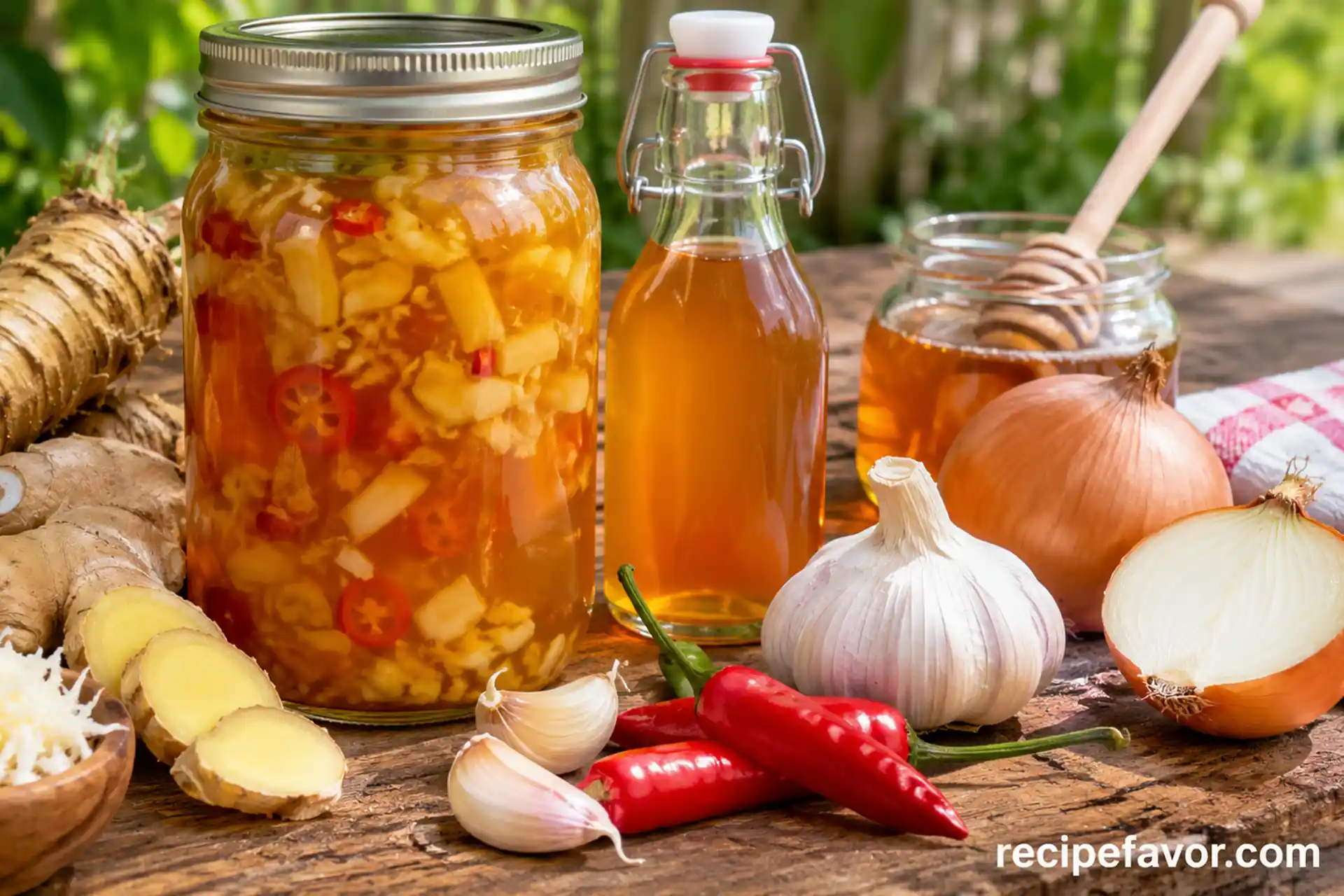
If you’re looking for a traditional fire cider recipe, this homemade version combines apple cider vinegar, horseradish, ginger, garlic, onion, hot peppers, and honey into a bold herbal infusion. I focus on the classic ingredient combination, practical preparation, and a balanced sweet-and-spicy flavor.
I also want to separate herbal tradition from scientific evidence. Fire cider has a long history in American herbalism, but claims about cold prevention and immunity aren’t clinically established. With straightforward ingredients, a clean mason jar, and a few weeks of patience, you can prepare this flavorful vinegar at home.
If you enjoy homemade drinks, you will find more ideas on Recipe Favor.
What is Fire Cider?
Fire cider is a traditional herbal vinegar made by steeping pungent roots, alliums, and hot peppers in raw apple cider vinegar. Herbalist Rosemary Gladstar popularized the recipe in the 1970s, and Fire cider has since become a well-known folk preparation in American herbalism. It is a culinary tonic, not a medicine, and its flavor is sharp, spicy, and warming.
The process is simple: chop the roots and vegetables, pack them into a jar, cover them completely with vinegar, and let the mixture steep for four to six weeks. The vinegar draws out the flavor and heat from the ingredients. After straining, honey is stirred in to soften the sharpness and balance the spice.
Fire Cider Recipe Ingredients
This fire cider recipe uses the classic combination of ingredients, in amounts that fill a one-quart jar. Use fresh, firm roots and vegetables, and raw, unfiltered apple cider vinegar with the mother if you can find it. The ginger and horseradish bring the heat, while the onion, garlic, and peppers add depth and the honey rounds everything out.
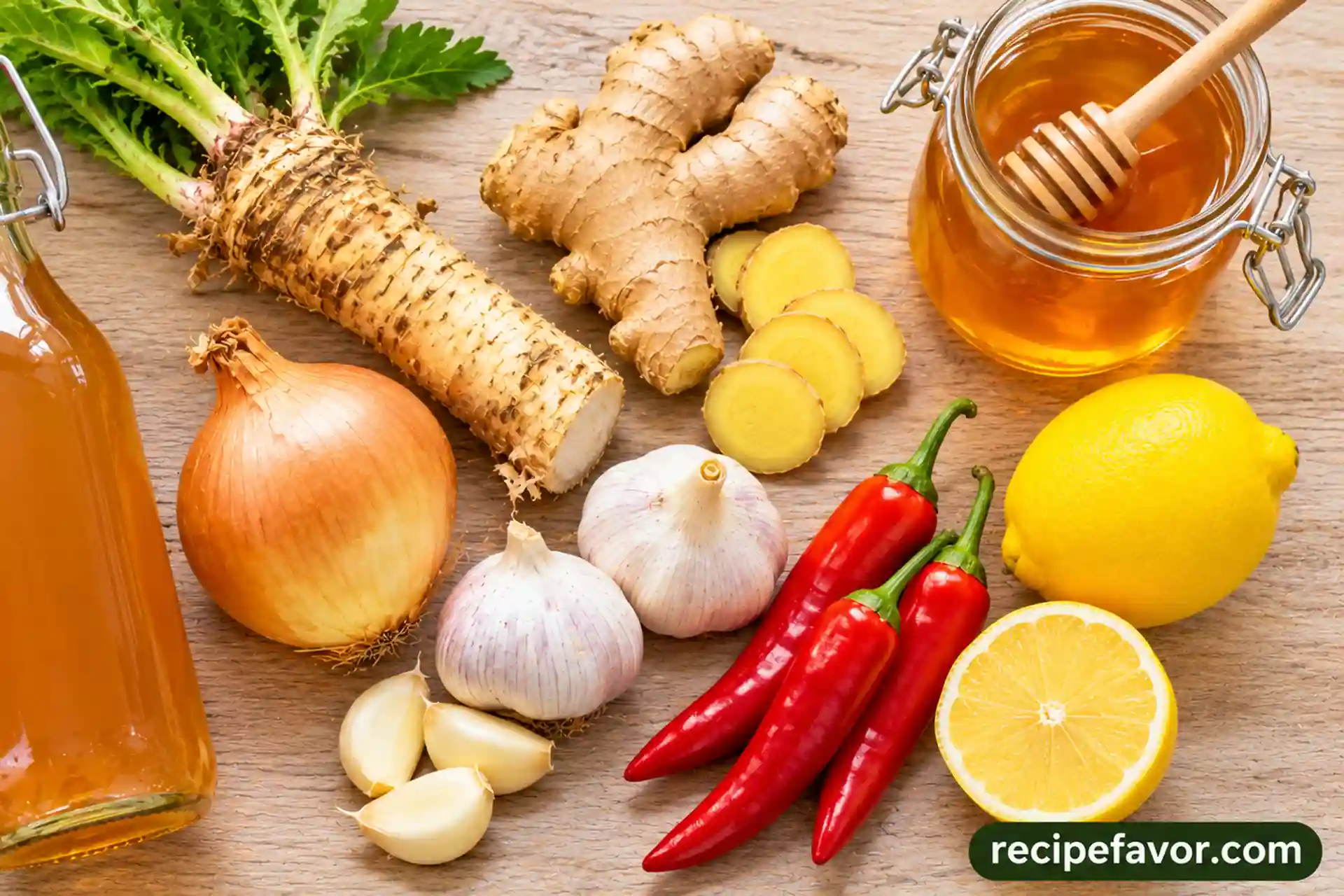
| Ingredient | Why It’s Used |
|---|---|
| Apple cider vinegar | Base liquid for infusion; provides acidity and tangy flavor |
| Horseradish | Adds sharp heat and a pungent, peppery bite |
| Ginger | Provides warm spice and a fresh, zesty note |
| Garlic | Adds savory depth and a mild pungent flavor |
| Onion | Adds sweetness and a savory, earthy base |
| Hot peppers | Deliver fiery heat and color |
| Honey | Balances acidity and heat with gentle sweetness |
| Lemon (optional) | Adds brightness and a fresh citrus note |
- 2 cups raw apple cider vinegar
- 1/2 cup grated horseradish
- 1/2 cup chopped fresh ginger
- 1/4 cup chopped garlic
- 1/2 cup chopped onion
- 1/4 cup chopped hot peppers
- 1/4 cup honey
- 1 lemon, sliced (optional)
How to Make This Fire Cider Recipe
Making this fire cider recipe takes about 15 minutes of hands-on work, then four weeks of waiting while the vinegar does the rest. Wash and dry a one-quart glass mason jar and its lid first. If you use a metal lid, place a piece of parchment paper between the lid and the jar so the vinegar does not touch the metal.
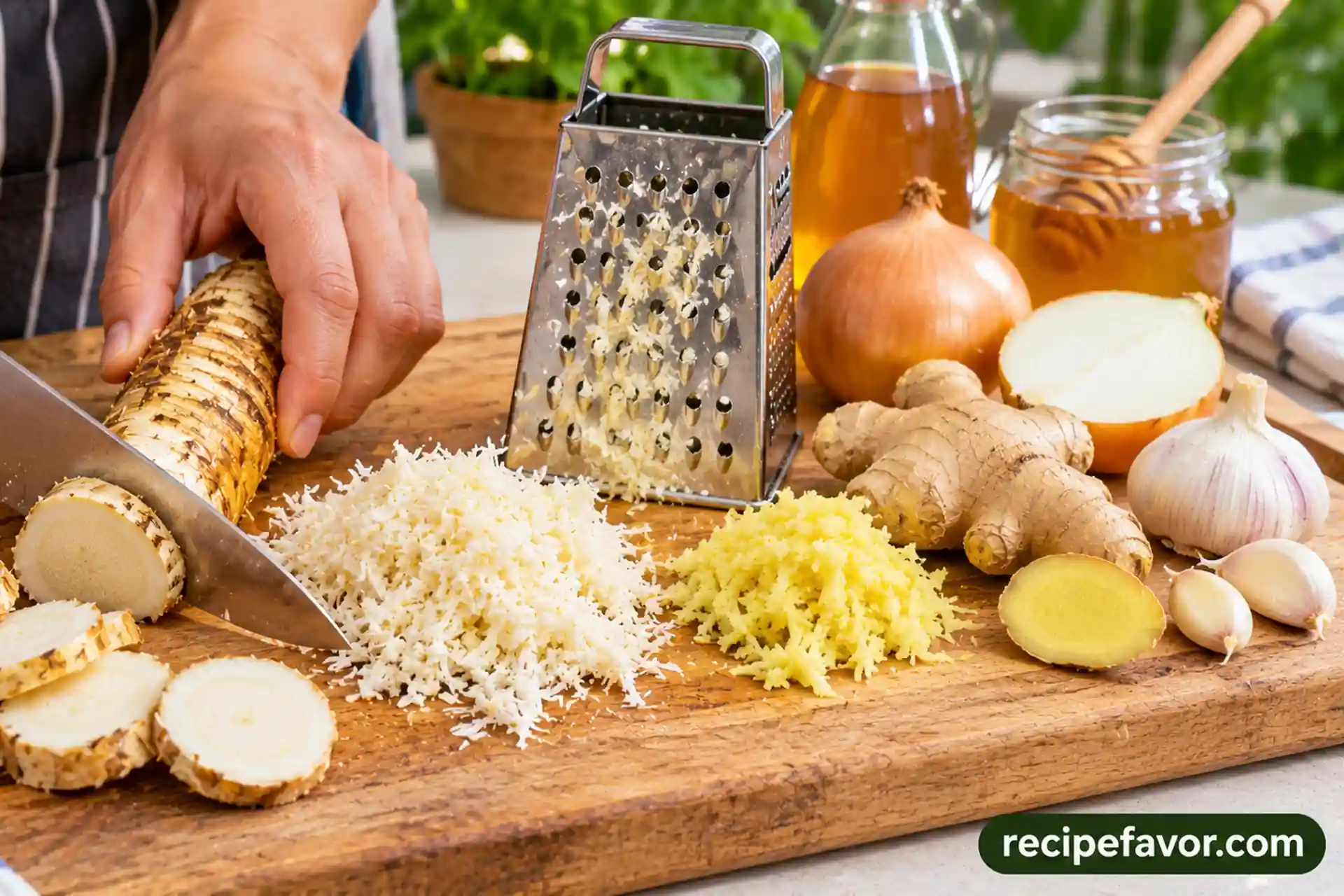
- Prep the ingredients: Peel and grate the horseradish, peel and chop the ginger, and chop the garlic, onion, and hot peppers.
- Combine in the jar: Add the horseradish, ginger, garlic, onion, hot peppers, and lemon slices to the clean jar.
- Pour the vinegar: Pour the apple cider vinegar over the ingredients until everything is completely covered.
- Seal the jar: Close the lid tightly. If using a metal lid, place parchment paper underneath it first.
- Steep for 4 weeks: Store the jar in a cool, dark place and shake it gently once a day.
- Strain the liquid: After four weeks, strain the mixture through a fine-mesh strainer or cheesecloth, pressing the solids to extract all the liquid.
- Sweeten with honey: Stir the honey into the strained liquid until it dissolves completely.
- Store and serve: Pour the finished fire cider into a clean bottle or jar and refrigerate. Take one tablespoon, or dilute it in warm water or tea.
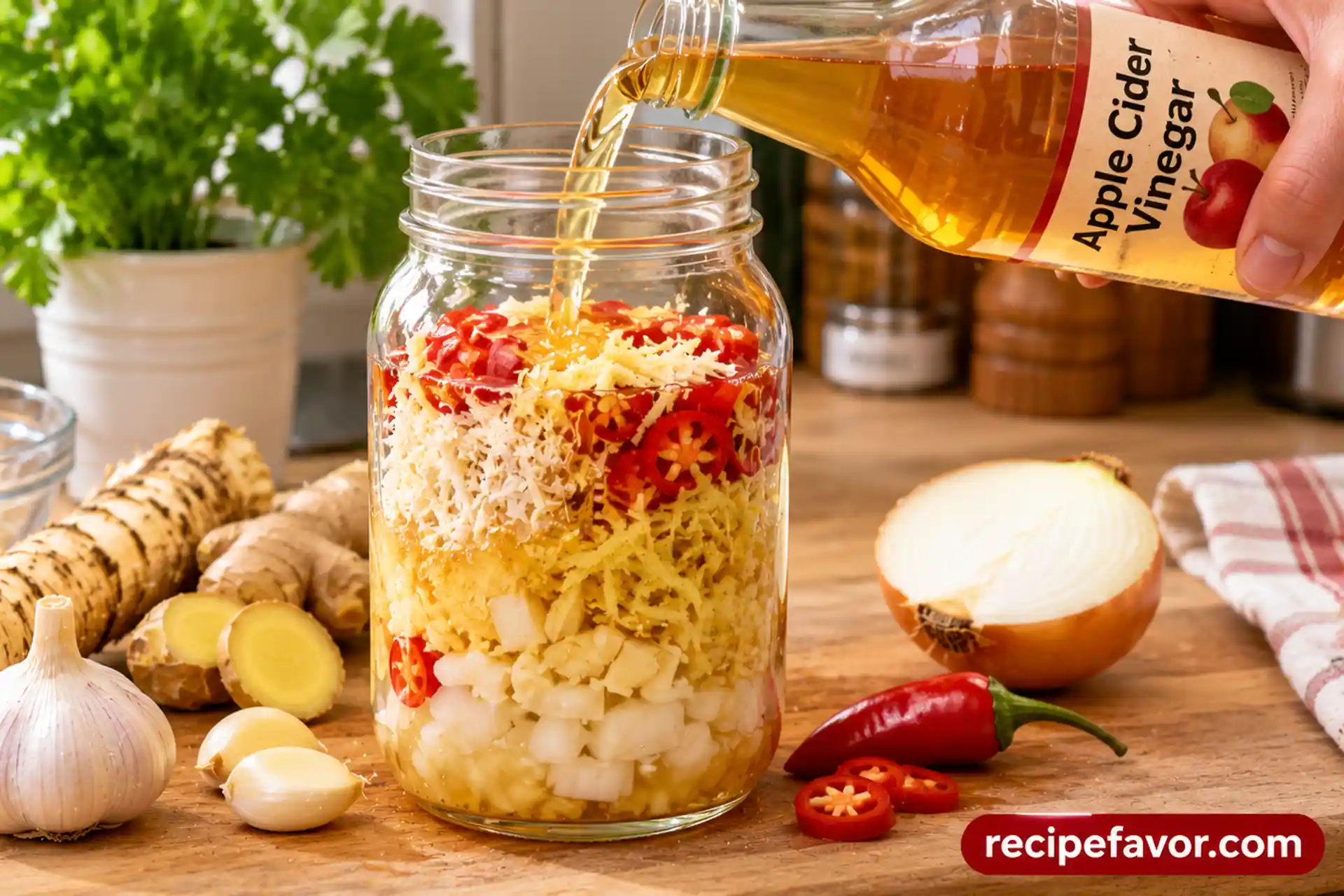
Shake the jar gently each day during the steeping period so the ingredients stay covered and the flavors infuse evenly. If any pieces float above the vinegar, press them down with a clean weight or a small piece of parchment, because exposed pieces can spoil.
What Fire Cider Can and Cannot Do
Fire cider is often talked about online as if it were a proven remedy. That is where a careful reader should pause. The recipe is a long-standing folk preparation, and its ingredients are ordinary foods, but the strong claims made for it have not been tested in clinical trials. This fire cider recipe is best enjoyed as a flavorful, traditional vinegar tonic, not as a treatment for any illness.
| Claimed Benefit | Evidence Level | What Research Shows |
|---|---|---|
| Prevents colds | No clinical evidence | No controlled studies show fire cider prevents colds |
| Boosts immunity | No clinical evidence | No trials measure an immune effect from fire cider |
| Supports digestion | Anecdotal only | Some people report it helps digestion, but studies are limited |
| Reduces inflammation | Preclinical only | Some ingredients show anti-inflammatory effects in lab studies, not in fire cider itself |
Medical disclaimer: This article is for general information only and is not medical advice. Fire cider is a food preparation, not a medicine, and it is not a treatment for colds or any other illness. Talk to a healthcare professional before using it if you are pregnant, breastfeeding, taking medication, or managing a medical condition, and stop using it if it causes discomfort.
Fire Cider Recipe Tips and Storage
A few small choices make a real difference to the finished flavor of this fire cider recipe. Fresh ingredients give a brighter, hotter result than dried ones, and the honey can be adjusted after straining if you prefer it sweeter or sharper. Taste a small spoonful before bottling, then add honey one tablespoon at a time until it suits you.
- Use a glass jar, not plastic, so the vinegar does not pick up off-flavors.
- Wear gloves when handling horseradish and hot peppers to protect your skin and eyes.
- Keep the ingredients fully covered with vinegar during the whole steeping period.
- Store the jar in a cool, dark place and shake it gently once a day.
- Adjust the honey after straining, one tablespoon at a time, to taste.
- Label the bottle with the date so you know when it was made.
| Storage Stage | Where to Store | How Long |
|---|---|---|
| Steeping | Cool, dark place | 4 weeks |
| After straining | Refrigerator | Up to 6 months |
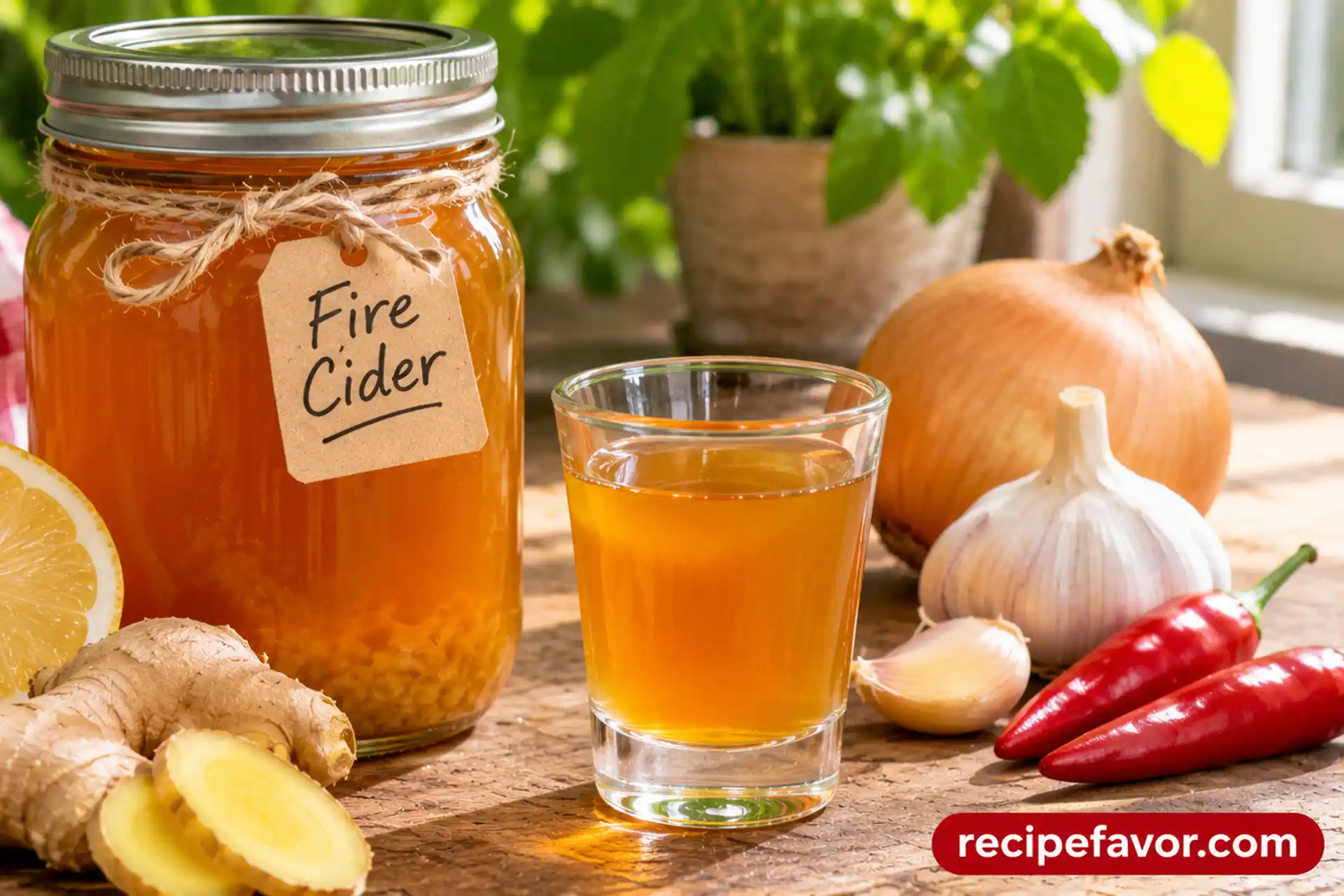
To serve, take one tablespoon of the strained fire cider, or dilute it in warm water or tea. It also works as a salad dressing, a marinade, or a splash in a glass of lemon ginger tea. Keep the finished bottle refrigerated and use it within six months.
Fire Cider Recipe Nutrition
The nutrition values below are estimates for one tablespoon of this fire cider recipe. The exact values depend on how much honey you add and how long the mixture steeps, so treat them as a guide rather than an exact measure.
| Nutrient | Amount per 1 tablespoon |
|---|---|
| Calories | 28 kcal |
| Carbohydrates | 5 g |
| Sugar | 4 g |
| Sodium | 125 mg |
| Fiber | 1 g |
Fire Cider Recipe FAQs
What is fire cider good for? Fire cider is a traditional herbal vinegar tonic enjoyed for its bold, spicy flavor. There is no clinical evidence that it treats or prevents illness, so it is best enjoyed as a food and flavoring.
How long does fire cider last? After straining and adding honey, store fire cider in the refrigerator, where it keeps for up to six months. Keep the bottle sealed and label it with the date it was made.
Can I drink fire cider every day? Many people take one tablespoon a day, diluted in water or tea, but there is no established daily dose. If you have acid reflux, stomach sensitivity, or a medical condition, ask a healthcare professional first.
Do I have to use raw apple cider vinegar? Raw, unfiltered apple cider vinegar with the mother is the traditional choice, but any apple cider vinegar will work for this fire cider recipe. The flavor will be slightly different with a filtered vinegar.
Can I make fire cider without honey? Yes, you can leave the honey out if you prefer a sharper, more acidic tonic, or replace it with another sweetener. Add sweetener only after straining, a little at a time, until it tastes right.
How do I use fire cider? Take one tablespoon straight, dilute it in warm water or tea, or use it as a salad dressing, marinade, or seasoning. Start with a small amount to see how the heat suits you.
Conclusion
This fire cider recipe is a straightforward way to make a traditional herbal vinegar at home: chop the roots and vegetables, cover them with apple cider vinegar, wait four weeks, then strain and sweeten. The result is a bold, spicy tonic that works just as well as a dressing or marinade as it does by the spoonful.
Enjoy it for its flavor and tradition, and keep the evidence in view. Fire cider has a long folk history, but it is not a proven remedy. If you like this kind of homemade drink, our guide on how to make herbal tea is a good next read, and our guide to the best tea for weight loss is another place to start. Make a batch, label the bottle, and let the jar do the slow work.
Fire Cider Recipe
Ingredients
Method
- Peel and grate the horseradish, peel and chop the ginger, and chop the garlic, onion, and hot peppers.
- Add the horseradish, ginger, garlic, onion, hot peppers, and lemon slices to the clean jar.
- Pour the apple cider vinegar over the ingredients until everything is completely covered.
- Close the lid tightly. If using a metal lid, place parchment paper underneath it first.
- Store the jar in a cool, dark place and shake it gently once a day for 4 weeks.
- After four weeks, strain the mixture through a fine-mesh strainer or cheesecloth, pressing the solids to extract all the liquid.
- Stir the honey into the strained liquid until it dissolves completely.
- Pour the finished fire cider into a clean bottle or jar and refrigerate. Take one tablespoon, or dilute it in warm water or tea.

Tuaseen is the creator of Recipe Favor, sharing easy, delicious, and homemade recipes for everyday cooking. Passionate about simple meals and flavorful dishes, Tuaseen focuses on creating step-by-step recipes that help beginners and food lovers cook with confidence, enjoy new flavors, and make every meal special at home.


5 thoughts on “Fire Cider Recipe: Make This Spicy Herbal Vinegar at Home”