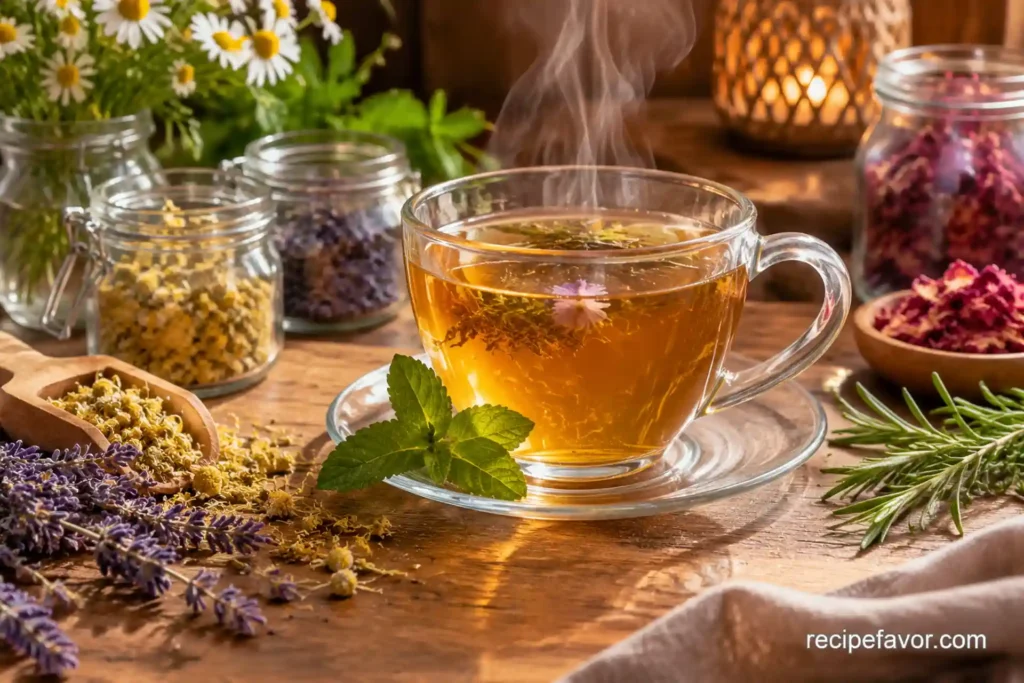
I make herbal tea almost every evening, and learning how to make herbal tea the right way changed how my cup tastes — no more weak, bitter brews. With fresh or dried herbs, hot water, and a few minutes of steeping, I can make a warm, fragrant cup at home, and I will walk you through the exact steps I use. For my ranked picks, see our guide to the best herbal tea.
In this guide, I will show you the right amount of herbs, the best water temperature, and how long to steep chamomile, peppermint, ginger, and other blends. I will also share the easy mistakes to avoid, so your first cup turns out smooth and full of flavor.
What is Herbal Tea?
Herbal tea is a warm drink made by steeping herbs, flowers, roots, or fruits in hot water. It is also called a tisane, and it is not made from the Camellia sinensis plant, so it is different from true black, green, and oolong tea. Most herbal teas are naturally caffeine-free, which is one reason I reach for them in the evening. If you want the details, read does herbal tea have caffeine? before you brew.
Chamomile, peppermint, ginger, rooibos, and hibiscus are some of the most popular choices, and each one brings its own flavor and color to the cup. I like chamomile when I want something soft and floral, peppermint when I want something fresh, and ginger when I want warmth. My guide to chamomile tea is a good place to start if you are new to herbal blends, and you can also explore herbal tea benefits to see what each herb is known for.
Ingredients for How to Make Herbal Tea
You only need a few things to make herbal tea at home: good water, your chosen herbs, and a teapot or infuser. I use fresh ginger and mint for the recipe below, but dried herbs work just as well — use about 1 to 2 teaspoons of dried herbs per cup, or about 1 tablespoon of fresh herbs per cup.
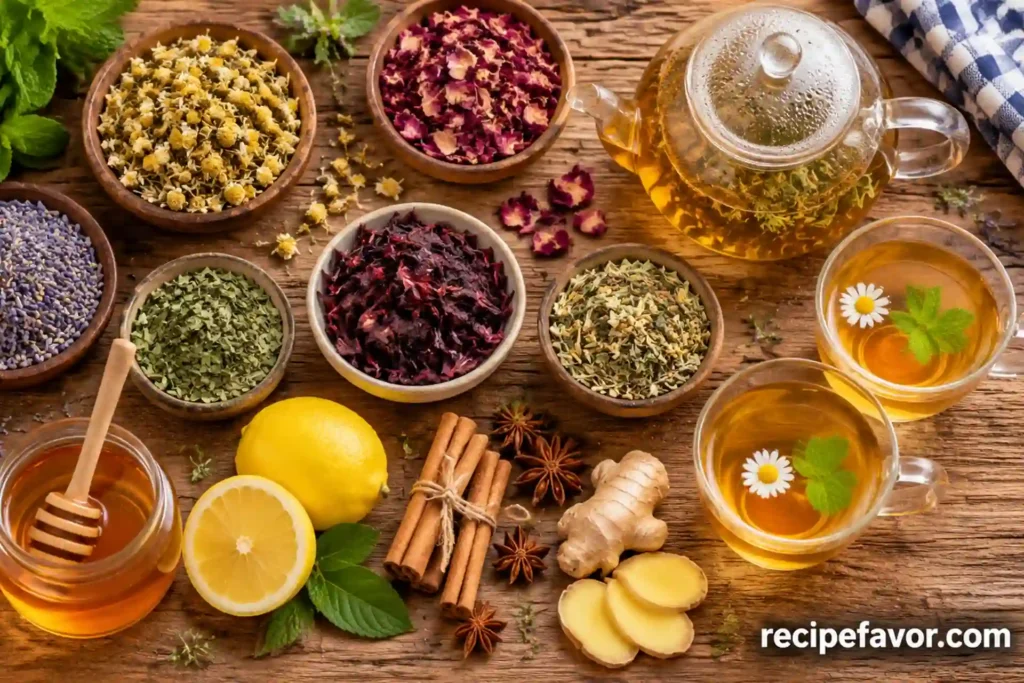
- 2 cups water
- 1-inch piece fresh ginger, sliced
- 5–6 fresh mint leaves
- 1 teaspoon lemon juice
- 1 teaspoon honey (optional)
- Lemon peel (optional)
| Ingredient | Why It Matters |
|---|---|
| Fresh ginger | Adds warm, spicy flavor and helps build a strong base for the tea |
| Mint leaves | Brings a cool, fresh taste that balances the heat of ginger |
| Lemon juice | Adds brightness and a light citrus note to the finished cup |
| Honey | Sweetens gently without overpowering the herbs |
| Water | Carries the flavor — filtered water gives the cleanest taste |
| Cinnamon | Optional warm spice for a deeper, cozier flavor |
How to Make Herbal Tea
Once you know the basic method, you can make almost any herbal tea the same way. The key is the right amount of herbs, water that is hot enough, and enough steeping time for the flavor to come out. Here is the step-by-step method I use every time.
- Choose your herbs. Pick fresh or dried herbs such as chamomile, peppermint, ginger, or a blend you enjoy.
- Boil fresh water. Bring 2 cups of filtered water to a boil in a kettle or small saucepan.
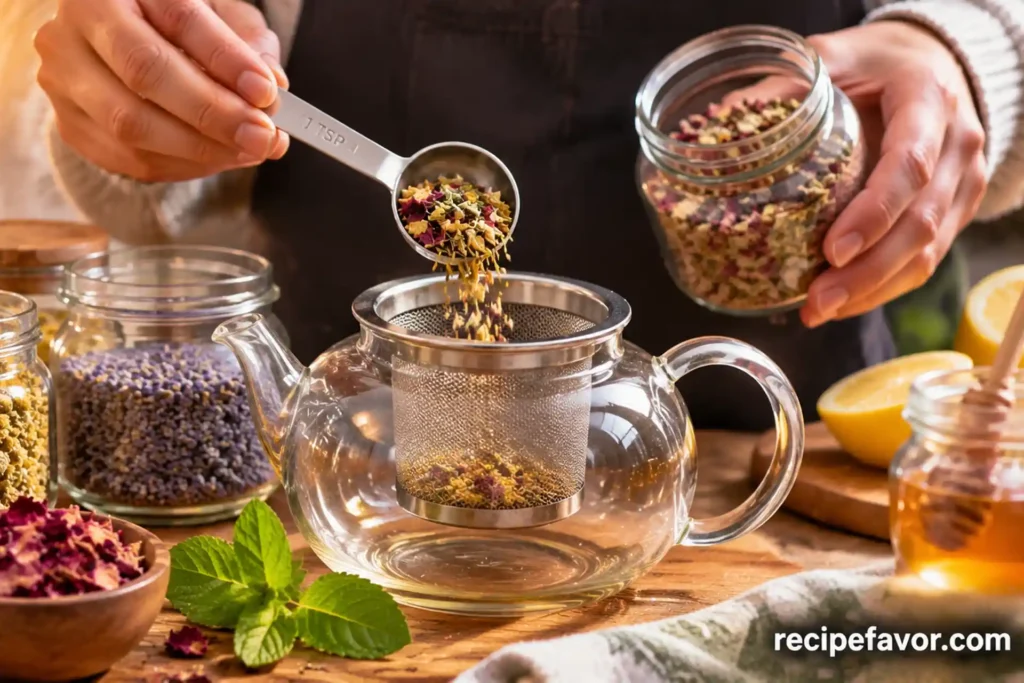
- Measure the herbs. Add 1 to 2 teaspoons of dried herbs, or about 1 tablespoon of fresh herbs, per cup to a teapot or infuser.
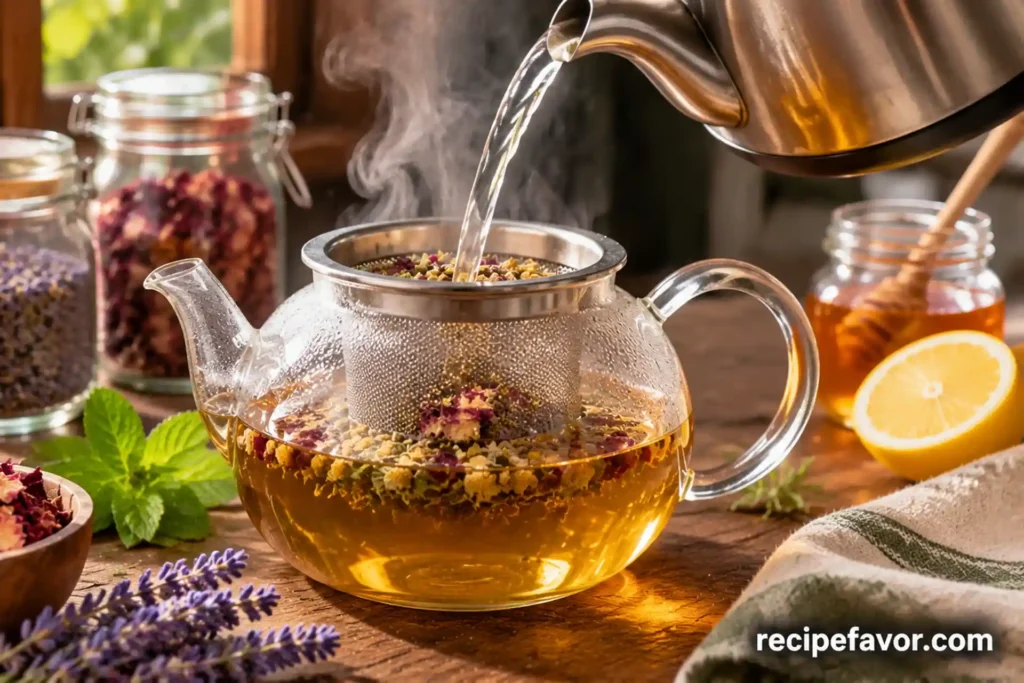
- Pour and steep. Pour the hot water over the herbs, cover the pot, and steep for 5 to 7 minutes. For fresh ginger, simmer it in the water for 8 to 10 minutes first.
- Strain the tea. Remove the infuser or strain the tea into your cup so no leaves are left behind.
- Add lemon and honey. Stir in lemon juice and honey to taste, if you like.
- Serve and enjoy. Serve hot right away, while the tea is fragrant and warm.
If you love ginger, try my lemon ginger tea next — it uses the same simmering method and is one of my favorite warming cups. Adjust the steeping time to taste: a longer steep gives a stronger cup, while a shorter steep stays lighter and more delicate.
Once you know the basics, try this butterfly pea flower tea recipe — the blue tea turns purple when you add lemon.
For a cold iced version, try my homemade loaded teas.
Tips and Storage for How to Make Herbal Tea
A few small habits make a big difference. Always cover the teapot while the tea steeps, so the fragrant oils stay in the cup instead of escaping with the steam. Taste before you sweeten — many herbal blends are lovely on their own — and use fresh, good-quality herbs, because old dried herbs lose their flavor. If your tea tastes weak, add more herbs rather than steeping it for much longer, which can turn it bitter. Learning how to make herbal tea at home is easy once you know the basics.
Store dried herbs in an airtight jar in a cool, dark place, where they keep their flavor for about 6 to 12 months. Keep brewed tea in a covered container in the refrigerator and drink it within 2 to 3 days. I like to reheat it gently rather than boiling it again, so the flavor stays smooth.
Is Herbal Tea Good for You?
Herbal tea is a naturally caffeine-free, hydrating drink, and many people enjoy it as a calm alternative to coffee or black tea. Chamomile and peppermint have long been used in home routines for comfort and relaxation, but herbal tea is not a medicine, and no single cup can guarantee a health result. If you are comparing it with true tea, my guide to herbal tea vs green tea explains how they differ in caffeine, flavor, and brewing.
I keep my own cups simple: mostly unsweetened, or with just a little honey. That way the herbs stay the star of the drink, and the tea fits easily into an everyday routine, morning or evening.
Nutrition
The values below are approximate for one cup of the ginger-mint herbal tea in this recipe, made with half a teaspoon of honey per cup. Without honey, the tea has almost no calories.
| Nutrient | Amount per Cup |
|---|---|
| Calories | 10 |
| Total Carbohydrate | 3 g |
| Sugars | 3 g |
| Fat | 0 g |
| Sodium | 0 mg |
| Protein | 0 g |
Frequently Asked Questions About How to Make Herbal Tea
Can I make herbal tea with fresh herbs?
Yes. Use about 1 tablespoon of fresh herbs per cup, bruise or tear the leaves gently first, and steep for 5 to 7 minutes. Fresh mint, lemon balm, and ginger all work well this way.
How long should I steep herbal tea?
Steep most herbal teas for 5 to 7 minutes with the pot covered. Delicate flowers like chamomile need about 5 minutes, while roots like ginger benefit from simmering for 8 to 10 minutes.
Does herbal tea have caffeine?
Most true herbal teas are naturally caffeine-free because they are not made from the tea plant. Blends that include green or black tea can contain caffeine, so always check the ingredients on the packet. If you want a caffeinated tea instead, see matcha caffeine compared with coffee to see how matcha measures up.
Can I drink herbal tea every day?
Most people enjoy a cup or two of common herbal teas like chamomile or peppermint every day. If you are pregnant, take medicine, or have a health condition, check with your doctor before drinking a new herb regularly.
How do I make herbal tea taste stronger?
Use more herbs per cup instead of steeping for much longer. Add an extra teaspoon of dried herbs, keep the pot covered while it steeps, and use freshly boiled water for the best flavor.
Conclusion
Learning how to make herbal tea is simple once you know the basics: good herbs, hot water, the right measure, and a few quiet minutes of steeping. With this method, you can make a fresh, flavorful cup at home any time of day, and you can change the herbs to suit your mood.
Try the ginger-mint recipe above, then explore more easy drinks here on Recipe Favor. Once you find the blend you love, it will quickly become one of your favorite everyday rituals. For an iced green tea treat, try this Starbucks iced sugar cookie cream matcha recipe. For a green, caffeine-free option, try this moringa tea.
If you want a cozy fall coffee instead, try this pumpkin cloud dunkalatte. If you prefer a creamy green-tea drink, try my creamy matcha latte. For a roasted, creamy Japanese tea instead, try this hojicha latte recipe.
For a coffee drink with protein, try my protein coffee recipe.
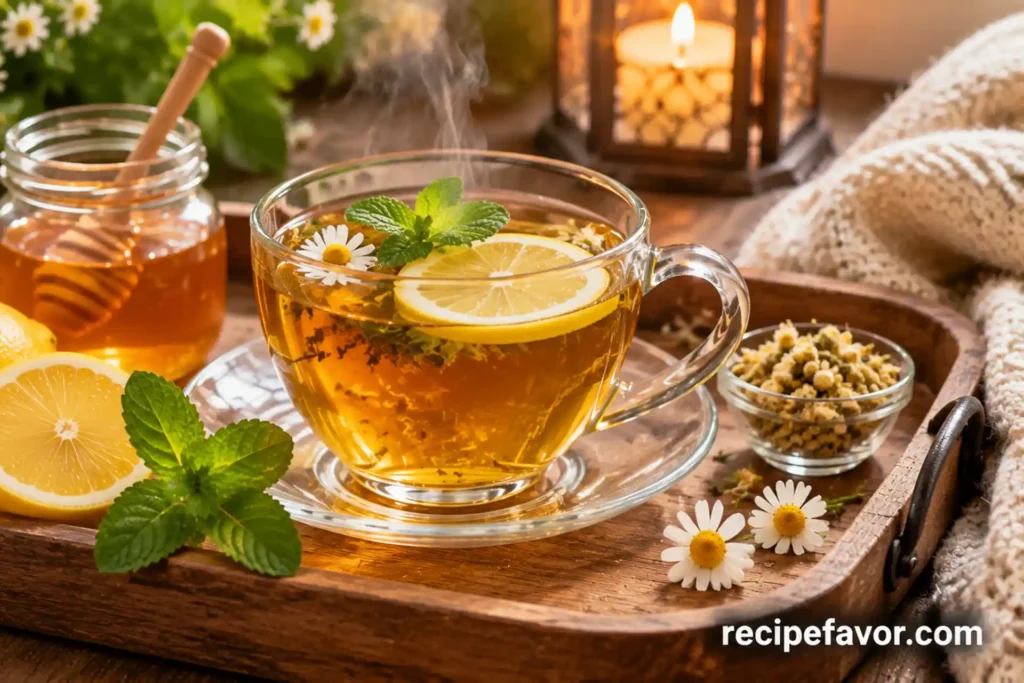
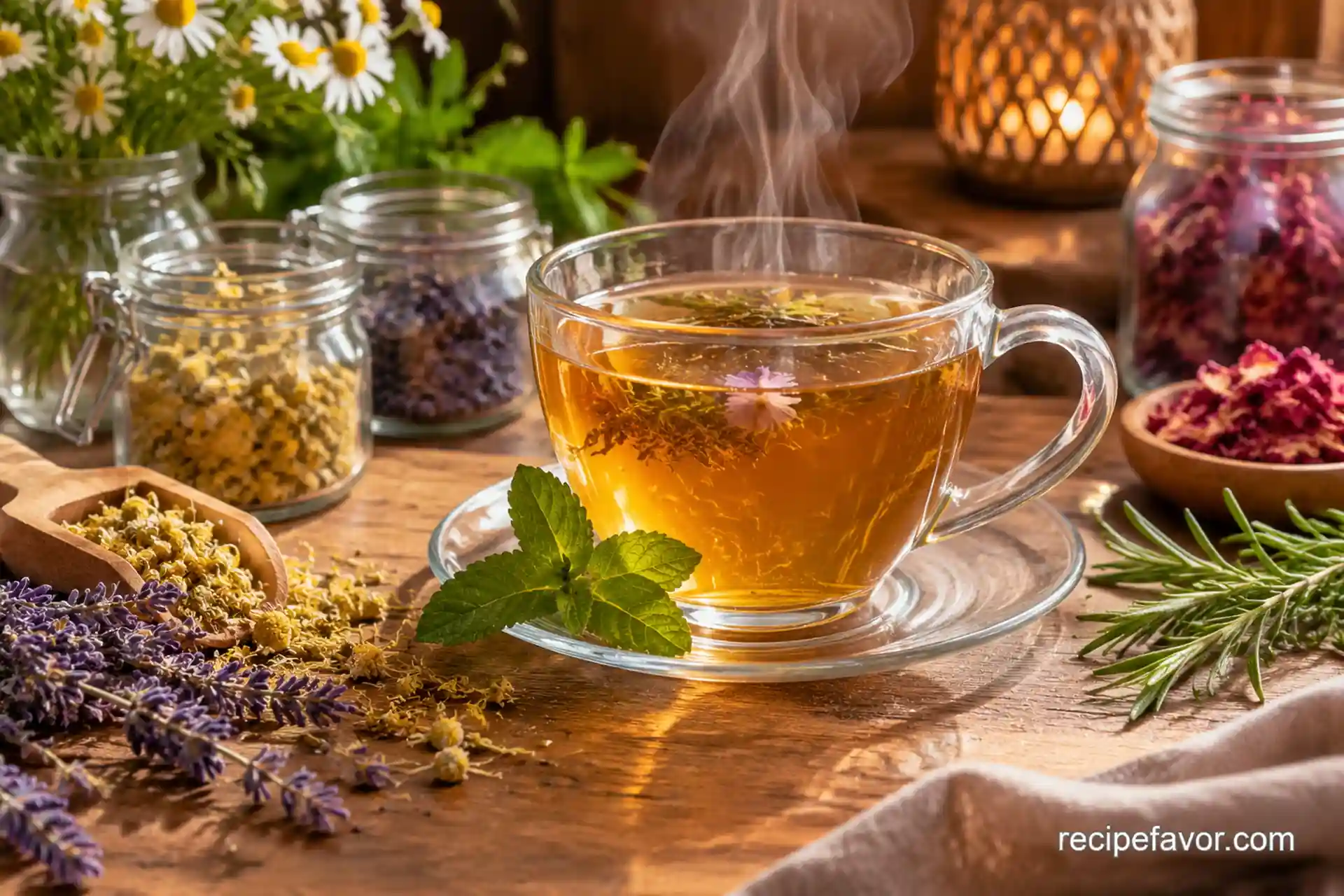
Ginger Mint Herbal Tea
Ingredients
Method
- Choose your herbs: fresh or dried chamomile, peppermint, ginger, or a blend you enjoy.
- Bring 2 cups of filtered water to a boil in a kettle or small saucepan.
- Add the ginger and mint to a teapot or infuser, using about 1 tablespoon of fresh herbs per cup.
- Pour the hot water over the herbs, cover the pot, and simmer the ginger for 8 to 10 minutes, then steep for 5 to 7 minutes.
- Remove the infuser or strain the tea into cups so no leaves are left behind.
- Stir in lemon juice and honey to taste, if you like.
- Serve hot right away, while the tea is fragrant and warm.

Tuaseen is the creator of Recipe Favor, sharing easy, delicious, and homemade recipes for everyday cooking. Passionate about simple meals and flavorful dishes, Tuaseen focuses on creating step-by-step recipes that help beginners and food lovers cook with confidence, enjoy new flavors, and make every meal special at home.




12 thoughts on “How to Make Herbal Tea: Simple Steps for a Better Cup”