Most western culinary blogs define Ponzu simply as “citrus soy sauce.” From a semantic and historical standpoint, this is incorrect.
True Ponzu (ポン酢) translates to “punch vinegar,” originating from the Dutch word pons (a citrus juice beverage). Historically, ponzu is simply the tart, acidic juice of Japanese citrus mixed with vinegar. When soy sauce (shoyu) is added, it technically becomes Ponzu Shoyu—though modern vernacular has blended the two.
This guide breaks down the precise formulation of authentic Ponzu Shoyu, the synergistic science of its umami components, and the exact citrus profiles needed to elevate raw dishes like Tuna Tataki or rich hot pots like Shabu-Shabu.
The Semantic Core: Deconstructing Ponzu’s Flavor Profile
Commercial, mass-produced ponzu relies on citric acid extracts and high-fructose corn syrup. Authentic, artisanal ponzu relies on a foundational Japanese culinary concept: Umami Synergy.
By combining specific ingredients, you create a multiplier effect on the palate, rather than a simple addition of flavors.
1. The Glutamate Base (Kombu)
Kombu (edible kelp) is the cornerstone of Japanese dashi (broth). It is exceptionally high in naturally occurring glutamic acid. In ponzu, cold-steeping kombu extracts this glutamate, providing a deep, oceanic baseline that gives the sauce its mouthfeel and savory length.
2. The Inosinate Multiplier (Katsuobushi)
Katsuobushi (dried, fermented, and smoked skipjack tuna flakes) contains high levels of inosinic acid. When inosinic acid (from the fish) meets glutamic acid (from the kelp), the perceived umami intensity multiplies by up to eight times. This is the scientific secret behind a world-class ponzu.
3. The Acidic Brightness (Japanese Citrus)
Lemon and lime are poor substitutes for Japanese citrus, as they lack the complex floral and bitter notes necessary to balance the heavy umami.
- Yuzu: The gold standard. Highly aromatic, floral, with notes of mandarin and grapefruit.
- Sudachi: Sharper, more acidic, and slightly peppery. Often used in high-end sushi preparations.
- Kabosu: Milder and sweeter, yielding a rounder, less aggressive ponzu.
- Daidai: Bitter orange. Traditionally used for ponzu destined for winter hot pots (nabemono).
What is the Difference Between Soy Sauce and Ponzu?
While they look identical in a ramekin, their chemical structures and culinary applications are vastly different.
- Soy Sauce (Shoyu): A fermented product of soybeans, roasted wheat, water, and salt. It is heavy, rich, and high in sodium.
- Ponzu (Ponzu Shoyu): A composite sauce that uses soy sauce as a base but cuts its density with mirin (sweet rice wine), rice vinegar, citrus juice, and dashi elements. It is lighter, highly acidic, and significantly lower in sodium.
Culinary Application: You dip sashimi in soy sauce to enhance the raw fish. You use ponzu on rich, seared items (like Tuna Tataki Salad) or fatty meats (like Wagyu beef) because the high acidity is required to cut through the lipids (fats) and cleanse the palate and Wafu Dressing (和風ドレッシング).
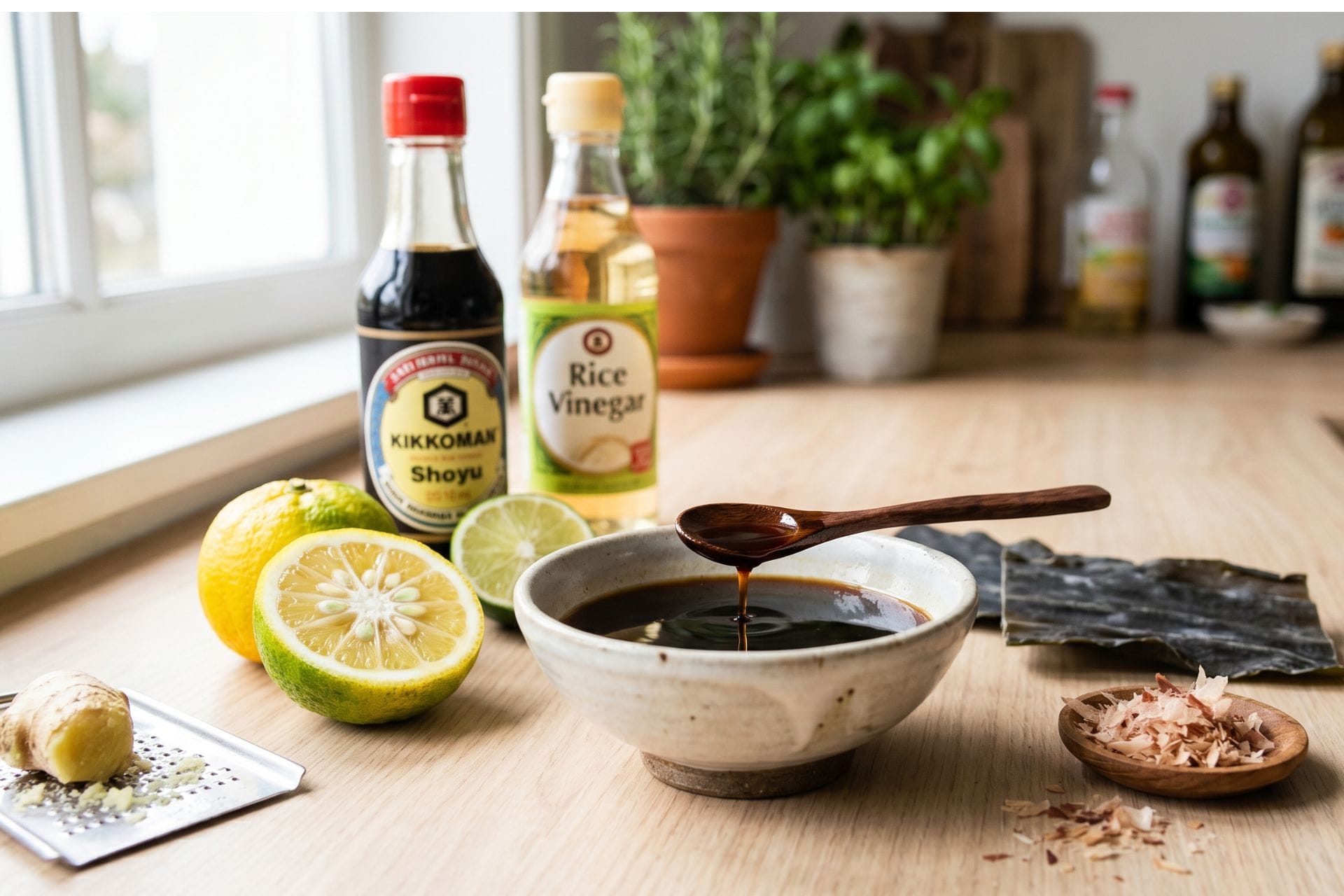

Ponzu Shoyu
Ingredients
Method
- The Mix: In a clean glass jar (avoid plastic or metal, which can react with the high acidity), combine the soy sauce, citrus juice, rice vinegar, and mirin.
- The Umami Agents: Submerge the dried kombu and the katsuobushi flakes directly into the liquid.
- The Cold Steep (Crucial Step): Seal the jar and place it in the refrigerator. Do not use heat. Boiling these ingredients extracts bitter tannins from the kombu and destroys the delicate floral esters of the citrus. Allow the mixture to steep for a minimum of 24 hours. (For peak flavor development, traditional chefs let it age for up to one week).
- The Strain: Pour the liquid through a fine-mesh sieve lined with cheesecloth to remove the kombu and bonito flakes. Press gently on the solids to extract the maximum yield.
- Storage: Store the strained ponzu in a sterilized glass bottle in the refrigerator. Due to the high acidity and sodium, it will comfortably last for up to one month.
Notes
Nutrition
(Estimated Per Tablespoon – 15ml) Calories: 12 kcal Protein: 1g Carbohydrates: 2g Fat: 0g Sodium: 380mg (Soy sauce ki wajah se high sodium hota hai) Sugar: 1g Fiber: 0g Cholesterol: 0mgTransactional Guide: Buying the Best Bottled Ponzu
If you are sourcing ponzu for a commercial kitchen or a home pantry and cannot make it from scratch, label-reading is critical.
Avoid: Brands where the first ingredient is water, or those that list “citric acid” or “lemon extract” instead of actual citrus juice. Look For: Artisanal brands imported from Japan that list specific citrus (Yuzu or Sudachi) and explicitly mention Kombu and Bonito in the ingredient list. Premium brands often come in glass bottles to preserve the volatile aromatic oils of the citrus.
FAQ: Semantic Search Queries
What is ponzu sauce made of?
Authentic ponzu sauce is a blend of Japanese citrus juice (like yuzu), soy sauce, rice vinegar, mirin, kombu (kelp), and katsuobushi (bonito flakes).
Is Ponzu sauce gluten-free?
Traditional ponzu is not gluten-free, because conventional Japanese soy sauce is brewed with roasted wheat. To make a gluten-free ponzu, you must substitute the standard shoyu with Tamari (a byproduct of miso paste that uses little to no wheat).
Can I use Ponzu as a marinade?
Yes, but with caution. Because ponzu is highly acidic, using it as a long-term marinade for delicate proteins (like fish or shrimp) will cause a chemical process called denaturation, essentially “cooking” the exterior of the meat (similar to ceviche) and turning it mushy. For seafood, apply it right before serving.
What is the best substitute for Yuzu in Ponzu?
If fresh yuzu or bottled 100% yuzu juice is unavailable, the most chemically accurate substitute is a blend of 1 part fresh lemon juice, 1 part fresh lime juice, and a few drops of fresh grapefruit juice to replicate the bitter/floral notes.
What does ponzu sauce taste like?
It has a bright, refreshing, and deeply savory flavor profile that perfectly balances sharp citrus tanginess with rich, earthy umami notes.
What is shoyu vs ponzu?
Shoyu is standard Japanese soy sauce (rich, heavy, and salty), whereas ponzu is a lighter, highly acidic sauce that uses shoyu as a base but cuts it with citrus juice and vinegar.
Tuaseen is the creator of Recipe Favor, sharing easy, delicious, and homemade recipes for everyday cooking. Passionate about simple meals and flavorful dishes, Tuaseen focuses on creating step-by-step recipes that help beginners and food lovers cook with confidence, enjoy new flavors, and make every meal special at home.




Thanks for the post, how can I make is so that I get an alert email whenever you make a new article?