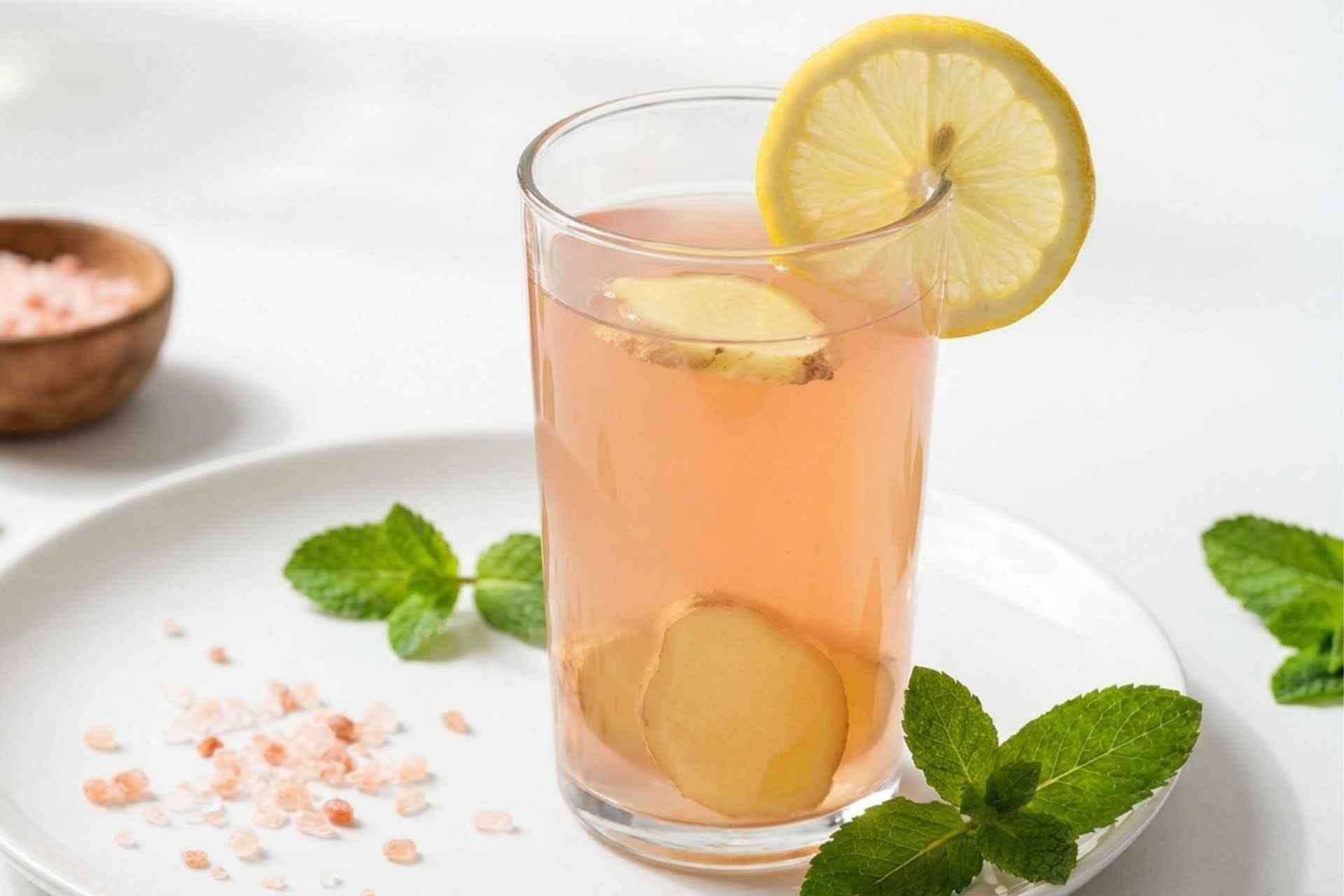

Ingredients
Equipment
Method
- Step 1 — Warm the Water
- Heat 8–10 oz of filtered water in your kettle or saucepan until it reaches 100–110°F. The water should feel comfortably warm on your wrist — not hot. This temperature ensures the Himalayan pink salt dissolves cleanly and preserves the active enzymes in fresh lemon juice.
- Step 2 — Pour Into Your Mug
- Transfer the warmed water into your ceramic mug or glass. A ceramic vessel retains heat better than glass, which helps you sip this Japanese pink salt recipe slowly without it going cold mid-drink.
- Step 3 — Dissolve the Pink Salt
- Add exactly ¼ teaspoon of Himalayan pink salt to the warm water. Stir steadily with your long-handled spoon in a circular motion for 15–20 seconds until every grain is fully dissolved. Undissolved crystals create uneven sodium distribution per sip.
- Step 4 — Add Fresh Lemon Juice
- Squeeze half a fresh lemon directly into the mug using your citrus juicer. Fresh lemon delivers Vitamin C, citric acid, and digestive enzymes that bottled lemon juice simply cannot replicate. Remove any seeds that fall in.
- Step 5 — Add Your Optional Boosters
- If using apple cider vinegar, add 1 teaspoon now and stir once. For ginger, drop in 2–3 thin slices and steep 60 seconds. If using matcha, pre-whisk ½ teaspoon in a tablespoon of warm water separately, then pour into the mug to prevent clumping. Add honey last to preserve its raw enzymes.
- Step 6 — Taste and Adjust
- Take one small sip. If the Japanese pink salt recipe tastes too salty, add a splash more warm water. Too sharp from lemon? Add ½ teaspoon raw honey. Your palate will adjust after 3–4 days of consistent use.
- Step 7 — Sip Slowly on an Empty Stomach
- Drink the entire glass over 5–10 minutes — never chug it. Slow sipping allows your digestive system to gradually activate, your intestinal walls to absorb electrolytes efficiently, and your metabolism to begin its morning warm-up before food arrives.
- Step 8 — Wait Before Eating
- After finishing your Japanese pink salt drink, wait 20–30 minutes before eating breakfast. This window allows gastric acid and bile production to fully prime your digestive system for optimal nutrient absorption from your first meal.
Notes
Always use filtered water — chlorine in tap water can interfere with the mineral profile of Himalayan pink salt.
Fresh lemon is non-negotiable — bottled lemon juice contains sodium benzoate preservative that reduces the drink's benefit.
Never exceed ½ tsp salt — more pink salt does not mean more benefit and may overload your daily sodium budget.
Intermittent fasting users: skip the honey — it technically breaks a fast. The base recipe (salt + lemon + water) is fast-safe for most protocols.
First-timers: start with ⅛ tsp pink salt for your first three days to let your body adjust, then increase to ¼ tsp.
Storage: base recipe can be refrigerated for up to 24 hours in an airtight glass jar. Always re-warm before drinking — cold delivery reduces digestive activation benefit.
Sodium-sensitive individuals: consult your healthcare provider before starting this Japanese pink salt recipe as a daily morning habit.
This recipe pairs beautifully with a 16:8 intermittent fasting routine as your fasting-window morning mineral drink.
Iced Summer Version: Prepare the base recipe warm to dissolve the salt, then pour over ice for a refreshing cold mineral drink.
Ginger-ACV Combo: Combine both ginger slices and 1 tsp apple cider vinegar for maximum metabolic and gut-health support.
Matcha Morning Energy: Add pre-whisked matcha for a calm, focused energy boost without coffee's cortisol spike.
Turmeric Anti-Inflammatory: Add a pinch of turmeric powder and black pepper for added anti-inflammatory benefit alongside your electrolyte support.
Those on sodium-restricted diets prescribed by a physician
Individuals with kidney disease or adrenal insufficiency
Pregnant women — consult your doctor first
Carbohydrates: 1.5g
Protein: 0.1g
Fat: 0g
Saturated Fat: 0g
Sodium: 560mg
Potassium: 18mg
Magnesium: 1.5mg
Calcium: 2mg
Vitamin C: 18mg (20% Daily Value)
Iron: 0.1mg
Sugar: 0.5g
Fiber: 0g
Cholesterol: 0mg Nutrition values are estimates. Optional add-ins will alter values: raw honey adds ~10 kcal and 2.5g sugar per ½ tsp; ACV adds ~1 kcal per tsp.
Fresh lemon is non-negotiable — bottled lemon juice contains sodium benzoate preservative that reduces the drink's benefit.
Never exceed ½ tsp salt — more pink salt does not mean more benefit and may overload your daily sodium budget.
Intermittent fasting users: skip the honey — it technically breaks a fast. The base recipe (salt + lemon + water) is fast-safe for most protocols.
First-timers: start with ⅛ tsp pink salt for your first three days to let your body adjust, then increase to ¼ tsp.
Storage: base recipe can be refrigerated for up to 24 hours in an airtight glass jar. Always re-warm before drinking — cold delivery reduces digestive activation benefit.
Sodium-sensitive individuals: consult your healthcare provider before starting this Japanese pink salt recipe as a daily morning habit.
This recipe pairs beautifully with a 16:8 intermittent fasting routine as your fasting-window morning mineral drink.
Variations
Citrus Boost: Replace lemon with fresh lime juice for a different Vitamin C profile and sharper flavor.Iced Summer Version: Prepare the base recipe warm to dissolve the salt, then pour over ice for a refreshing cold mineral drink.
Ginger-ACV Combo: Combine both ginger slices and 1 tsp apple cider vinegar for maximum metabolic and gut-health support.
Matcha Morning Energy: Add pre-whisked matcha for a calm, focused energy boost without coffee's cortisol spike.
Turmeric Anti-Inflammatory: Add a pinch of turmeric powder and black pepper for added anti-inflammatory benefit alongside your electrolyte support.
Who Should Avoid This Recipe
People with hypertension or heart diseaseThose on sodium-restricted diets prescribed by a physician
Individuals with kidney disease or adrenal insufficiency
Pregnant women — consult your doctor first
Nutrition
(Per serving — base recipe: pink salt + lemon + warm water, no optional add-ins) Calories: 6 kcalCarbohydrates: 1.5g
Protein: 0.1g
Fat: 0g
Saturated Fat: 0g
Sodium: 560mg
Potassium: 18mg
Magnesium: 1.5mg
Calcium: 2mg
Vitamin C: 18mg (20% Daily Value)
Iron: 0.1mg
Sugar: 0.5g
Fiber: 0g
Cholesterol: 0mg Nutrition values are estimates. Optional add-ins will alter values: raw honey adds ~10 kcal and 2.5g sugar per ½ tsp; ACV adds ~1 kcal per tsp.