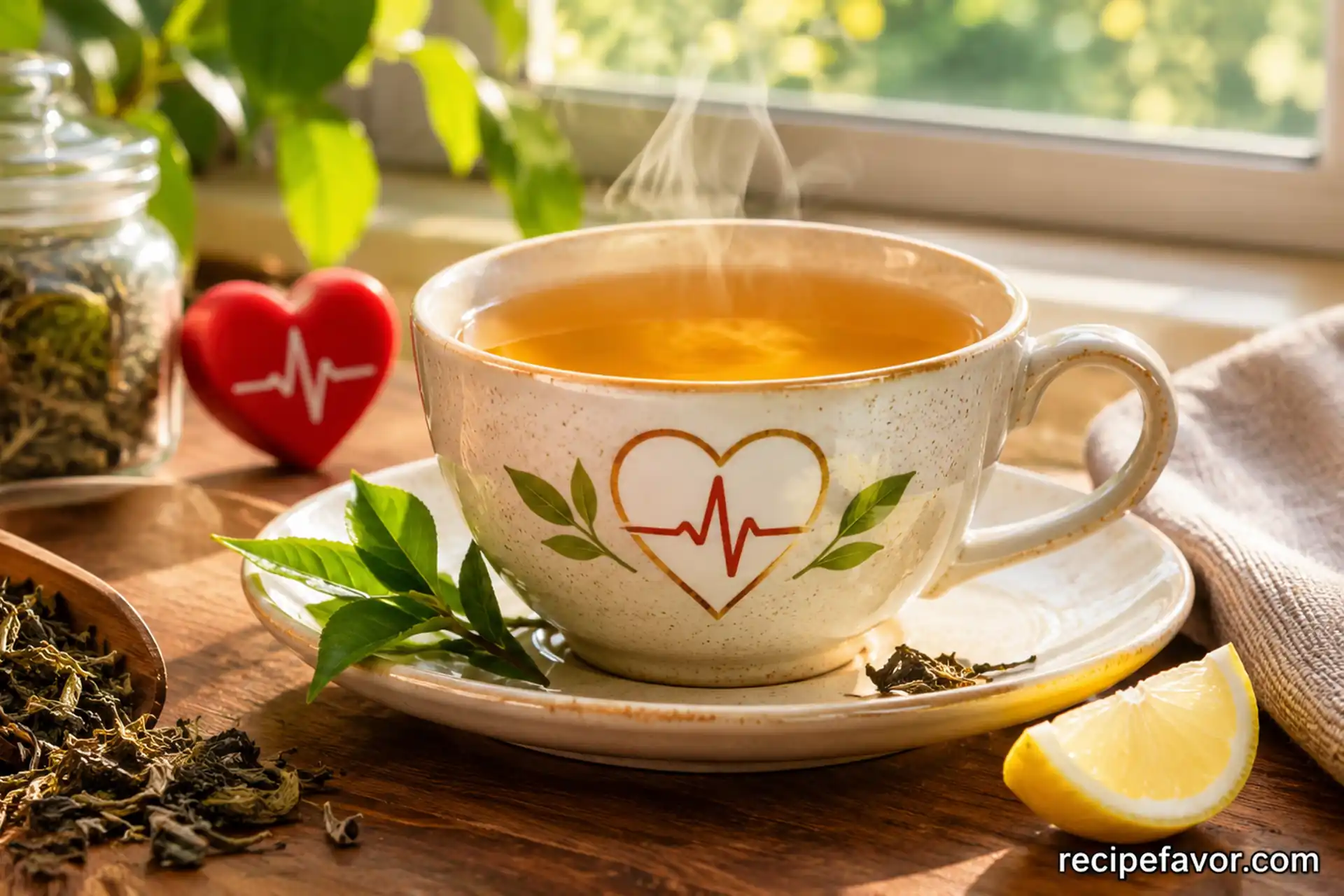
The first time someone told me a daily cup of tea could be good for my heart, I wanted to believe it. So I checked the research myself, and the honest answer is more careful than the headlines: tea and heart health are linked in some studies, but there is no clinical proof that tea prevents or treats heart disease. In this myth-check, I separate the claims from the evidence, cup by cup.
I make this simple lemon and mint tea at home most mornings, and I love the ritual of it. Below, I walk you through what the evidence really says about green tea, black tea, blood pressure and cholesterol, and how to brew a heart-friendly cup without falling for the hype. This is my own kitchen routine, shared on Recipe Favor, not a medical prescription.
What Is Tea and Heart Health?
When people talk about tea and heart health, they usually mean the idea that compounds in tea, especially flavonoids and other polyphenols, may support blood vessels and heart function. Green tea, black tea and herbal infusions are all part of the conversation, though they are very different drinks with different evidence behind them. That is why tea and heart health is such a popular search, and why the claims deserve a careful check.
It helps to be precise about what tea is. True teas come from the Camellia sinensis plant, while herbal teas are infusions of leaves, flowers or roots. If you are new to herbal blends, start with our guide to the best herbal tea, then come back here to check the heart claims against the evidence.
Is Tea Good for Your Heart?
Verdict: mixed evidence, not proof. Large observational studies have found that people who drink tea regularly tend to have lower rates of some heart problems, but those studies cannot prove tea caused the difference. Tea drinkers may also eat better, smoke less or exercise more, and researchers cannot fully separate those habits from the tea itself.
A large 2026 study of about 486,000 adults found tea drinking was associated with roughly 11% lower cardiovascular risk, while a major review found no clear effect on blood pressure or cholesterol. That is the pattern of this topic: promising associations, modest or inconsistent trial results, and no guaranteed benefit for any individual.
| Claim | What the evidence says | Verdict |
|---|---|---|
| Tea prevents heart disease | No clinical trial proves prevention; only observational associations exist. | Myth |
| Tea supports heart health as part of a healthy diet | Unsweetened tea fits a heart-friendly pattern; flavonoids are plausibly helpful. | Plausible, not proven |
| Tea lowers blood pressure | Reviews find little or no consistent effect on blood pressure. | Mostly myth |
| Tea lowers cholesterol | Effects are small and inconsistent across studies. | Unproven |
Is Green Tea Good for Heart Health?
Green tea is the most studied tea for heart health, largely because it is rich in catechins such as EGCG. Some research links regular green tea drinking with better blood vessel function and slightly lower LDL cholesterol, but the effects are small, and not every study agrees. It is a reasonable choice, not a remedy.
What matters most is the whole cup: unsweetened green tea with lemon is a very different drink from a sweetened bottled tea. For a wider look at what these drinks may offer, read our guide to herbal tea benefits, and keep the heart claims in perspective.
Is Black Tea Good for Heart Health?
Black tea contains theaflavins, formed when tea leaves are fully oxidized, and some studies link it with modest improvements in blood vessel function. As with green tea, the evidence is observational or short-term, so black tea should be enjoyed as a pleasant, low-calorie drink rather than relied on for heart protection.
I switch between green and black tea depending on the morning, and I keep both unsweetened. Adding lots of sugar or syrup would work against the very habits that support heart health, so I sweeten lightly with honey only when I want it, or not at all.
Does Tea Lower Blood Pressure?
Verdict: not reliably. This is one of the most repeated claims about tea and heart health, but the evidence does not back a strong effect. A Cochrane review of green and black tea trials found little to no consistent change in blood pressure, and some short-term studies even show a small temporary rise after drinking caffeinated tea.
If your blood pressure is high, tea is not a substitute for the steps your doctor recommends, such as reducing salt, staying active and taking prescribed medicine. Think of an unsweetened cup as a better choice than a sugary drink, not as a treatment.
Does Tea Lower Cholesterol?
Verdict: small, inconsistent effects at best. Some trials of green tea report a slight drop in total and LDL cholesterol, while others find no meaningful change. Black tea shows even less consistent results. Any change is far smaller than what diet, exercise or prescribed treatment can achieve.
That does not make tea useless. A cup of unsweetened tea replaces a sugary drink and adds no saturated fat, which fits well into an overall heart-friendly eating pattern. The mistake is expecting the tea itself to move your cholesterol numbers.
How Much Tea Should You Drink a Day?
Most studies that find associations look at one to three cups a day, and moderate amounts are generally considered fine for healthy adults. There is no proven ideal amount for heart health, and more is not better. Very large amounts add caffeine and can disturb sleep, which matters for heart health too.
I keep it to one or two cups a day, usually in the morning. If you enjoy tea as part of a lighter routine, you may also like our roundup of the best tea for weight loss, but remember that no tea burns fat or protects the heart on its own.
Does Tea Have Caffeine?
Yes, true teas contain caffeine: roughly 30 to 50 mg per cup for green or black tea, compared with about 95 mg in coffee. The US Food and Drug Administration cites 400 mg a day as a general limit for healthy adults, so a couple of cups of tea are well within that range for most people.
Herbal infusions are usually caffeine-free, which is one reason many people choose them in the evening. If caffeine worries you, or you drink tea late in the day, read does herbal tea have caffeine before choosing your blend.
What Are the Ingredients in This Heart-Friendly Tea?
This is the simple cup I make at home: green or black tea leaves, fresh water, a squeeze of lemon, a little honey if you like it, and fresh mint. Nothing here is a medicine, and no single ingredient makes the drink heart-protective. The point is a fresh, unsweetened or lightly sweetened cup you will actually enjoy.

| Ingredient | Why It Is in This Cup |
|---|---|
| 1 teaspoon loose green or black tea leaves (or 1 tea bag) | The base of the drink; source of the flavonoids studied in tea research. |
| 1 cup fresh water | Hydration without calories, sugar or sodium. |
| 1 lemon wedge or slice | Fresh flavor and vitamin C; helps you skip sugar. |
| 1 teaspoon honey (optional) | A little sweetness if you want it; keep it light. |
| A few fresh mint leaves | Cool, fresh flavor with no calories. |
How to Make This Heart-Friendly Tea
Brewing a good cup takes about five minutes, and the steps are the same whether you use green or black tea. Keep the water just off the boil for green tea so it does not turn bitter, and let black tea steep a little longer for a fuller flavor.

- Heat 1 cup of fresh water until just boiling, then let it cool for a minute for green tea.
- Add 1 teaspoon of loose tea leaves to a teapot or infuser, or place a tea bag in a cup.
- Pour the hot water over the leaves and steep for 3 minutes for green tea or 4 to 5 minutes for black tea.
- Remove the leaves or tea bag so the tea does not turn bitter.
- Stir in the lemon and honey if using, add fresh mint, and serve right away.

Tips and Storage for Tea and Heart Health
Keep your tea leaves in a cool, dry, airtight container away from light, and use them within a few months for the best flavor. Brew only what you will drink, and store any leftover brewed tea in the fridge for up to a day. Reheat gently rather than boiling it again. When it comes to tea and heart health, the daily habit matters more than any single cup.
For variety, try swapping the mint for fresh ginger. Our ginger tea is a warming alternative, and the same rules apply: keep it unsweetened or lightly sweetened, watch the caffeine, and enjoy it as part of a balanced day.
Nutrition: What Is in a Cup?
A plain cup of unsweetened tea has almost no calories, no fat and no sodium, which is why it fits so easily into a heart-friendly pattern. Honey is the only ingredient that adds calories, so the totals below are for one cup made with 1 teaspoon of honey. Values are approximate. For tea and heart health, what matters is the pattern: unsweetened tea most days, not a sugary drink.
| Nutrient | Per 1 cup (with 1 tsp honey) |
|---|---|
| Calories | About 21 |
| Carbohydrates | About 6 g |
| Sugars | About 6 g |
| Fat | 0 g |
| Sodium | 0 mg |
| Caffeine | About 30-50 mg (green or black tea); 0 mg for herbal |
Frequently Asked Questions About Tea and Heart Health
These are the questions I hear most about tea and heart health, answered with the evidence as it stands today.
Is tea good for your heart?
Tea can be part of a heart-friendly diet, but it is not proven to protect your heart. Studies show associations, not proof, and the benefits are small. Unsweetened tea is a good choice; it is not a treatment for heart disease.
Which tea is best for heart health?
Green tea has the most research behind it, followed by black tea. Herbal teas are usually caffeine-free and can be a good evening choice. No type is proven best, so choose the unsweetened tea you enjoy most.
Can tea lower blood pressure?
There is no reliable evidence that tea lowers blood pressure. Reviews of trials find little or no consistent effect. If you have high blood pressure, follow your doctor’s advice rather than relying on tea.
How many cups of tea a day is good for heart health?
One to three cups a day is the range most often seen in studies, but no amount is proven to help the heart. Keep your total caffeine within 400 mg a day, and avoid drinking caffeinated tea late at night.
Does herbal tea have caffeine?
Most herbal teas are naturally caffeine-free, because they are not made from the tea plant. True green and black teas do contain caffeine, about 30 to 50 mg per cup. Check the label if you are unsure.
Conclusion: My Honest Take on Tea and Heart Health
I still make this lemon and mint tea most mornings, because I enjoy it and it replaces a sugary drink. I do not drink it expecting it to protect my heart. The evidence on tea and heart health says tea may be a small, pleasant part of a heart-friendly life, alongside balanced food, movement, sleep and regular check-ups. That honest view is worth more than any miracle claim.
If you like lighter drinks, our green juice recipes for weight loss are another fresh option. Whatever you pour, keep it simple, keep it mostly unsweetened, and talk to your doctor about your own heart health.

Medical disclaimer: This article is for information only and is not medical advice. Tea does not prevent, treat or cure heart disease. If you have a heart condition, high blood pressure or take heart medication, talk to your doctor before changing your diet or tea habits.
Heart-Friendly Lemon Mint Tea
Ingredients
Method
- Heat 1 cup of fresh water until just boiling, then let it cool for a minute for green tea.
- Add 1 teaspoon of loose tea leaves to a teapot or infuser, or place a tea bag in a cup.
- Pour the hot water over the leaves and steep for 3 minutes for green tea or 4 to 5 minutes for black tea.
- Remove the leaves or tea bag so the tea does not turn bitter.
- Stir in the lemon and honey if using, add fresh mint, and serve right away.

Tuaseen is the creator of Recipe Favor, sharing easy, delicious, and homemade recipes for everyday cooking. Passionate about simple meals and flavorful dishes, Tuaseen focuses on creating step-by-step recipes that help beginners and food lovers cook with confidence, enjoy new flavors, and make every meal special at home.





6 thoughts on “Tea and Heart Health: 5 Honest Answers From the Evidence”