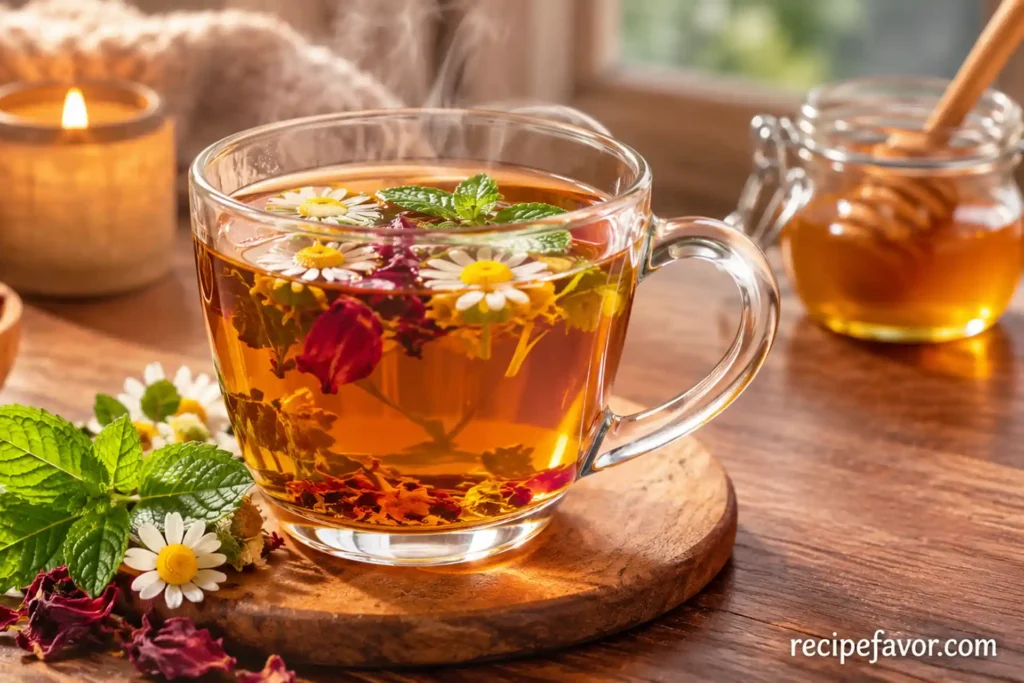
The best herbal tea depends on what you want from your cup. For sleep, I reach for chamomile; for digestion, ginger; for a bright, tart afternoon cup, hibiscus. After trying dozens of blends in my own kitchen, I can tell you there is no single winner — there is a best herbal tea for each moment, and this guide will help you find yours.
I wrote this guide after many quiet evenings testing blends, steep times, and flavour combinations here at Recipe Favor. Below you will find what herbal tea really is, the ingredients I use for a balanced 4-cup pot, simple steps, honest notes on benefits, nutrition, and answers to the questions I hear most.
What is Best Herbal Tea?
Herbal tea, also called a tisane, is an infusion made from dried herbs, flowers, roots, or fruit — not from the tea plant, Camellia sinensis. That is why most herbal teas are naturally caffeine-free, which makes them a gentle choice in the evening. You can read more in the herbal tea article on Wikipedia.
For me, the best herbal tea is one that tastes good unsweetened, brews reliably, and fits the moment. A calming chamomile before bed, a fresh peppermint after a heavy meal, and a ruby hibiscus with lemon on a warm afternoon all earn a place in my cupboard. If you are comparing true teas, see my guide to herbal tea vs green tea, and if caffeine is your main question, see does herbal tea have caffeine?
If you want something caffeinated with protein instead, try my protein coffee.
For a more colorful cup, try this butterfly pea flower tea recipe — it turns from blue to purple with lemon. For a warm, creamy cup instead, try a creamy hojicha latte.
For a cold, colorful iced drink, try my loaded tea recipes.
Best Herbal Tea Ingredients
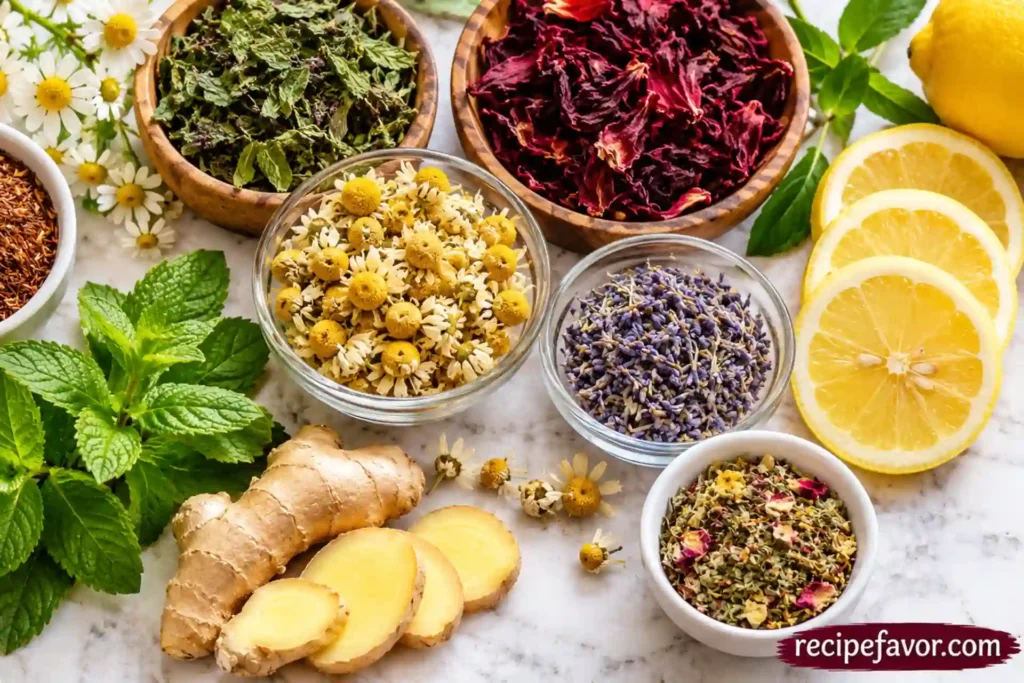
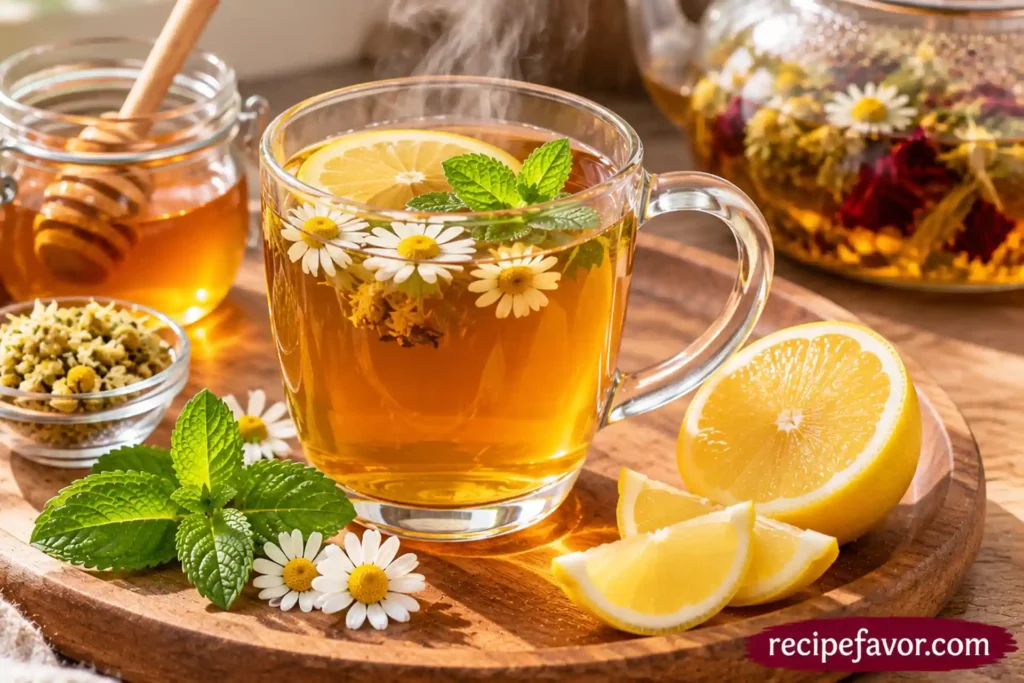
For 4 cups, I use a simple, balanced blend: 2 tablespoons dried chamomile flowers, 1 tablespoon dried peppermint leaves, 1 tablespoon dried hibiscus petals, 1 tablespoon sliced fresh ginger, and 2 thin lemon slices. Add 1 teaspoon of honey per cup only if you like it sweet. This mix is floral, minty, gently tart, and warming all at once.
| Ingredient | Why I Use It |
|---|---|
| Chamomile flowers | Soft, apple-like flavour; my first choice for a calm evening cup. |
| Peppermint leaves | Cool, fresh flavour; a classic after-meal choice. |
| Hibiscus petals | Tart, ruby colour and bright flavour; a little goes a long way. |
| Fresh ginger | Warmth and gentle spice; my pick for digestion and cold days. |
| Lemon slices | Brightness that lifts the whole blend. |
| Honey (optional) | A little sweetness, added at the end, to taste. |
You can change the balance to suit your taste. For a sleepy-time cup, use more chamomile and skip the ginger. For a brighter cup, add more hibiscus and lemon. I keep chamomile tea and peppermint tea on hand so I can brew either one on its own, too.
How to Make the Best Herbal Tea
This is the method I use every time. It takes about 10 minutes, and it works for loose herbs, a tea infuser, or a teapot. For a fuller step-by-step guide, see how to make herbal tea.
- Boil 4 cups of fresh water, then let it sit for 1 minute so it is just off the boil.
- Warm your teapot or mug with a splash of hot water, then tip it out.
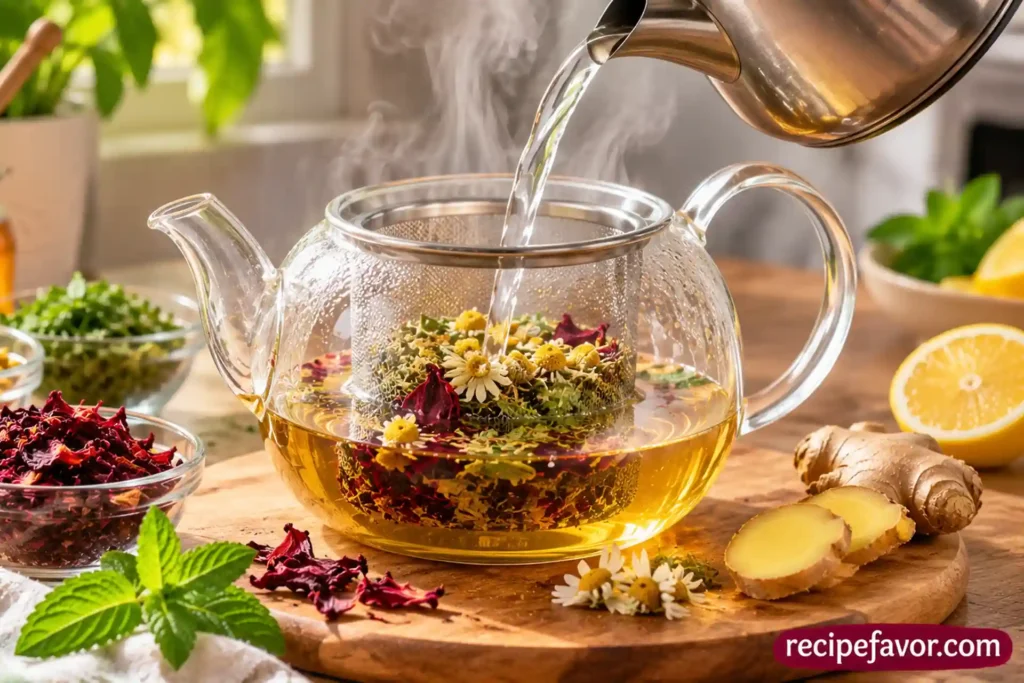
- Add the chamomile, peppermint, hibiscus, and ginger to the teapot or infuser.
- Pour the hot water over the herbs and cover the pot to keep the steam in.
- Steep for 5 to 7 minutes. Taste at 5 minutes; steep longer only if you want a stronger cup.
- Strain into cups, add lemon, and stir in honey if you like. Serve hot.
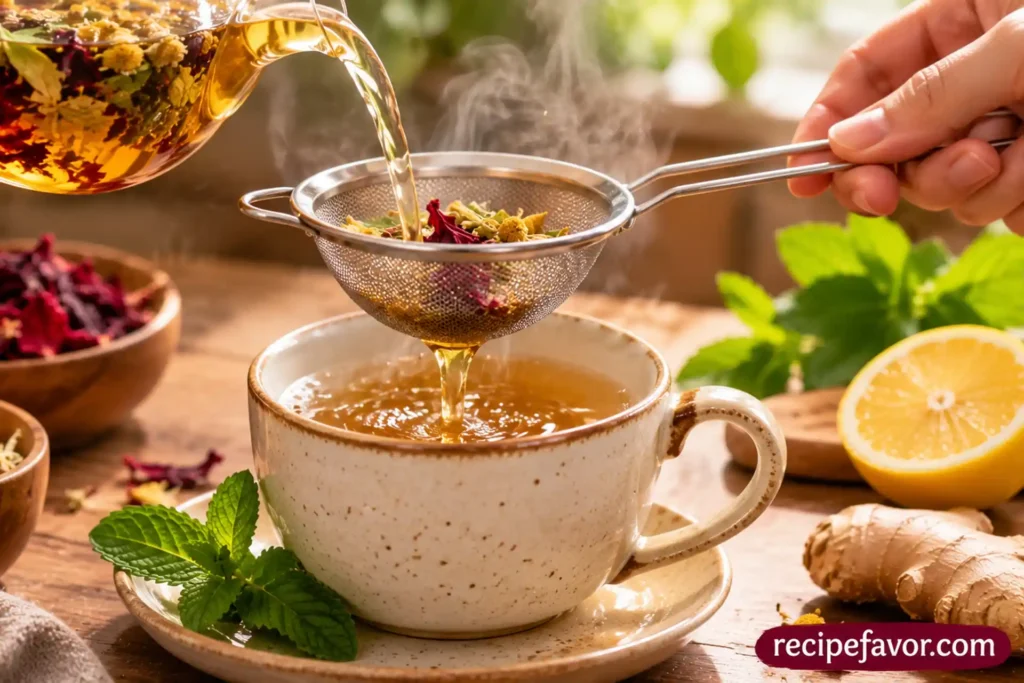
Do not boil the herbs themselves — that can make the tea bitter. If your cup tastes flat, add a little more lemon before you add more honey. A covered steep keeps the fragrant oils in the cup, not in the air.
Tips and Storage for the Best Herbal Tea
Start with good water and fresh dried herbs. Old, dusty herbs make a dull cup no matter how long you steep them. I buy small amounts, keep them in airtight jars away from light, and replace them after about 3 months. Taste before sweetening, and write down the blend you liked so you can repeat it.
- Use 1 tablespoon of dried blend per cup as a starting point, then adjust.
- Steep covered for 5 to 7 minutes for the best flavour.
- Add lemon first, then honey, so you do not over-sweeten.
- Store the dry blend in a cool, dark cupboard for up to 3 months.
- Store brewed, cooled tea in the fridge for up to 2 days and reheat gently.
Best Herbal Tea Nutrition
Unsweetened herbal tea is very light. The values below are approximate for one cup of this blend, brewed without honey. They will change a little with the herbs you use and how long you steep.
| Nutrient | Per 1 Cup (Unsweetened) |
|---|---|
| Calories | About 2 |
| Carbohydrates | 0 g |
| Sugar | 0 g |
| Sodium | 0 mg |
| Caffeine | 0 mg |
One teaspoon of honey adds about 20 calories and 5 grams of sugar, so a sweetened cup is still light, but it is no longer sugar-free. Lemon adds almost no calories and a little vitamin C.
Health Benefits and Myth Check for the Best Herbal Tea
Herbal teas have a long history, and some have modest research behind them. Ginger has been studied for nausea, and chamomile is often used for relaxation — but the evidence is limited, the effects are small, and a cup of tea is not a treatment. I enjoy these teas for flavour, comfort, and hydration, not as a cure for anything. For a fuller look at the claims, see herbal tea benefits.
Myth check: herbal tea does not guarantee weight loss, detox your body, or cure anxiety, poor sleep, or digestive problems. If a claim sounds too good to be true, it probably is. Tea can be part of a calm routine, a warm drink before bed, or a caffeine-free swap for soda — and that is a real, honest benefit on its own. The same goes for heart claims — see our myth-check of tea and heart health.
Medical disclaimer: This article is for general information only and is not medical advice. Herbal teas can interact with medicines and may not be suitable during pregnancy or for some health conditions. If you take medicine, are pregnant, or have a health condition, please consult a doctor before drinking herbal tea regularly.
Frequently Asked Questions About the Best Herbal Tea
What is the best herbal tea for sleep?
Chamomile is my first choice for sleep. I brew it plain, drink it about an hour before bed, and keep the evening quiet. It may help you relax, but it is not a guaranteed sleep treatment.
Does herbal tea have caffeine?
Most herbal teas are naturally caffeine-free because they are not made from the tea plant. Always check the label, because some blends add true tea or other ingredients. If you want a caffeinated option instead, a standard cup of matcha has about 38–88 mg — see does matcha have caffeine for the full comparison.
Which herbal tea is best for digestion?
Ginger and peppermint are the two I reach for after a meal. Ginger is warming, peppermint is fresh, and both taste good in a small cup after eating. After a rich holiday meal, a warm cup like this pairs beautifully with a bright, sweet-tart cranberry relish on the table.
Can I drink herbal tea every day?
Many people do, in moderate amounts. I usually drink one or two cups a day and vary the blend. If you take medicine or are pregnant, ask your doctor first.
Is herbal tea good for weight loss?
No tea guarantees weight loss. Unsweetened herbal tea is low in calories and can replace sugary drinks, which may help, but it is not a weight-loss treatment on its own.
How long should I steep herbal tea?
Steep for 5 to 7 minutes, covered. Taste at 5 minutes and steep longer only if you want a stronger flavour.
Final Thoughts on the Best Herbal Tea
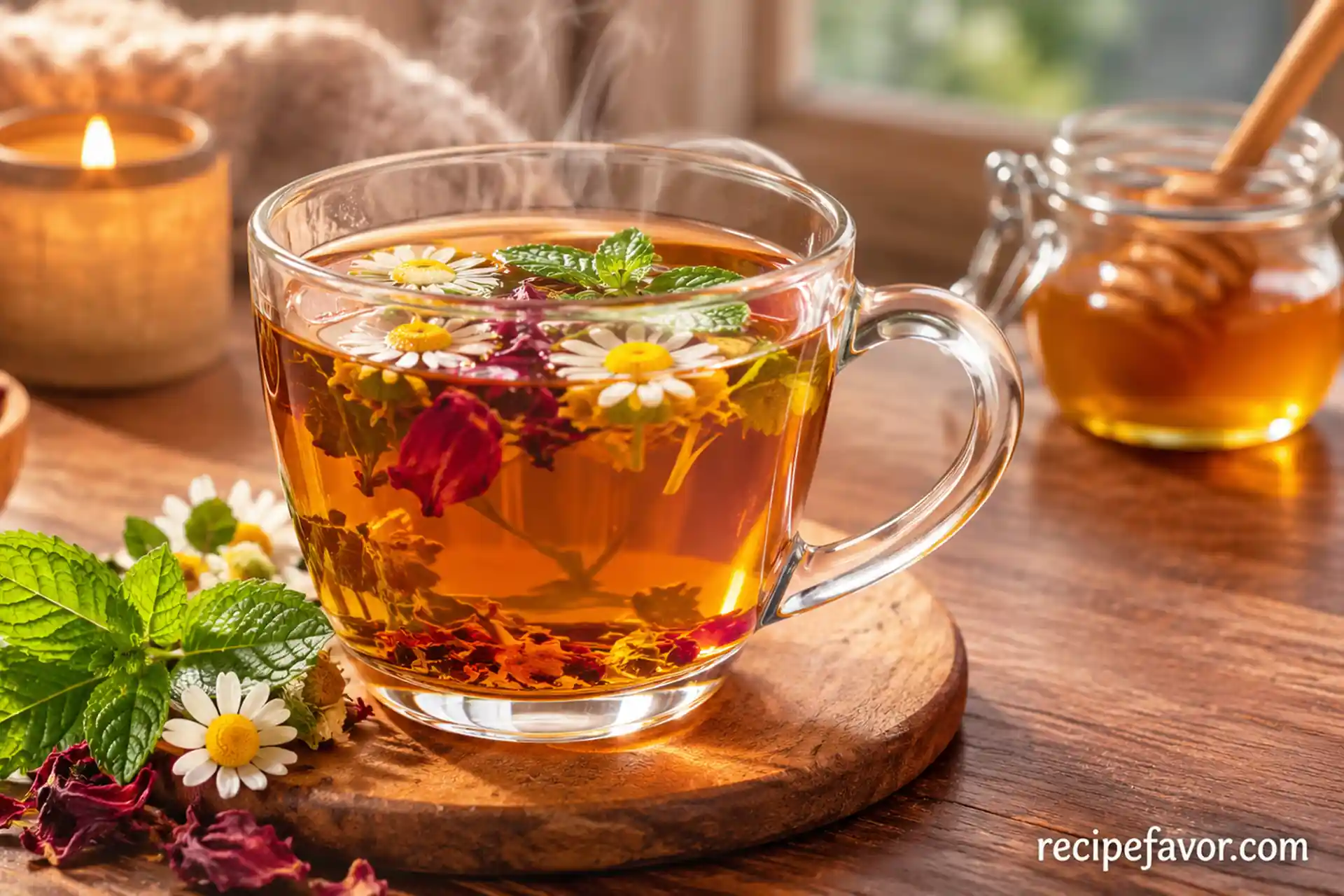
My favourite all-round cup is this chamomile, peppermint, hibiscus, and ginger blend. It is calm, fresh, bright, and warming at the same time, and it is easy to make in 10 minutes. Start with the recipe below, then change one ingredient at a time until it tastes like your tea.
If you try it, tell me which blend became your favourite. And if you are still choosing, start with chamomile for evenings, ginger for digestion, and hibiscus for a bright afternoon cup — you will soon know which one is the best herbal tea for you. For another caffeine-free herbal brew, try this moringa tea recipe.
For a fruity iced option, try this pomegranate apple refresher next.
Best Herbal Tea
Ingredients
Equipment
Method
- Boil 4 cups of fresh water, then let it sit for 1 minute so it is just off the boil.
- Warm your teapot or mug with a splash of hot water, then tip it out.
- Add the chamomile, peppermint, hibiscus, and ginger to the teapot or infuser.
- Pour the hot water over the herbs and cover the pot to keep the steam in.
- Steep for 5 to 7 minutes. Taste at 5 minutes; steep longer only if you want a stronger cup.
- Strain into cups, add lemon, and stir in honey if you like. Serve hot.

Tuaseen is the creator of Recipe Favor, sharing easy, delicious, and homemade recipes for everyday cooking. Passionate about simple meals and flavorful dishes, Tuaseen focuses on creating step-by-step recipes that help beginners and food lovers cook with confidence, enjoy new flavors, and make every meal special at home.




12 thoughts on “Best Herbal Tea: 10 Healthy Choices Worth Trying Today”