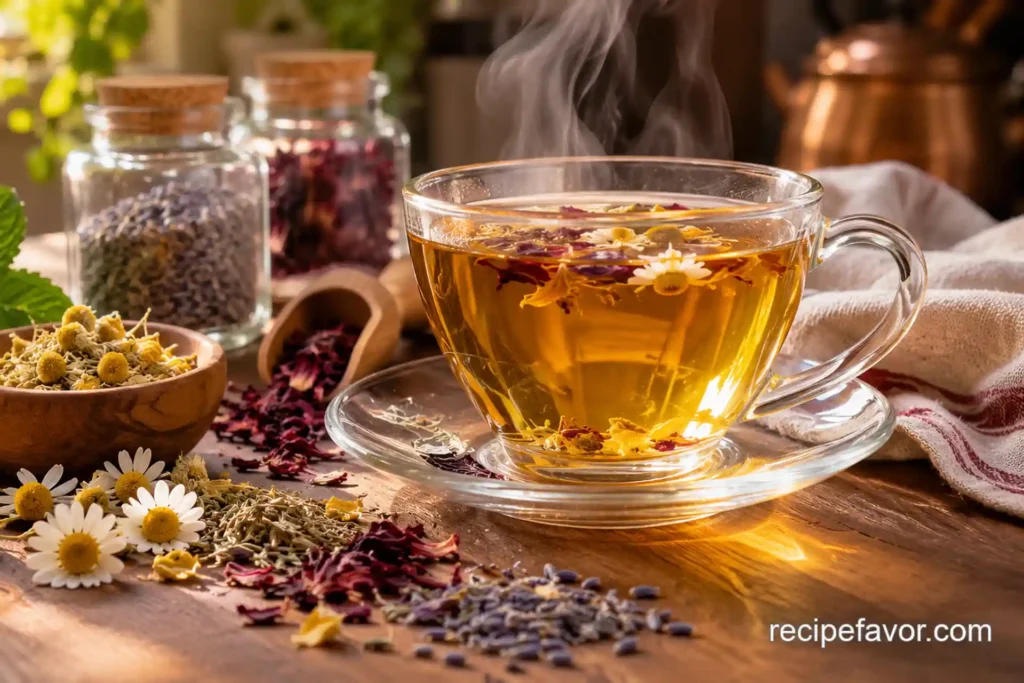
Herbal tea benefits depend on which herbs you brew, how you prepare them, and what you hope they will do. I have spent years making herbal tea at home, testing chamomile for sleep, peppermint for digestion, and ginger for a warm, comforting drink, and I have learned to enjoy the ritual as much as the cup itself.
After researching the most popular herbal teas, I found that many of the claims sound promising, but the science is still limited. This guide, here at Recipe Favor, explains what each tea may help with, what the evidence actually says, and how to brew a safe, delicious cup at home.
Another favorite in my routine is lemon ginger tea.
For a colorful change of pace, try butterfly pea flower tea — it brews blue and turns purple with lemon.
What is Herbal Tea?
Herbal tea, also called a tisane, is not made from the tea plant at all. It is an infusion of dried flowers, leaves, roots, seeds, or fruit, steeped in hot water. Because it contains no true tea leaves, most herbal teas are naturally caffeine-free, which is one reason so many people reach for them in the evening.
That simple difference matters when you read about herbal tea benefits. A cup of chamomile, peppermint, or rooibos is a flavored hot drink, not a medicine, and its effects tend to be gentle. The herbs, the strength of the brew, and how often you drink it all shape what you notice, so it helps to start with one tea at a time. For a side-by-side look at how herbal tea compares with green tea, see my full comparison.
Ingredients for Herbal Tea
You only need a few things to make good herbal tea at home. I use 4 cups of fresh water, 4 teaspoons of loose dried herbs or 4 tea bags, and a teapot or heatproof jug. Honey and a slice of lemon are optional, and I add them only after the tea has steeped, so the flavor stays bright and clean. For the full step-by-step method, see how to make herbal tea.
Choose herbs you enjoy and that suit your evening or your stomach. My usual blend is chamomile with a little peppermint, but hibiscus, ginger, rooibos, and lemon balm all brew well on their own. Buy dried herbs from a trusted source, store them away from light, and use them within a few months for the best flavor.
| Ingredient | Why I Use It |
|---|---|
| Chamomile flowers | Floral, apple-like flavor; often chosen for bedtime and relaxation |
| Peppermint leaves | Cool, fresh flavor; often chosen after meals for digestion |
| Hibiscus petals | Tart, ruby-red brew; often chosen for a bright, fruity cup |
| Fresh or dried ginger | Warm and spicy; often chosen for comfort and digestion |
| Rooibos | Smooth, naturally sweet flavor; caffeine-free and easy to drink |
| Lemon balm | Gentle citrus flavor; often chosen for calm evenings |
| Honey or lemon (optional) | A little sweetness or brightness, added after steeping |

How to Make Herbal Tea
- Boil 4 cups of fresh water, then let it cool for about a minute so it is just below boiling.
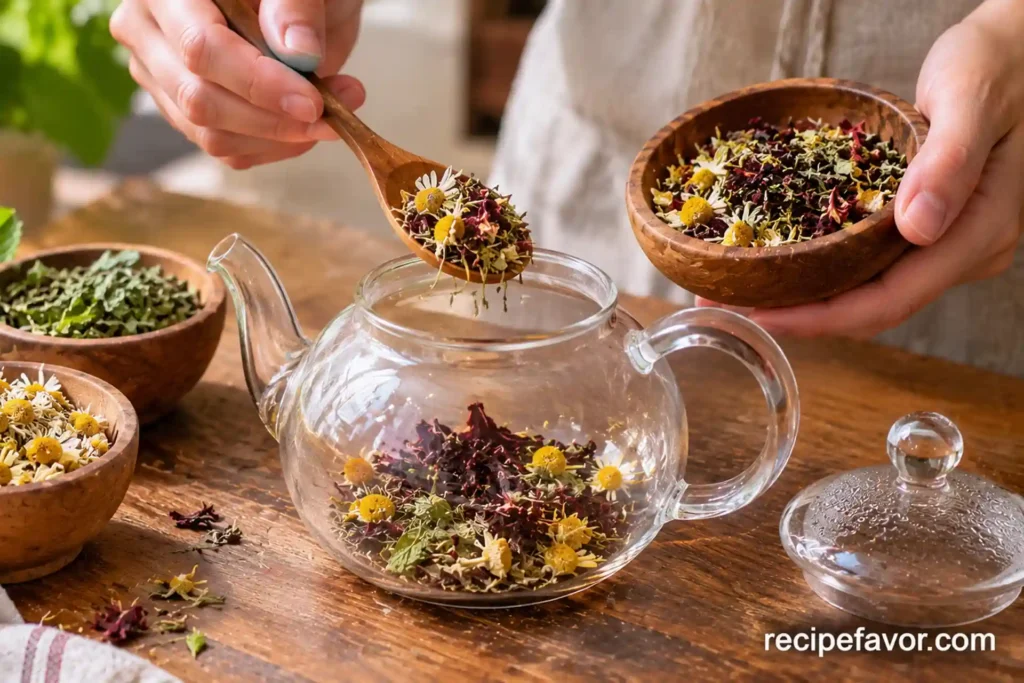
- Add 4 teaspoons of dried herbs, or 4 tea bags, to a teapot or heatproof jug.
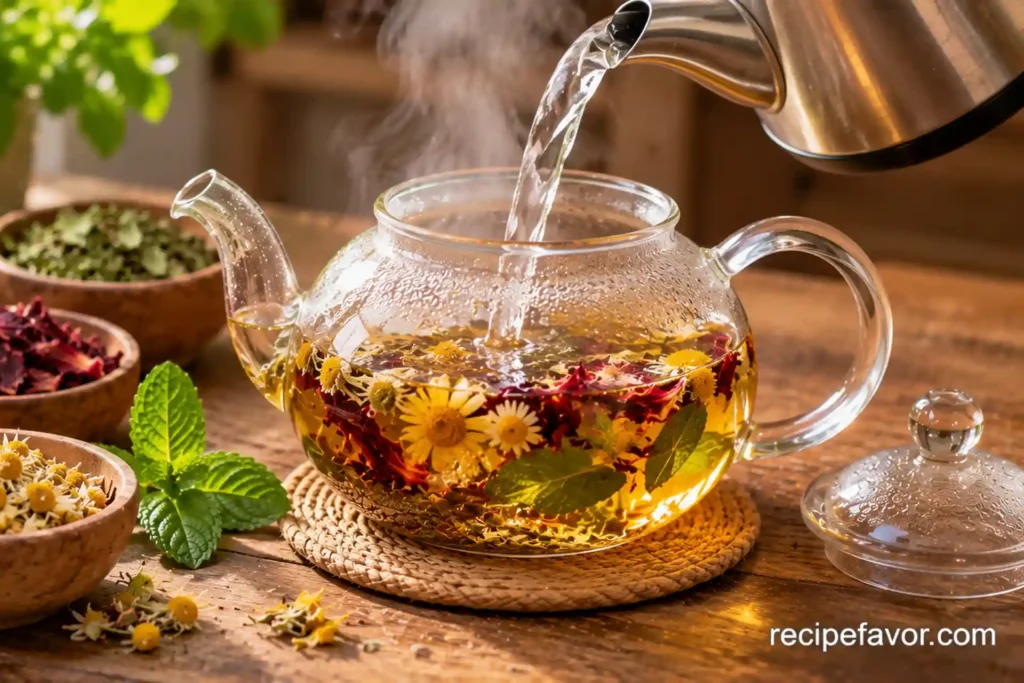
- Pour the hot water over the herbs and cover the pot to keep the steam and aroma in.
- Steep for 5 to 7 minutes. Taste at 5 minutes and steep longer only if you want a stronger cup.
- Strain the herbs, pour into cups, and add honey or lemon if you like. Serve warm.
Herbal Tea Benefits for Sleep
Chamomile is the tea I reach for most at night, and it is the one with the most familiar sleep story. Small studies have linked chamomile to slightly better sleep quality, and many people find that a warm, caffeine-free cup helps them slow down before bed. For more calm evening options, try these night drinks for weight loss.
The evidence is still limited, and chamomile is not a proven treatment for insomnia. I treat it as part of a calm bedtime routine, not a sleep aid, and I keep my evenings screen-free and regular. If you want a deeper guide, try my chamomile tea recipe and brewing tips.
Herbal Tea Benefits for Digestion
Peppermint and ginger are the two herbs I use most after a heavy meal. Peppermint is often said to ease bloating and fullness, while ginger has a longer history of use for nausea and stomach comfort. A warm cup after eating feels soothing, and that ritual alone can help you slow down.
Again, the research is modest, and these teas do not replace medical care for ongoing digestive problems. I enjoy ginger tea and peppermint tea for their flavor and warmth, and I pay attention to which one my stomach prefers on a given day.
Herbal Tea Benefits for Relaxation and Stress
Many people drink herbal tea to relax, and I understand why. The act of boiling water, waiting for the steep, and sitting with a warm cup creates a small pause in the day. Lemon balm, chamomile, and rooibos are the herbs most often linked with calm, and all three brew into gentle, easy cups.
Some small studies suggest lemon balm and chamomile may support a calmer mood, but the results are not strong enough to promise stress relief. For me, the benefit is the routine itself: a quiet cup, no caffeine, and a few minutes to breathe before the next task.
Herbal Tea Benefits for Immunity
Ginger, elderberry, and echinacea are the herbs most often mentioned when people talk about immunity. They are rich in plant compounds, and some studies have looked at whether they can shorten colds, but the findings are mixed and often based on extracts, not a single cup of tea.
I do not drink herbal tea to prevent illness. I drink it because staying hydrated, resting, and eating well matter far more, and a warm cup fits into that picture. My ginger cinnamon tea is a cozy choice on cold days, and I enjoy it for its flavor first.
Herbal Tea Benefits for Inflammation
Turmeric, ginger, and rooibos contain plant compounds that researchers study for inflammation, and that research is often quoted in tea articles. The amounts in a home-brewed cup are small, though, and most studies use concentrated extracts or much larger doses than a daily cup provides.
That gap matters, so I keep my expectations modest. A cup of ginger or rooibos tea can be a pleasant, warming part of a balanced diet, but it is not a treatment for joint pain or any inflammatory condition, and it should never replace care from a doctor.
Herbal Tea Benefits for Heart Health
Hibiscus tea has drawn the most attention for heart health, with some studies finding small drops in blood pressure among people who drank it regularly. Rooibos is also studied for its antioxidants, although the evidence in people is still early and far from settled.
These are interesting findings, not promises. I enjoy hibiscus for its tart, cranberry-like flavor, and I think of it as one small part of a heart-friendly pattern: less sugar, regular movement, and a varied diet. Anyone taking blood pressure medicine should ask a doctor before drinking hibiscus daily. For the full picture, read our myth-check on tea and heart health.
Herbal Tea Benefits for Weight Management
Herbal tea is often linked with weight loss online, but that claim needs care. An unsweetened cup has almost no calories, so swapping it for a sugary drink can help you cut calories, and some teas, such as ginger or peppermint, may help you feel satisfied after a meal.
No herbal tea melts fat, speeds up metabolism in a meaningful way, or causes weight loss on its own. I drink it as a tasty, low-calorie alternative to soda or sweetened drinks, not as a diet plan. If you like that idea, see my Costa Rican tea recipe for a flavored, unsweetened option. The same caution applies to commercial detox teas — see what the evidence says about Lulutox detox tea before buying one. For a closer look at one specific herb, see my guide to lemon balm for weight loss. For a fiber-rich cold drink, try a psyllium husk drink.
Herbal Tea Benefits and Risks: Who Should Be Careful?
Herbal tea is generally safe for most healthy adults in normal amounts, but it is not risk-free for everyone. Some herbs can interact with medicines, affect blood pressure or blood sugar, or trigger allergies, especially in people who are sensitive to plants in the daisy family, such as chamomile.
Pregnant and breastfeeding people, children, and anyone taking regular medicine should check with a doctor before drinking a new herb daily or in large amounts. I also avoid drinking very large quantities of any one herb, and I stop using a tea if it upsets my stomach or causes any unusual symptoms.
How Much Herbal Tea Should You Drink Daily?
For most healthy adults, 1 to 3 cups a day is a sensible range, and I usually stay within it. Rotating herbs through the week, rather than drinking the same strong brew all day, keeps the flavor interesting and avoids overdoing any single plant.
Herbal tea is caffeine-free, so it can fit into an evening routine, but it still counts toward your daily fluids, and some blends can affect fasting. If you follow a fasting plan, read my guide on does herbal tea break a fast before choosing a sweetened or flavored blend.
Does herbal tea have caffeine? Most pure herbal teas are naturally caffeine-free, but a few blends add green or black tea, so check the label.
Tips and Storage
- Use fresh, filtered water and rinse the teapot with hot water first.
- Cover the pot while steeping to keep the aroma in the cup.
- Taste at 5 minutes; longer steeping can turn some herbs bitter.
- Add honey or lemon only after steeping, and keep sweetener light.
- Try one herb at a time first, so you learn which flavors you truly enjoy.
Store dried herbs in airtight jars in a cool, dark cupboard and use them within 3 to 6 months for the best flavor. Brewed herbal tea keeps in the fridge for up to 2 days in a covered jug; reheat it gently or serve it over ice. Discard any tea that smells stale or has been left out overnight.

Nutrition
Unsweetened herbal tea is very low in calories and contains no fat, protein, or caffeine. The values below are approximate for one cup (240 ml) of plain brewed herbal tea with no honey, sugar, or milk added.
| Nutrient | Per 1 Cup (240 ml) |
|---|---|
| Calories | 0–2 |
| Carbohydrates | 0 g |
| Sugars | 0 g |
| Fat | 0 g |
| Protein | 0 g |
| Caffeine | 0 mg |
| Sodium | 0–5 mg |
Adding one tablespoon of honey adds about 64 calories and 17 grams of sugar, so I keep sweetener light when I want the cup to stay low in calories.
Frequently Asked Questions
What is herbal tea good for? Herbal tea is a caffeine-free hot drink made from herbs, flowers, or roots. People drink it for relaxation, digestion, sleep, and hydration, but the evidence for most benefits is limited, so it is best enjoyed as a pleasant drink rather than a treatment.
Is herbal tea healthy? Unsweetened herbal tea can be part of a healthy diet because it is low in calories and caffeine-free. It is not a medicine, and sweetened blends or very large amounts may not suit everyone.
What is the healthiest herbal tea? There is no single healthiest tea. Chamomile, peppermint, ginger, hibiscus, and rooibos are all popular choices, and the best one is the one you enjoy, tolerate well, and drink unsweetened. For my ranked picks, see our guide to the best herbal tea.
Is herbal tea good for sleep? Chamomile and lemon balm are often used before bed, and some small studies link chamomile with slightly better sleep quality. The effect is modest, and a regular bedtime routine matters more than any single cup.
Does herbal tea help with digestion? Peppermint and ginger teas are commonly used after meals, and some people find them soothing for bloating or nausea. The evidence is limited, and ongoing digestive problems should be checked by a doctor.
Can I drink herbal tea every day? Most healthy adults can drink 1 to 3 cups a day. Rotate herbs, avoid very large amounts of any single herb, and check with a doctor if you are pregnant, breastfeeding, or taking medicine.
Is herbal tea caffeine-free? Most true herbal teas are naturally caffeine-free because they contain no tea leaves. Always check the label, as some blends may include true tea or other caffeinated ingredients.
Does herbal tea help with weight loss? No tea causes weight loss on its own. Unsweetened herbal tea can help if it replaces sugary drinks, but claims about melting fat or boosting metabolism are not supported by strong evidence.
What are the side effects of herbal tea? Side effects are uncommon in normal amounts, but allergies, stomach upset, and interactions with medicines are possible. Stop drinking a tea that causes symptoms and talk to a doctor if you are unsure.
Which herbal tea is best for anxiety? Chamomile and lemon balm are the herbs most often studied for calm, but the evidence is limited. Herbal tea is not a treatment for anxiety, and anyone with ongoing anxiety should seek professional support.
Conclusion
Herbal tea benefits are real in a small, everyday way: a warm, caffeine-free cup can help you slow down, stay hydrated, and enjoy flavors such as chamomile, peppermint, ginger, and hibiscus. The strongest claims, though, are still waiting for stronger evidence, so I enjoy these teas for what they are — simple, comforting drinks — rather than for promises they cannot keep.
Start with one herb you like, brew it well, and make it part of a routine you look forward to. That is the version of herbal tea benefits I trust most, and it is the one I keep coming back to in my own kitchen. When you want something richer than tea, try a rich hot chocolate. If you enjoy green, earthy brews, try this homemade moringa tea.
Medical disclaimer: This article is for information only and is not medical advice. Herbal teas can interact with medicines and may not be suitable for everyone, including people who are pregnant or breastfeeding. Please consult a doctor before using herbal tea for a health concern.
For a cold, caffeine-free option, try this refreshing weight loss drink.
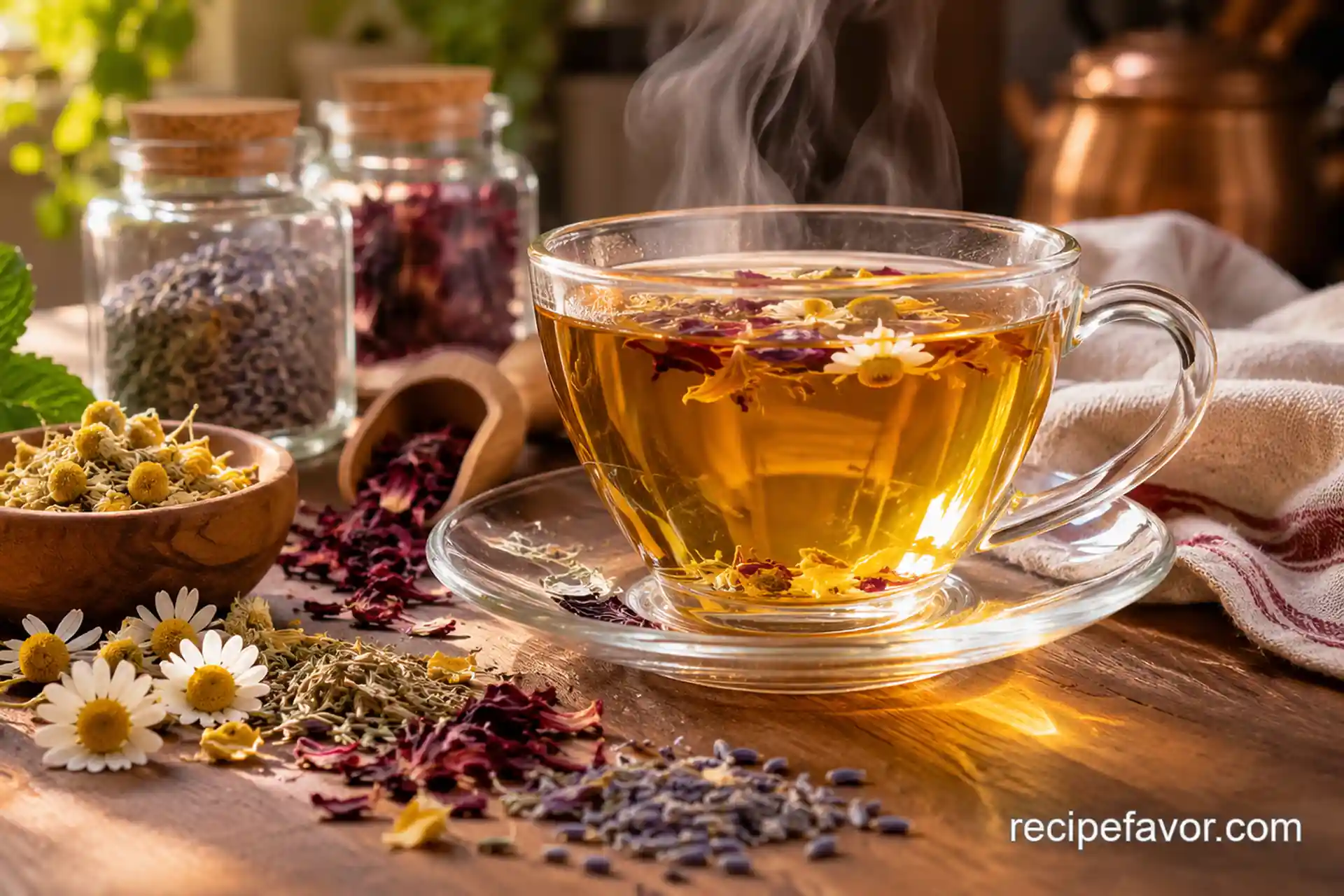
Herbal Tea
Ingredients
Equipment
Method
- Boil 4 cups of fresh water, then let it cool for about a minute so it is just below boiling.
- Add 4 teaspoons of dried herbs, or 4 tea bags, to a teapot or heatproof jug.
- Pour the hot water over the herbs and cover the pot to keep the steam and aroma in.
- Steep for 5 to 7 minutes. Taste at 5 minutes and steep longer only if you want a stronger cup.
- Strain the herbs, pour into cups, and add honey or lemon if you like. Serve warm.

Tuaseen is the creator of Recipe Favor, sharing easy, delicious, and homemade recipes for everyday cooking. Passionate about simple meals and flavorful dishes, Tuaseen focuses on creating step-by-step recipes that help beginners and food lovers cook with confidence, enjoy new flavors, and make every meal special at home.




15 thoughts on “Herbal Tea Benefits: 7 Teas Worth Adding to Your Routine”