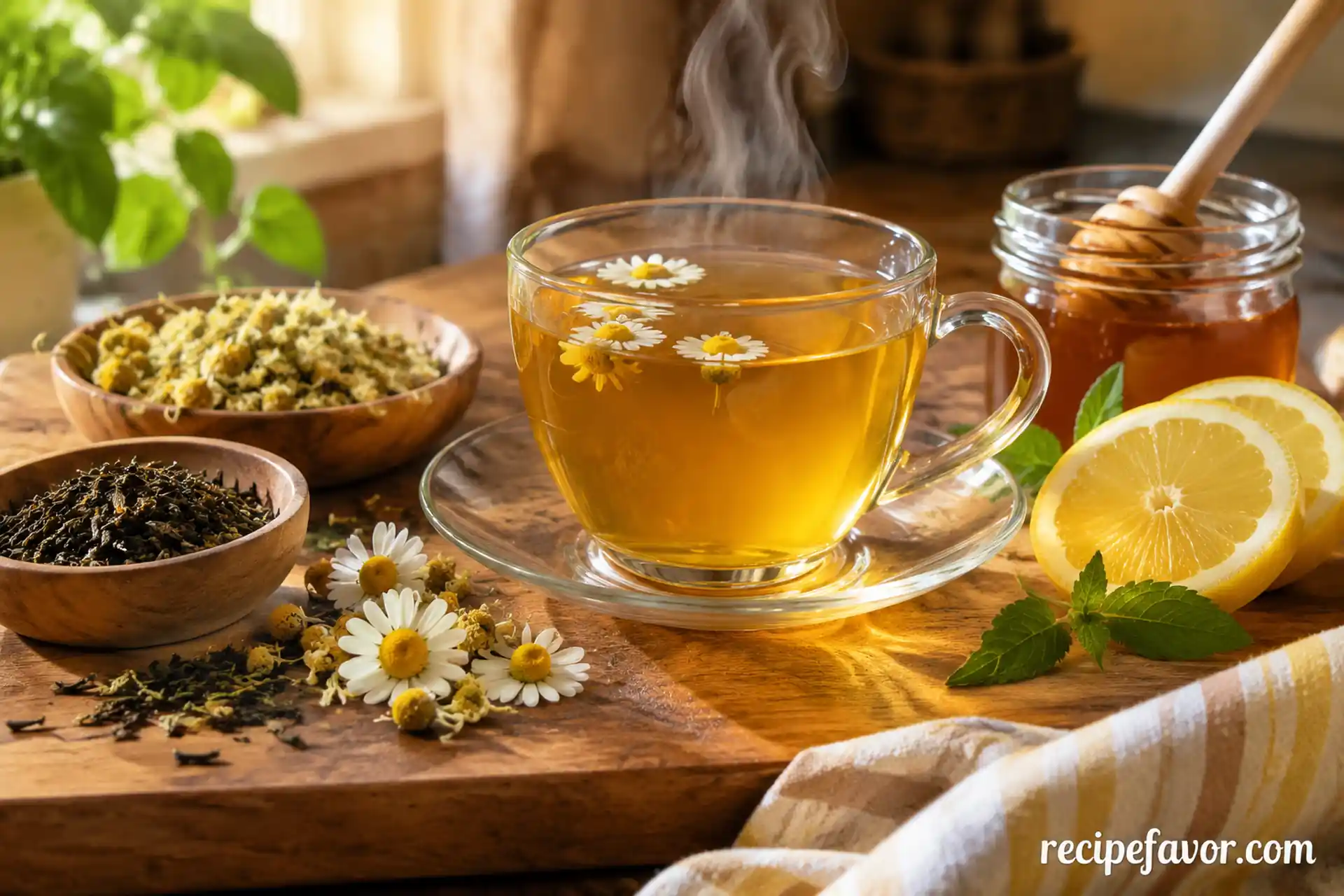
Does herbal tea have caffeine? No, most pure herbal teas are naturally caffeine-free, because they are not made from the Camellia sinensis plant that gives us true tea. I used to assume every hot cup in a tea bag carried caffeine, until a late-night cup left me wondering why some teas helped me unwind while others kept me wide awake. If you love a warm cup in the evening but still want to sleep well, this guide will help you tell the difference.
In this post, I will walk you through what herbal tea really is, which blends are caffeine-free, and which ones can surprise you with caffeine. I will also show you how I make a simple cup at home, how to read a label, and what the evidence actually says, so you can choose your next cup with confidence.
What is Herbal Tea?
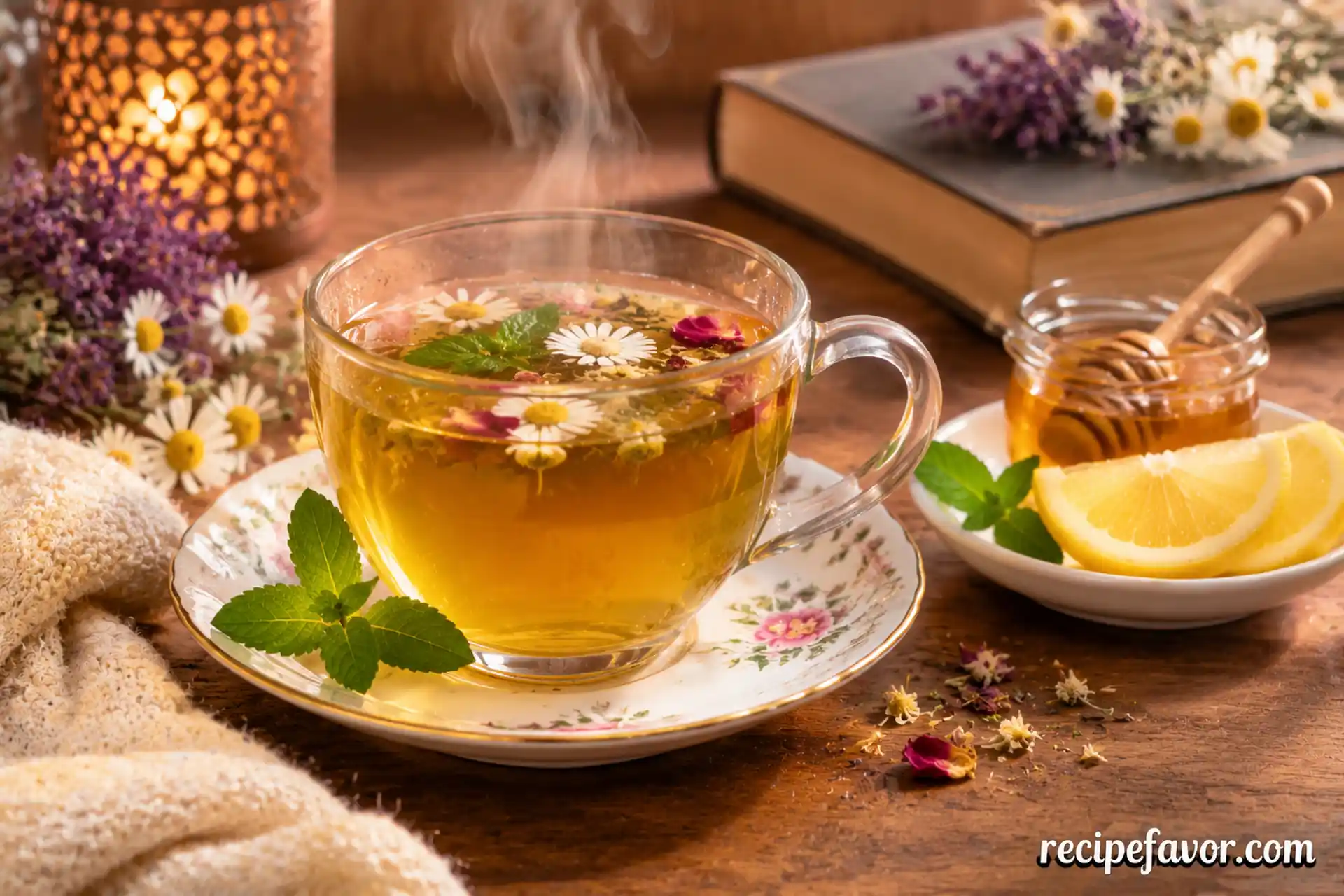
Herbal tea, also called a tisane, is an infusion made by steeping dried herbs, flowers, roots, fruits, or spices in hot water. Unlike black, green, or white tea, it usually contains no leaves from the tea plant at all. That is the main reason most herbal teas are naturally caffeine-free. You can read more about herbal tea on Wikipedia, and about the benefits of herbal tea here on Recipe Favor.
Common herbal teas include chamomile, peppermint, rooibos, ginger, hibiscus, and lemon balm. Each one tastes different and is made from a different plant, so it helps to think of herbal tea as a family of drinks rather than a single recipe. A cup can be floral, minty, spicy, or fruity, depending on what goes into the pot.
Does Herbal Tea Have Caffeine?
The short answer is no for most pure herbal teas. If a tea is made only from herbs, flowers, roots, or fruits, it has no natural caffeine, because caffeine comes mainly from the tea plant and a few other plants such as coffee and cacao. That is why many people reach for a herbal cup in the evening, when they want warmth and flavour without a stimulant. For the full side-by-side numbers, see my herbal tea vs green tea caffeine comparison.
The exception is a blend. Some drinks sold as herbal tea also contain true tea leaves, yerba mate, guayusa, or yaupon holly, and those ingredients do add caffeine. Always check the ingredient list, because the front of the box can be misleading. If it lists black tea, green tea, white tea, or mate, the cup is not caffeine-free.
| Drink | Caffeine per Cup (8 oz) |
|---|---|
| Pure herbal tea | 0 mg |
| Black tea | About 47 mg |
| Green tea | About 28 mg |
| Yerba mate | About 78 mg |
| Coffee | About 96 mg |
Which Herbal Teas Are Caffeine-Free?
Most of the herbal teas you will find in a grocery store are caffeine-free when they are made from a single herb or a blend of herbs only. These are the ones I reach for most often, especially in the evening. Chamomile tea is soft and floral, peppermint tea is cool and minty, and ginger tea is warm and gently spicy.
- Chamomile tea — floral and calming, a classic bedtime choice
- Peppermint tea — minty and refreshing, made from dried peppermint leaves
- Rooibos tea — smooth, slightly sweet, and naturally caffeine-free
- Ginger tea — warm and spicy, made from fresh or dried ginger
- Hibiscus tea — tart and ruby-red, made from hibiscus flowers
- Lemon balm tea — light and citrusy, made from lemon balm leaves
Even with these, read the label. A chamomile blend that also contains green tea is no longer caffeine-free, even if chamomile is the first ingredient listed. Pure, single-herb teas are the safest choice when you want zero caffeine.
Which Herbal Teas Contain Caffeine?
A few herbal-style drinks do contain caffeine, and they are worth knowing about. Yerba mate is the best known, with roughly 78 mg of caffeine per cup, similar to coffee. Guayusa and yaupon holly are also naturally caffeinated, and both are sometimes sold as herbal teas because they come from plants other than the tea plant.
Black tea loaded teas do contain caffeine, as you can see in my loaded tea recipes.
Blends are the other common source of caffeine. A “herbal” blend mixed with black, green, or white tea will contain caffeine in proportion to the true tea it includes. Cocoa nibs and guarana can add caffeine too. When in doubt, look for the words “caffeine-free” on the label, or check the ingredients for any tea leaves, mate, or guayusa.
Herbal Tea Ingredients
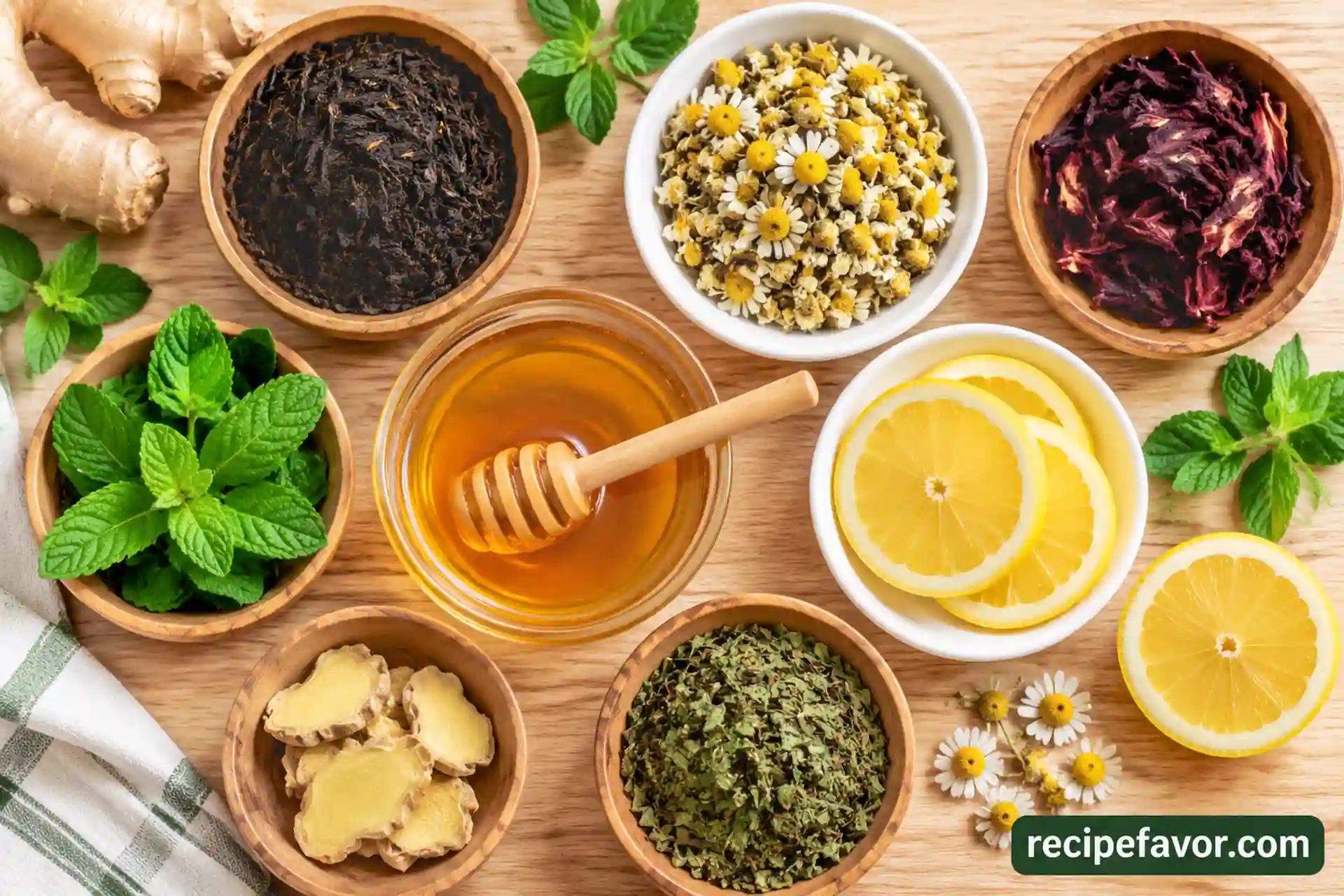
I keep my herbal tea simple, with just a few ingredients I can find in any grocery store. Dried chamomile and peppermint are my base most days, fresh ginger adds warmth, lemon brightens the flavour, and a little honey sweetens the cup. You can use tea bags instead of loose herbs if that is easier, and the result is just as comforting.
| Ingredient | Why I Use It |
|---|---|
| Dried chamomile flowers | Soft, floral flavour and a classic caffeine-free base |
| Dried peppermint leaves | Cool, fresh mint flavour that feels refreshing |
| Fresh ginger | Warm, gently spicy flavour and a little heat |
| Lemon slices | Bright, citrus flavour that lifts the whole cup |
| Honey | Optional sweetness, stirred in after steeping |
| Hot water | Draws out the flavour from the herbs |
How to Make Herbal Tea
Making herbal tea at home takes about ten minutes, and you do not need any special equipment. A small teapot or a mug with a lid works well, because covering the cup while it steeps keeps the flavour in. If you like a stronger cup, you can steep it a little longer, but I would not go past ten minutes for chamomile, or it can turn bitter. For a caffeine-free cup, try brewing your own herbal tea at home.
- Boil 2 cups of fresh water in a kettle.
- Add 2 teaspoons of dried herbs, or 2 herbal tea bags, to a teapot or mug.
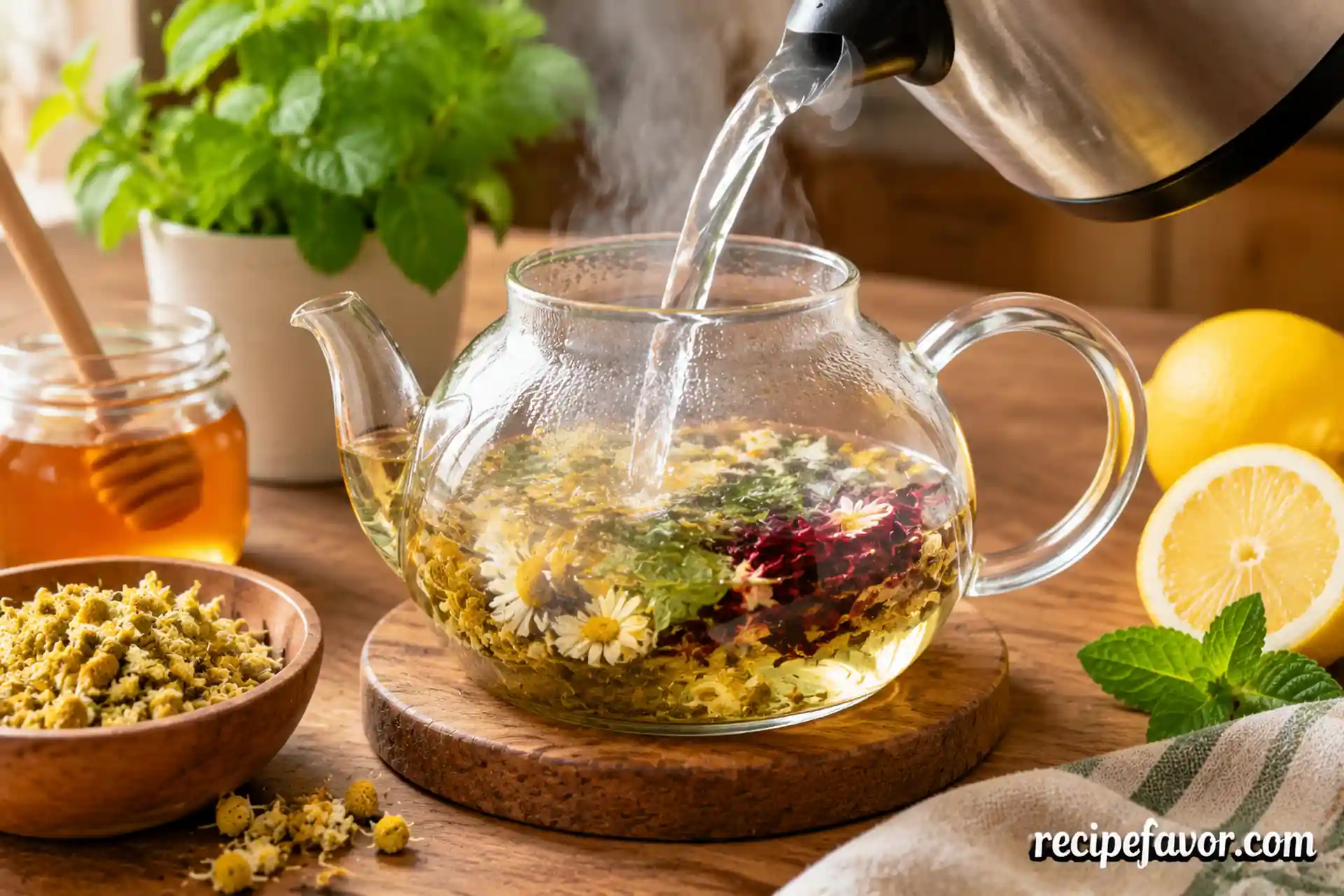
- Pour the hot water over the herbs and cover the cup.
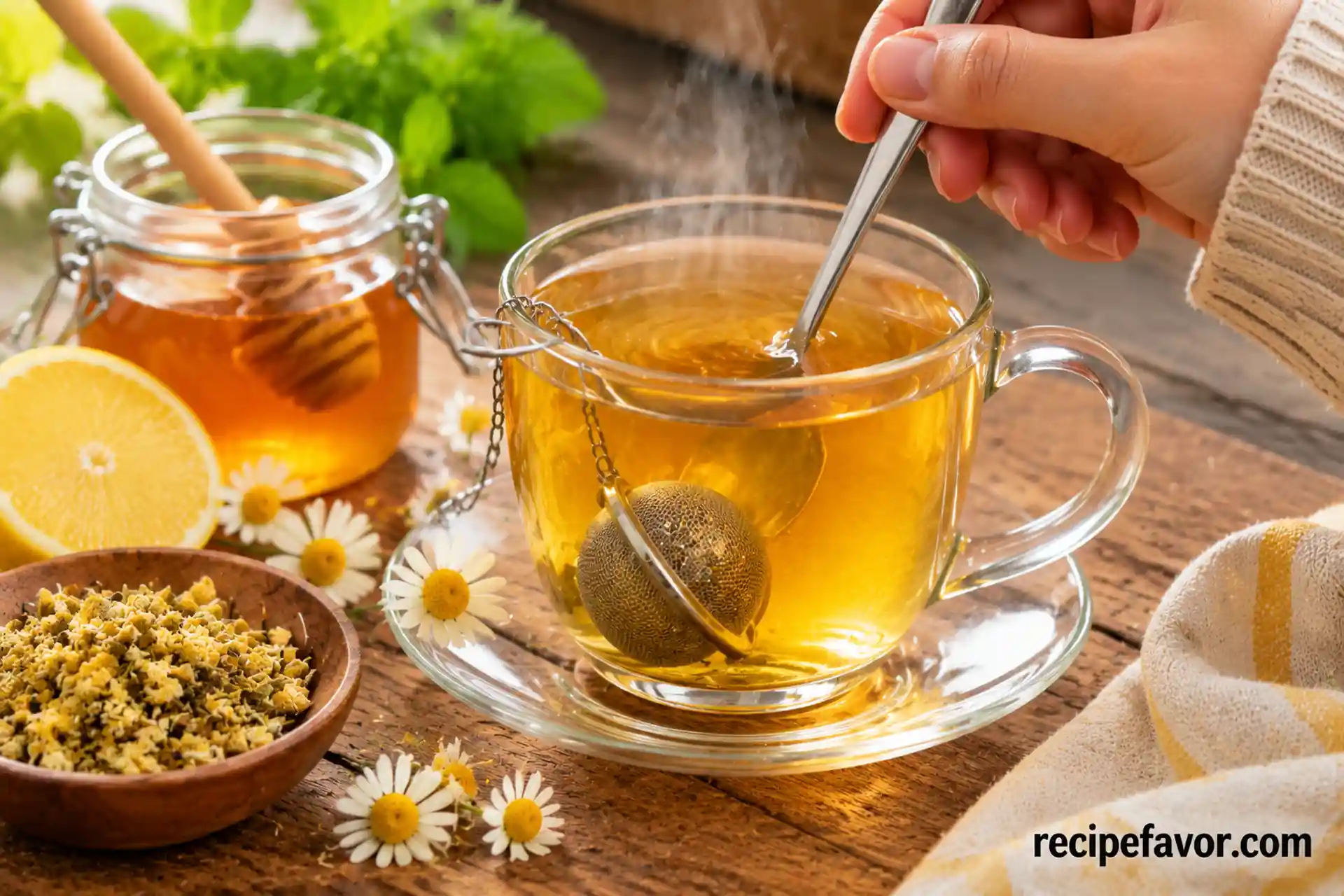
- Steep for 5 to 7 minutes, then stir gently.
- Strain the tea into cups and discard the herbs or tea bags.
- Add lemon slices and stir in honey if you like, then serve warm.
For a stronger flavour, use a little more herb rather than a much longer steep. I also like to warm the cup with hot water first, so the tea stays hot while I drink it. If you want a variation, try my lemon ginger tea recipe, which uses the same simple method.
Tips and Storage for Herbal Tea
A few small habits make a better cup. Use fresh, filtered water when you can, and do not use water that has been boiled more than once, because it can taste flat. Cover the cup while it steeps, and add honey only after steeping, so its flavour stays fresh. If you like iced herbal tea, brew it double strength and pour it over ice.
Store dried herbs in a sealed jar in a cool, dark cupboard, away from heat and light, and use them within six months for the best flavour. Brewed tea will keep in a sealed jar in the fridge for up to two days; reheat it gently on the stove, and do not boil it again. I do not leave a brewed cup sitting out overnight.
Herbal Tea Nutrition
Herbal tea is a very light drink. A plain cup made with just herbs and water has almost no calories, and the numbers below are for one cup made with one teaspoon of honey. The exact values will vary a little with the herbs you use and how much honey you add, so treat these as approximate.
| Nutrient | Per 1 Cup (with 1 tsp Honey) |
|---|---|
| Calories | 21 |
| Total Carbohydrates | 5.8 g |
| Sugars | 5.7 g |
| Protein | 0.1 g |
| Total Fat | 0 g |
| Sodium | 2 mg |
| Potassium | 8 mg |
| Vitamin C | 1.5 mg |
Without honey, a cup of herbal tea has about 2 calories and no sugar. If you are watching your sugar intake, try the tea plain first, or use just half a teaspoon of honey, and you will still get the full flavour of the herbs.
What the Evidence Says About Herbal Tea
Herbal tea is often talked about online as if it can do everything, so I wanted to check the claims against the evidence before I wrote this. The honest picture is more modest than the headlines suggest: herbal tea can be a pleasant, caffeine-free drink, and some herbs have been studied for relaxation, but it is not a medicine, and no single cup will change your health on its own. I take the same approach to heart claims — see our look at tea and heart health.
| Claim | What the Evidence Says |
|---|---|
| “Herbal tea helps you sleep.” | Chamomile is linked with relaxation in some small studies, but it is not a proven sleep treatment. |
| “Herbal tea melts fat.” | There is no strong evidence that herbal tea causes weight loss on its own. |
| “Herbal tea detoxes your body.” | Your liver and kidneys already do that work; tea does not detox you. |
| “Herbal tea is always safe.” | Most herbal teas are fine for most people, but some herbs can interact with medicines or affect pregnancy. |
If weight loss is your goal, it is better to think of unsweetened herbal tea as a low-calorie swap for sugary drinks than as a fat-burning drink. You can read more in my guide to the best tea for weight loss, which looks at the evidence for each tea honestly.
Can You Drink Herbal Tea Every Day?
For most people, one to three cups of a pure herbal tea a day is a reasonable habit, and many people enjoy it daily. I usually have one cup in the afternoon and one in the evening, and I vary the herbs so I am not drinking the same one every single day. If you are pregnant, breastfeeding, taking medicine, or managing a health condition, it is worth asking your doctor first, because some herbs are not suitable for everyone.
Children should stick to small amounts of mild herbal teas, and anyone with a ragweed allergy should be careful with chamomile, because the plants are related. When you try a new herb, start with one cup and see how you feel before you make it a daily habit.
Potential Side Effects and Who Should Be Cautious
Herbal tea is gentle for most people, but it is not free of side effects. Chamomile can cause an allergic reaction in people who are allergic to ragweed, daisies, or chrysanthemums. Hibiscus may lower blood pressure, so people on blood pressure medicine should ask a doctor before drinking it often. Ginger in large amounts can cause heartburn in some people.
Some herbs can also interact with medicines, including blood thinners and sedatives, and a few are not recommended during pregnancy. That is why the label matters, and why it is worth checking with a doctor or pharmacist if you take regular medicine or have a health condition. A short check is a small step for peace of mind.
Does Herbal Tea Have Caffeine? FAQs
Does herbal tea have caffeine?
No, most pure herbal teas are naturally caffeine-free, because they are made from herbs, flowers, roots, or fruits rather than tea leaves. Blends that contain true tea, yerba mate, guayusa, or yaupon holly do contain caffeine, so check the ingredients. Matcha is different — learn how much caffeine is in matcha before choosing a caffeinated tea.
Is chamomile tea caffeine-free?
Yes, pure chamomile tea is caffeine-free. It is made only from dried chamomile flowers, so it contains no caffeine at all, which is why many people drink it before bed.
Does peppermint tea have caffeine?
No, pure peppermint tea is caffeine-free. It is made from dried peppermint leaves and contains no tea leaves, so it will not keep you awake the way black or green tea can.
Is herbal tea safe to drink at night?
Yes, a pure, caffeine-free herbal tea is a good choice at night for most people. Just make sure the blend has no true tea, mate, or guayusa in it, and avoid drinking a large cup right before bed if it means you will wake up during the night.
Does herbal tea break a fast?
Plain herbal tea with no honey, sugar, or milk has almost no calories, so many people drink it while fasting. Adding honey or sugar does add calories, so a sweetened cup is more likely to break a fast.
Which tea has the least caffeine?
Pure herbal tea has the least caffeine of all, at zero milligrams per cup. Among true teas, white tea and green tea usually have less caffeine than black tea, but neither is caffeine-free. For ranked, caffeine-free herbal tea blends, see our guide to the best herbal tea.
Final Thoughts on Herbal Tea
So, does herbal tea have caffeine? For most pure herbal teas, the answer is no, and that is what makes them such an easy evening drink. The key is to check the label, because blends with true tea or mate can add caffeine you were not expecting. Once you know what to look for, you can enjoy your cup with confidence. If you do want a caffeinated tea, try this iced sugar cookie cream matcha instead.
I hope this guide helps you pick the right tea for your next cup. If you enjoyed it, you can find more simple drink recipes on the Recipe Favor homepage, and I would love to know which herbal tea is your favourite.
For a caffeinated fall drink, see how I make a pumpkin cloud dunkalatte at home. For a creamy caffeinated option, try my iced matcha latte.
Medical Disclaimer: This article is for general information only and is not medical advice. It does not replace advice from a doctor or other qualified health professional. If you are pregnant, breastfeeding, taking medicine, or have a health condition, please consult a doctor before drinking a new herbal tea regularly.
Herbal Tea
Ingredients
Method
- Boil 2 cups of fresh water in a kettle.
- Add the chamomile, peppermint, and ginger to a teapot or mug.
- Pour the hot water over the herbs and cover the cup.
- Steep for 5 to 7 minutes, then stir gently.
- Strain the tea into cups and discard the herbs.
- Add lemon slices and stir in honey if you like, then serve warm.

Tuaseen is the creator of Recipe Favor, sharing easy, delicious, and homemade recipes for everyday cooking. Passionate about simple meals and flavorful dishes, Tuaseen focuses on creating step-by-step recipes that help beginners and food lovers cook with confidence, enjoy new flavors, and make every meal special at home.



13 thoughts on “Does Herbal Tea Have Caffeine? What to Know Before You Sip”