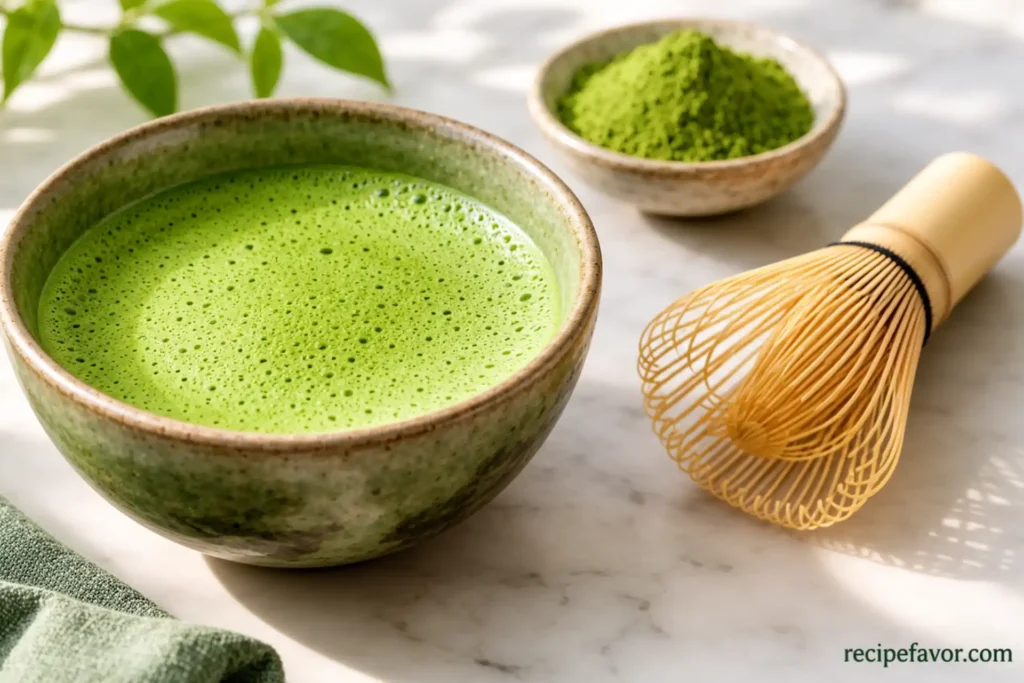
Does matcha have caffeine? Yes — a standard cup made with about 2 grams of matcha powder usually has about 38–88 mg of caffeine, which is less than most brewed coffee but more than a typical cup of green tea. I first tried matcha on a morning when I wanted something gentler than coffee, and I was surprised by how steady and calm it felt, so I wanted to find out exactly how much caffeine was in my cup.
In this guide, I will answer the question clearly, compare matcha with coffee and green tea, check a few common myths, and show you how I make a simple cup at home. You will find the amounts, the facts behind the calm feeling many people describe, and a short recipe you can follow today — all in one place here at Recipe Favor.
What is Matcha?
Matcha is a finely ground powder made from specially grown green tea leaves. Unlike regular green tea, where the leaves are steeped and then removed, matcha is whisked into water and drunk whole, so you take in the whole leaf. That is one reason its caffeine and flavour can feel stronger than a cup of steeped green tea.
The leaves are shade-grown before harvest, which helps keep their bright green colour and smooth, slightly sweet taste. Ceremonial-grade matcha is usually the smoothest choice for drinking on its own, while culinary-grade matcha works well in lattes and baking. Either way, the powder should look vivid green, not dull or yellowish.
How Much Caffeine Is in Matcha?
Does matcha have caffeine in a meaningful amount? Yes. A serving made with 2 grams of matcha powder, about 1 teaspoon, usually contains about 38–88 mg of caffeine. Each gram of matcha generally has about 19–44 mg, so a stronger cup with more powder will have more caffeine, and a lighter cup will have less.
The exact amount varies by brand, grade, growing conditions, and how much powder you use. Water temperature and whisking do not change the caffeine much, but the amount of powder does. If you want a lighter cup, start with 1 gram and see how you feel before making it stronger.
Does Matcha Have More Caffeine Than Coffee?
No, a standard cup of matcha usually has less caffeine than a standard cup of brewed coffee. Matcha has about 38–88 mg per serving, while an 8-ounce cup of brewed coffee usually has about 80–100 mg. Matcha is closer to coffee than green tea is, but it is still the lighter of the two in most cases.
| Drink (8-ounce serving) | Typical caffeine |
|---|---|
| Matcha (2 grams of powder) | 38–88 mg |
| Brewed coffee | 80–100 mg |
| Green tea | 30–40 mg |
| Black tea | 64–112 mg |
These are typical ranges, not exact values for every brand. A very strong matcha made with 4 grams of powder could match a cup of coffee, while a weak coffee could be closer to matcha. If you are counting your total caffeine for the day, add up every caffeinated drink, not just the first one. For comparison, see my protein coffee recipe if you prefer a coffee-based drink.
What the Evidence Says About Matcha and Caffeine
Matcha is often described as giving calm, steady energy. That feeling is linked to L-theanine, an amino acid naturally found in tea, which is present in matcha in higher amounts than in many other teas. L-theanine does not remove caffeine, but many people find the combination feels smoother than coffee on its own. That is a personal experience, not a promise that it will feel the same for everyone.
It helps to separate what is supported from what is exaggerated. The table below is a simple myth-check, so you can see at a glance which claims hold up and which do not.
| Claim | What the evidence says |
|---|---|
| Matcha is caffeine-free | No — matcha contains caffeine, about 38–88 mg per 2-gram serving. |
| L-theanine cancels out caffeine | No — L-theanine does not remove caffeine; it may change how the drink feels for some people. |
| Matcha always has more caffeine than coffee | No — a standard cup of matcha usually has less caffeine than brewed coffee. |
| Matcha is the same as green tea | Not quite — matcha is powdered whole-leaf green tea, so a serving can have more caffeine than steeped green tea. |
By contrast, most herbal teas are naturally caffeine-free because they are not made from the tea plant. If you want to compare, read Does Herbal Tea Have Caffeine? — it explains which herbal drinks do and do not contain caffeine.
Ingredients
You only need a few simple ingredients to make a good cup of matcha at home. I use ceremonial-grade powder when I drink it plain, and a good culinary-grade powder when I make a latte. Fresh, bright green powder, hot but not boiling water, and a quick whisk make the biggest difference.

- 2 grams (about 1 teaspoon) matcha powder
- 60 ml (1/4 cup) hot water, about 80°C (175°F), not boiling
- 180 ml (3/4 cup) hot water or warm milk, for a plain cup or a latte
- 1 teaspoon honey or maple syrup, optional
- Ice, optional, for an iced matcha latte
| Ingredient | Why it matters |
|---|---|
| Matcha powder | Provides the caffeine, colour, and flavour; sifting keeps it smooth. |
| Hot water (about 80°C) | Dissolves the powder without making it bitter. |
| Milk (optional) | Makes a creamy matcha latte. |
| Honey (optional) | Balances bitterness; add to taste. |
| Bamboo whisk (chasen) | Creates a fine, even foam. |
How to Make Matcha
Making matcha takes about five minutes once you have done it a couple of times. The key steps are sifting, using water that is hot but not boiling, and whisking quickly until the top is frothy. If you want a latte instead, follow the same steps and finish with warm milk — my matcha latte recipe shows that version in detail.
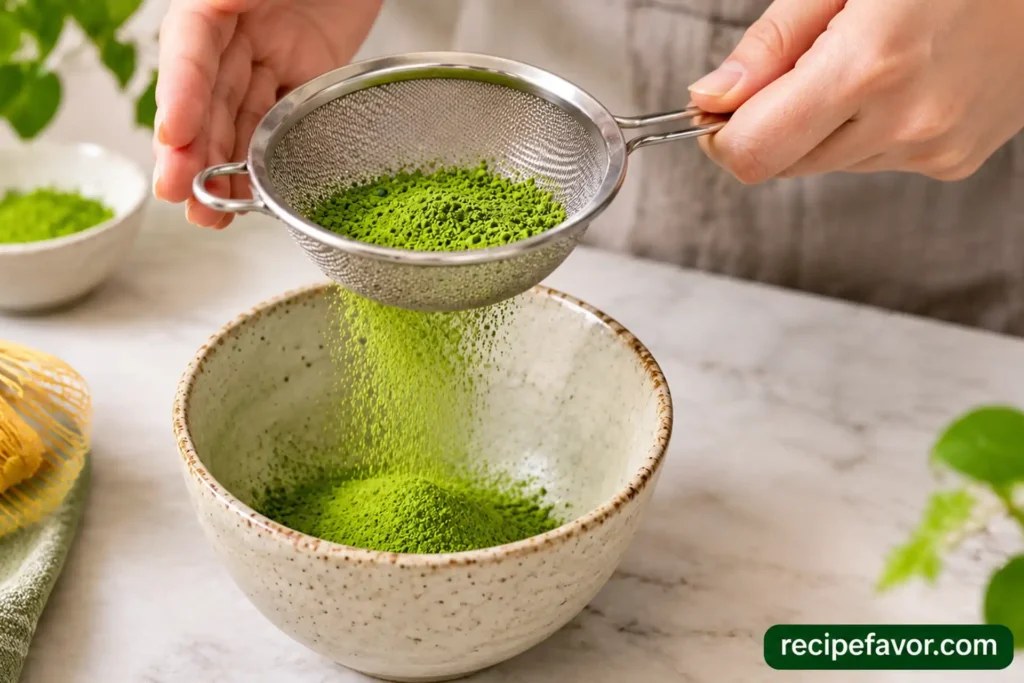
- Sift the matcha powder through a fine-mesh sieve into a bowl or wide cup to remove clumps.
- Add 60 ml of hot water, about 80°C (175°F), and stir the powder into a smooth paste.
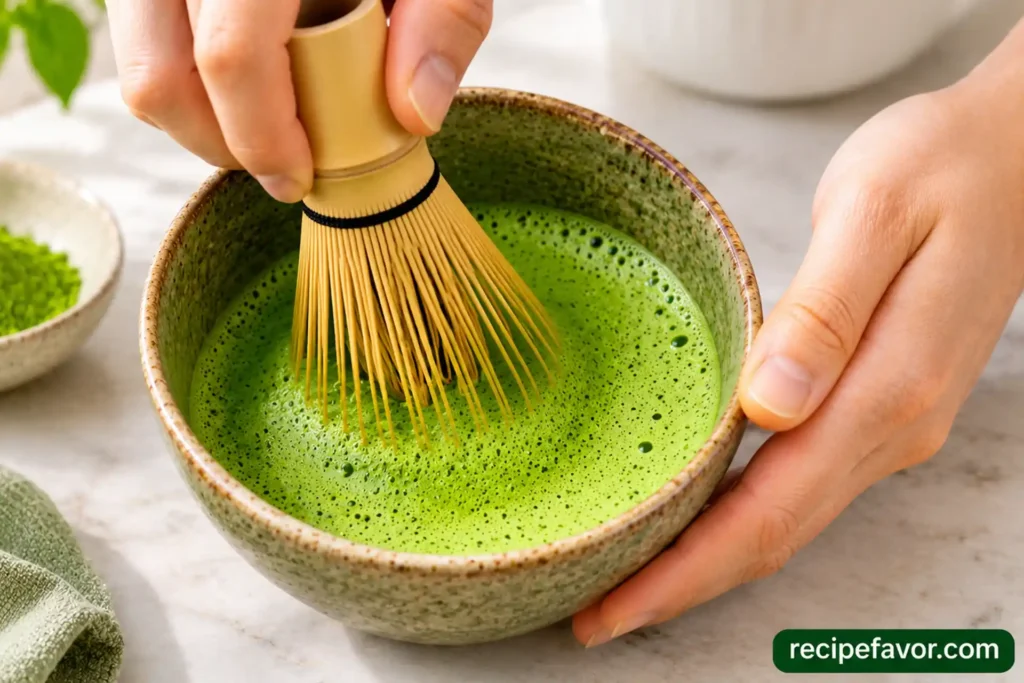
- Whisk briskly with a bamboo chasen in a quick “M” or “W” motion for 15–20 seconds, until frothy.
- Top up with the remaining hot water for plain matcha, or warm milk for a latte, and add honey if you like.
- Serve right away, while it is hot and frothy — or pour it over ice for an iced version.
If you enjoy simple hot drinks, you may also like How to Make Herbal Tea, which uses a similar step-by-step approach for a caffeine-free cup.
Tips and Storage
Use fresh matcha within a few weeks of opening it, and keep the tin sealed, cool, and away from light and strong smells. Once whisked, matcha is best drunk straight away — it settles quickly and the foam fades. If your matcha tastes bitter, try slightly cooler water, a little less powder, or a small amount of honey or milk.
Do not store a made cup of matcha in the fridge for the next day if you can avoid it; make a fresh cup instead. Leftover powder should stay dry, so always use a dry spoon. A small sieve and a bamboo whisk are worth having, but a small milk frother or a clean jar with a tight lid can work in a pinch.
Nutrition
The values below are for one cup of plain matcha made with water and no sweetener. They are estimates and will change if you add milk, honey, or sugar, or use a different brand of powder.
| Nutrient (per 1 cup) | Amount |
|---|---|
| Calories | About 5 |
| Caffeine | 38–88 mg |
| Carbohydrates | Less than 1 g |
| Protein | Less than 1 g |
| Sugar | 0 g |
Frequently Asked Questions
Is matcha stronger than coffee?
Not usually. A standard cup of matcha has about 38–88 mg of caffeine, while brewed coffee usually has about 80–100 mg per 8-ounce cup. A very strong matcha can come close to coffee, but a normal serving is lighter. So, does matcha have caffeine? Yes, but usually less than coffee per cup.
Does decaffeinated matcha have caffeine?
Decaffeinated matcha is hard to find and may still contain a small amount of caffeine. If you need to avoid caffeine completely, check the label carefully or choose a naturally caffeine-free herbal tea instead.
Can I drink matcha every day?
Many people drink matcha daily, but it still counts toward your total caffeine for the day. For healthy adults, the U.S. Food and Drug Administration cites about 400 mg of caffeine per day as a general limit. Keep track of coffee, tea, and other caffeinated drinks as well.
Does matcha keep you awake?
Does matcha have caffeine enough to keep you awake? Yes — matcha can keep you awake because it contains caffeine. If you are sensitive to caffeine, try drinking it earlier in the day and avoid a second cup late in the afternoon or evening.
Is matcha safe during pregnancy?
General guidance often suggests limiting total caffeine to about 200 mg per day during pregnancy, but advice varies by person. If you are pregnant or breastfeeding, ask your doctor what is right for you before drinking matcha regularly.
Conclusion
So, does matcha have caffeine? Yes — about 38–88 mg in a standard 2-gram serving. That is less than most brewed coffee and more than a typical cup of green tea, with a smoother feel for many people thanks to L-theanine. Make it with sifted powder, hot but not boiling water, and a quick whisk, and you will have a bright, frothy cup in about five minutes.

If you enjoy green drinks, try my green juice recipes and best tea for weight loss roundup next — both are simple ways to explore more tea and green-drink ideas at home. Now that you know the answer to “does matcha have caffeine” — about 38–88 mg per cup — you can enjoy your next cup with confidence.
Medical disclaimer: This article is for general information only and is not medical advice. If you are sensitive to caffeine, pregnant, breastfeeding, or taking medication, talk to your doctor before changing how much caffeine you drink.
Does Matcha Have Caffeine? Simple Matcha Tea
Ingredients
Equipment
Method
- Sift the matcha powder through a fine-mesh sieve into a bowl or wide cup to remove clumps.
- Add 60 ml of hot water, about 80°C (175°F), and stir the powder into a smooth paste.
- Whisk briskly with a bamboo chasen in a quick “M” or “W” motion for 15–20 seconds, until frothy.
- Top up with the remaining hot water for plain matcha, or warm milk for a latte, and add honey if you like.
- Serve right away, while it is hot and frothy — or pour it over ice for an iced version.
Notes

Tuaseen is the creator of Recipe Favor, sharing easy, delicious, and homemade recipes for everyday cooking. Passionate about simple meals and flavorful dishes, Tuaseen focuses on creating step-by-step recipes that help beginners and food lovers cook with confidence, enjoy new flavors, and make every meal special at home.

5 thoughts on “Does Matcha Have Caffeine?”